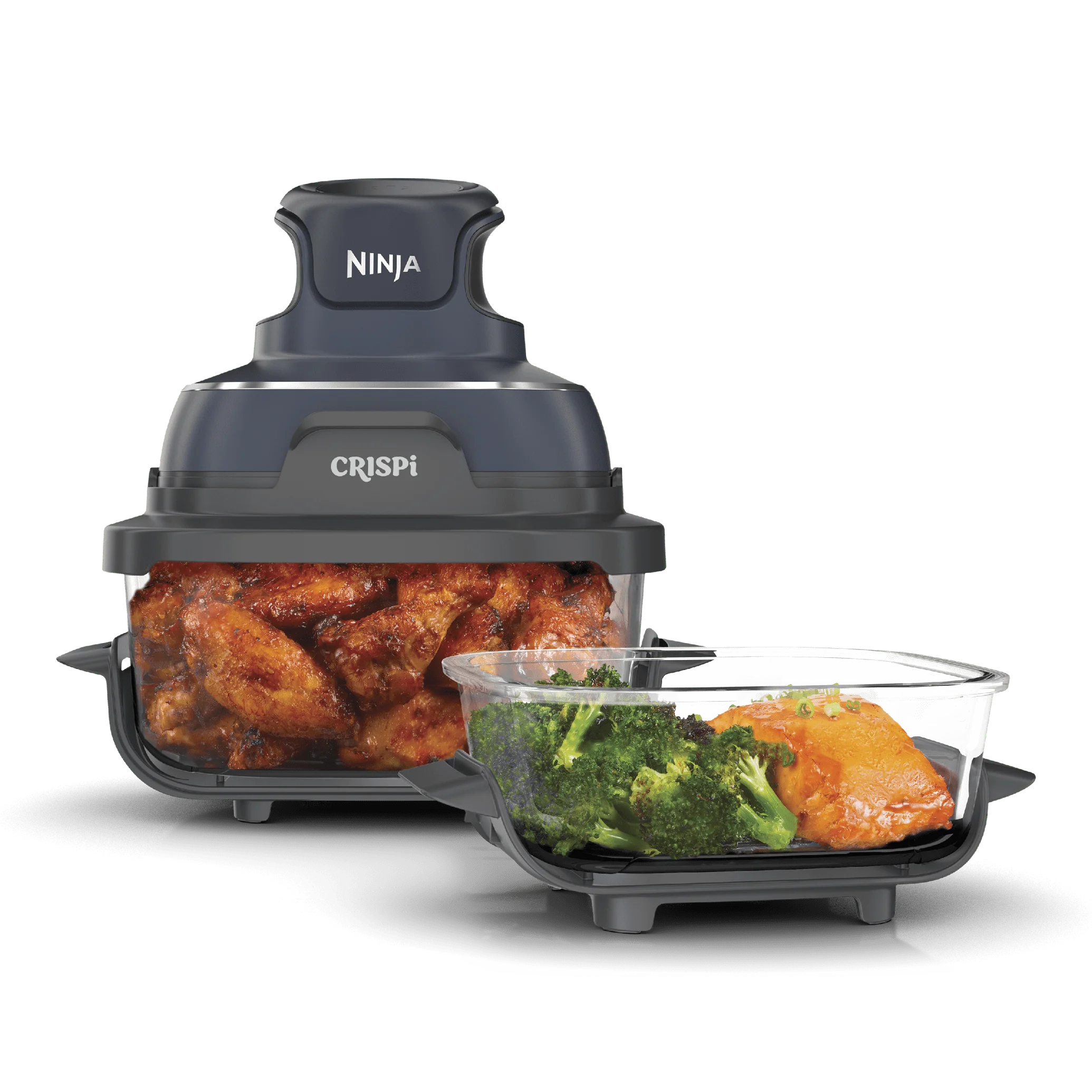
1Best Overall
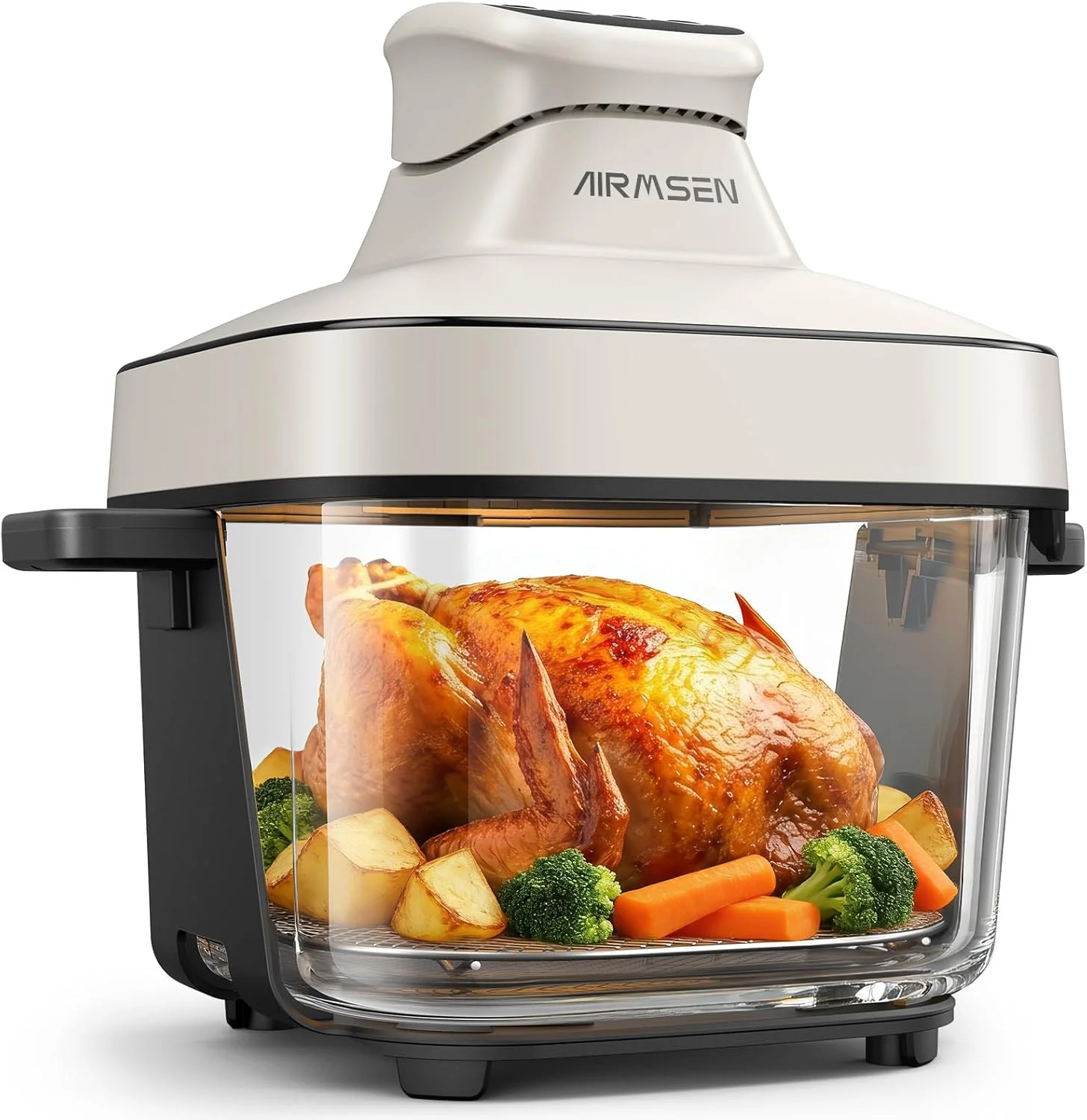
Best Overall
8.5Excellent
What we love
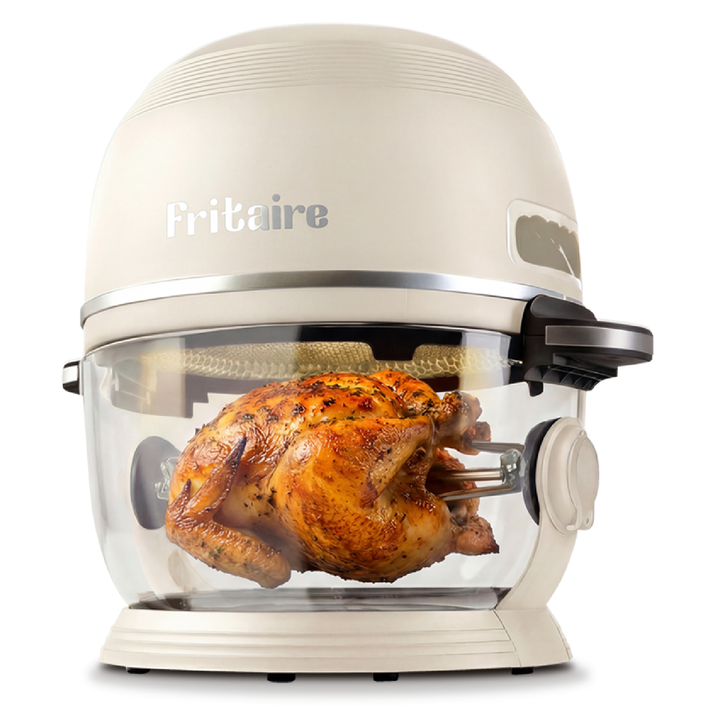
- 6.3 qt capacity serves up to 6 people in a compact countertop design
- 1600 W turbo heating with 105–400 °F range, 1–60 min timer, 4 presets, and full manual/custom control
- Bare heat-resistant glass bowl and 18/8 stainless tray have zero PFAS, PTFE, PFOA, or other chemical coatings
- Glass bowl and tray are 100% dishwasher safe with crystal-clear 360° view for monitoring without opening the lid
Worth knowing
- Glass bowl and tray are heavier to handle and move than traditional lightweight metal basket models
- Standard warranty is 1 year; 2-year coverage requires product registration
- Only 4 one-touch presets; most recipes rely on manual temperature and time settings
- Positioned at a higher price point than basic coated air fryers in the same capacity class
Key Specs
Timer
1–60 min
Wattage
1600 W
Capacity
6.3 qt
Controls
4 presets + manual/custom