Low-EMF baby monitors · Tested for radiation and data security
Which baby monitors are low-EMF and can't be hacked?
I looked at what each monitor actually transmits into the nursery and who can reach the feed. Most WiFi models never stop broadcasting, and only a few run a real low-emission mode. Here are the ones I would put in my own baby's room.

By Renee Torres, R3 Research Lead·Updated Oct 2026
8 products · 8 brands40+ hrs researchNo brand pays us
Get the Baby Monitors shortlist, free
The picks that cleared safety, what to skip, and why price didn’t predict the winner.
No spam. Unsubscribe any time.
All Baby Monitors Rankings
8 of 8 products
| Product | Cord Hazard Profile | Data Storage Model | Subscription Lock-In | Score | Price | Actions |
|---|---|---|---|---|---|---|
| Unlock safety data | 9.6 | $50 | ||||
| Unlock safety data | 9.4 | $25 | ||||
| Unlock safety data | 8.5 | $249 | ||||
| Unlock safety data | 8.5 | $60 | ||||
| Unlock safety data | 8.3 | $200 |
Not all 8 baby monitors cleared our safety screen.
See which ones we flagged, which failed, and which ranked #1.
See which of these 8 products actually passed our safety screen
Free account unlocks full safety test results, complete spec breakdowns, and what disqualified the ones that didn't make the list.
Already have an account?Sign in
Compare Baby Monitors head-to-head
Connection & privacy
How each baby monitor connects, and who else can reach the feed
A non-WiFi monitor keeps a private radio link with no internet, so it cannot be hacked from outside your home; a WiFi-cloud monitor routes the feed to a company server, where a breach or a stolen password can expose it.
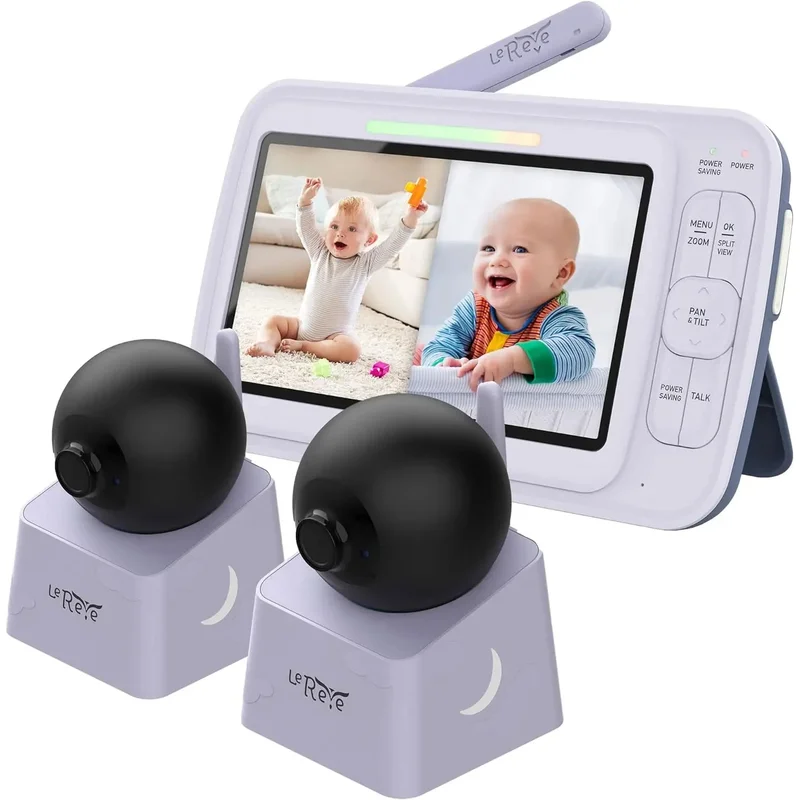
Keeps the feed in your homeTimeFlys Crown Audio Baby Monitor, Safety 1st Crystal Clear Audio Baby Monitor, Bebcare Motion Low-EMF Digital Video Baby Monitor, HelloBaby HB6550 Video Baby Monitor, LeReve Low-EMF 5-Inch HD Baby Monitor, Philips Avent Digital Video Baby Monitor (No WiFi)uses a private non-WiFi radio link with no cloud, so the feed cannot be reached from outside the house
routes the feed over the internet and has a documented history of security vulnerabilities
Renee's Take · Oct 2026
What your baby monitor transmits, and who else can reach the feed
Shopping for a baby monitor turns into two questions that no product page really answers: how much is it beaming into the nursery all night, and who besides you can see the feed. So I scored a set of monitors the same way, on what they actually transmit, how they store the video, and whether the model has ever been recalled. The ranking that came out is close to the opposite of the popular WiFi favorites.
Here is the part the marketing skips. A WiFi-cloud monitor sends your baby's video out to a company server so you can watch from your phone, which means the feed travels the internet and can be reached by anyone who gets in. A non-WiFi monitor keeps a private radio link between the camera and the parent unit, with no internet, no app, and no cloud, so there is nothing to hack from across the world. I am not going to tell you low-level radio waves are proven to harm a baby, because the science is not settled and every certified monitor meets the FCC's exposure limits. What I can tell you is which monitors emit less, which ones never stop transmitting, and which ones put the feed somewhere a stranger could find it.
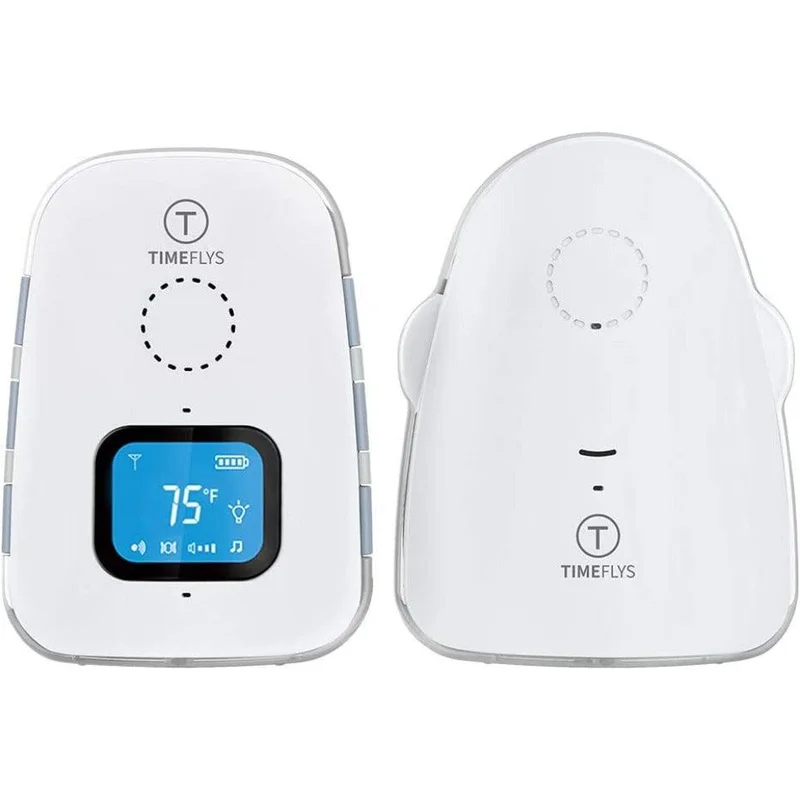
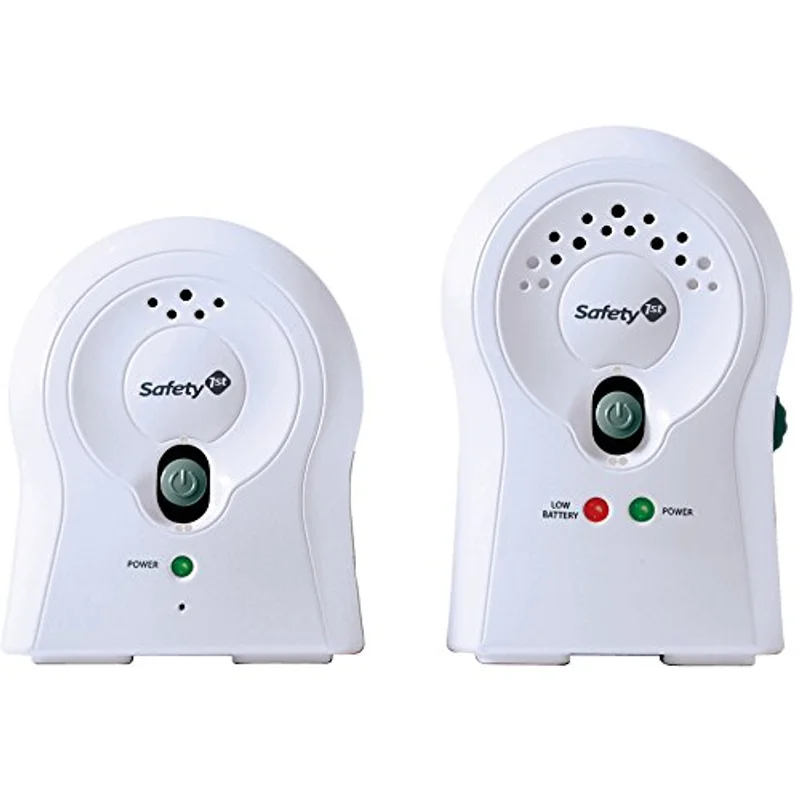
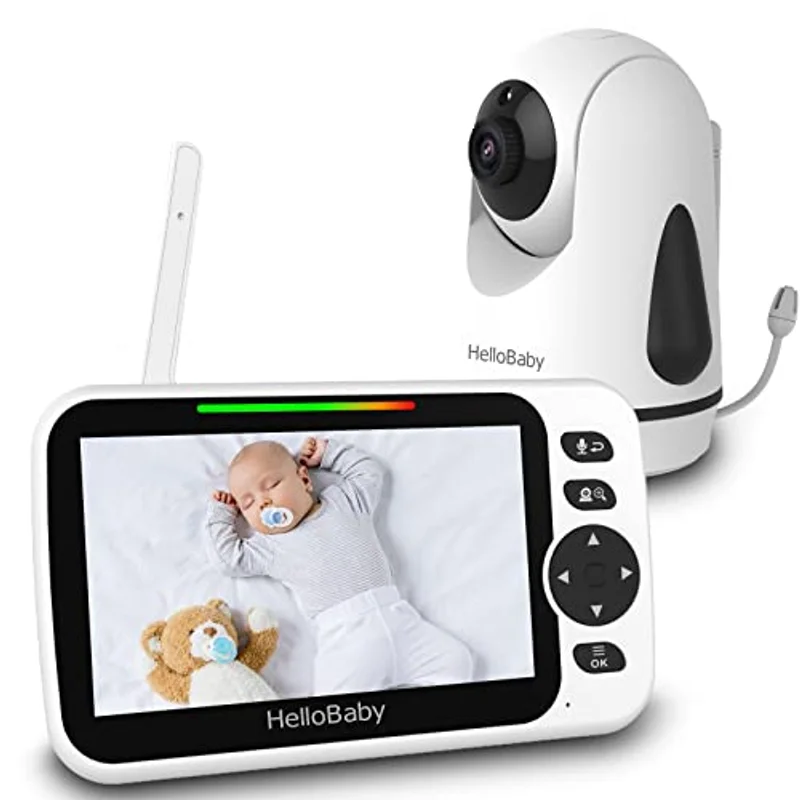
The highest scores went to the simplest designs. The TimeFlys Crown Audio ($50, 9.6) is an audio monitor that goes completely silent when the room is quiet and has no camera to compromise, and the $25 Safety 1st Crystal Clear (9.4) is old-fashioned analog audio with no internet anywhere near it. If you want to see your baby, the best value is the non-WiFi HelloBaby HB6550 ($60, 8.5), which keeps a private local link at a fraction of the price of the $249 Bebcare Motion (8.5).
The contrast at the bottom is the whole point. The Nanit Pro ($220, 7.3) is a beautiful WiFi camera that streams to the cloud around the clock and locks some features behind a subscription. And the $360 Owlet Dream Duo (6.1) pairs a WiFi camera with a foot sock that tracks oxygen, and while that sock does now carry a real FDA clearance, the camera platform has a documented record of security vulnerabilities, which is exactly the risk a parent is trying to avoid. The reassuring takeaway is that the safest, most private option is also the cheapest: at $25, a monitor with nothing to hack is the baseline, not the upgrade.
What Matters Most?
The criteria R3 evaluates for every baby monitors
Safety
Cord Hazard Profile, Active Recall, Infant-Vitals FDA Authorization
Efficacy
Data Storage Model, Connection Encryption, Documented Security Breach History
Usability
Subscription Lock-In
What to Watch For
Safety factors I look at closely when rating baby monitors
A WiFi feed that can be reached remotely
The stories parents dread, a stranger's voice through the speaker or a stolen feed, almost always involve a WiFi-cloud monitor, not a private radio one. The Owlet camera platform has a documented set of security vulnerabilities disclosed by researchers, and cloud accounts can be exposed in ordinary data breaches. A WiFi monitor is only as safe as its weakest password and the company's servers.
If you do not need to watch from outside the house, choose a non-WiFi model with a private local link. If you want WiFi, use a unique strong password, enable two-factor login, and pick a model that offers end-to-end encryption and local storage.
Overheating and fire recalls
A monitor is an electronic device that sits plugged in beside a sleeping baby, and the parent unit can fail. In early 2026 the CPSC recalled roughly 81,000 Babysense Max View monitors after the display unit overheated and posed a fire hazard, following earlier recalls of other brands for the same reason.
Related Categories
Other categories families browse alongside this one.