Is pfas (per- and polyfluoroalkyl substances) safe in your family's products?
A family of 10,000+ synthetic chemicals with an unbreakable carbon-fluorine bond. Found in nonstick cookware, air fryer baskets, food packaging, and drinking water. Called "forever chemicals" because they accumulate in the body and never break down — with links to cancer, immune suppression, and hormone disruption.
Renee · Founder & Lead Researcher, R3
We score every product the same way and never accept brand payment. We may earn a commission from some links, which never changes a score. How we stay independent.
Quick facts
Get the research before you buy
New picks and safety research, no spam, no sponsors.
PFAS stands for Per- and Polyfluoroalkyl Substances — a class of more than 10,000 synthetic chemicals built on an extremely stable carbon-fluorine (C–F) bond. That bond is the strongest in organic chemistry, which is why PFAS resist heat, water, oil, and every biological process that would otherwise break them down. They don't degrade in soil, water, or the human body. That's why scientists and regulators now call them 'forever chemicals.'
DuPont discovered polytetrafluoroethylene (PTFE) — the polymer marketed as Teflon — in 1938 by accident. By the 1950s, 3M and DuPont were mass-producing PFAS chemicals for industrial and consumer use. Internal animal studies from the 1960s and 1970s showed the chemicals were accumulating in blood and causing harm, but those findings were kept from the public for decades. The true scope of contamination didn't reach mainstream awareness until Rob Bilott's landmark lawsuits against DuPont in the late 1990s and early 2000s — the story told in the 2019 film Dark Waters.
Today, PFAS are detected in the blood of 97% of Americans. The U.S. EPA set the first federal drinking water limits for PFAS in April 2024, capping PFOA and PFOS at 4 parts per trillion — effectively near zero — because no safe level has been established.
PFAS aren't confined to one product type. They appear across the things families use every day. Here's where they show up and what you need to know at a glance:
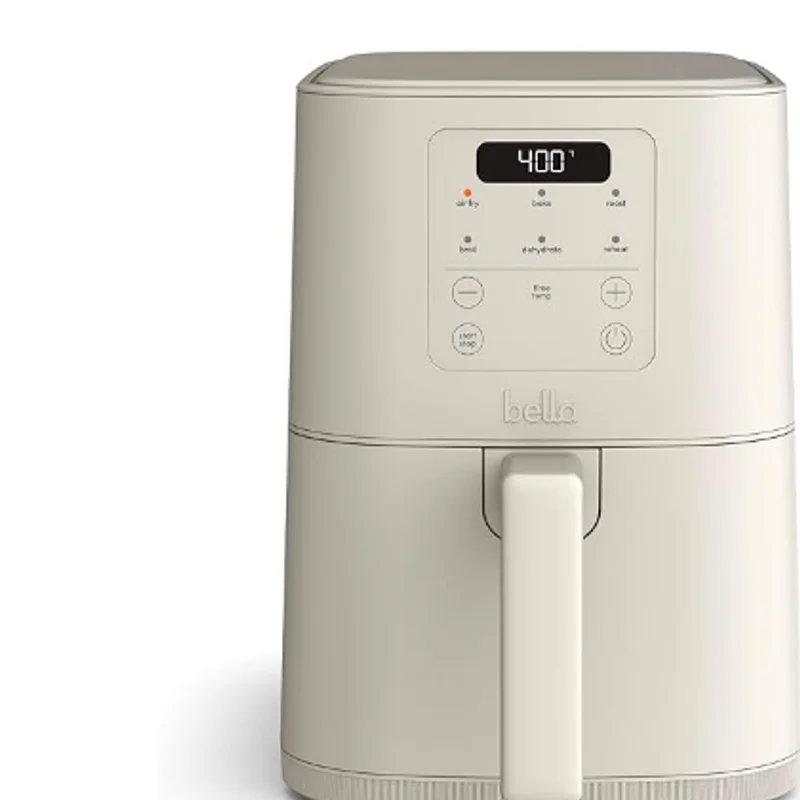
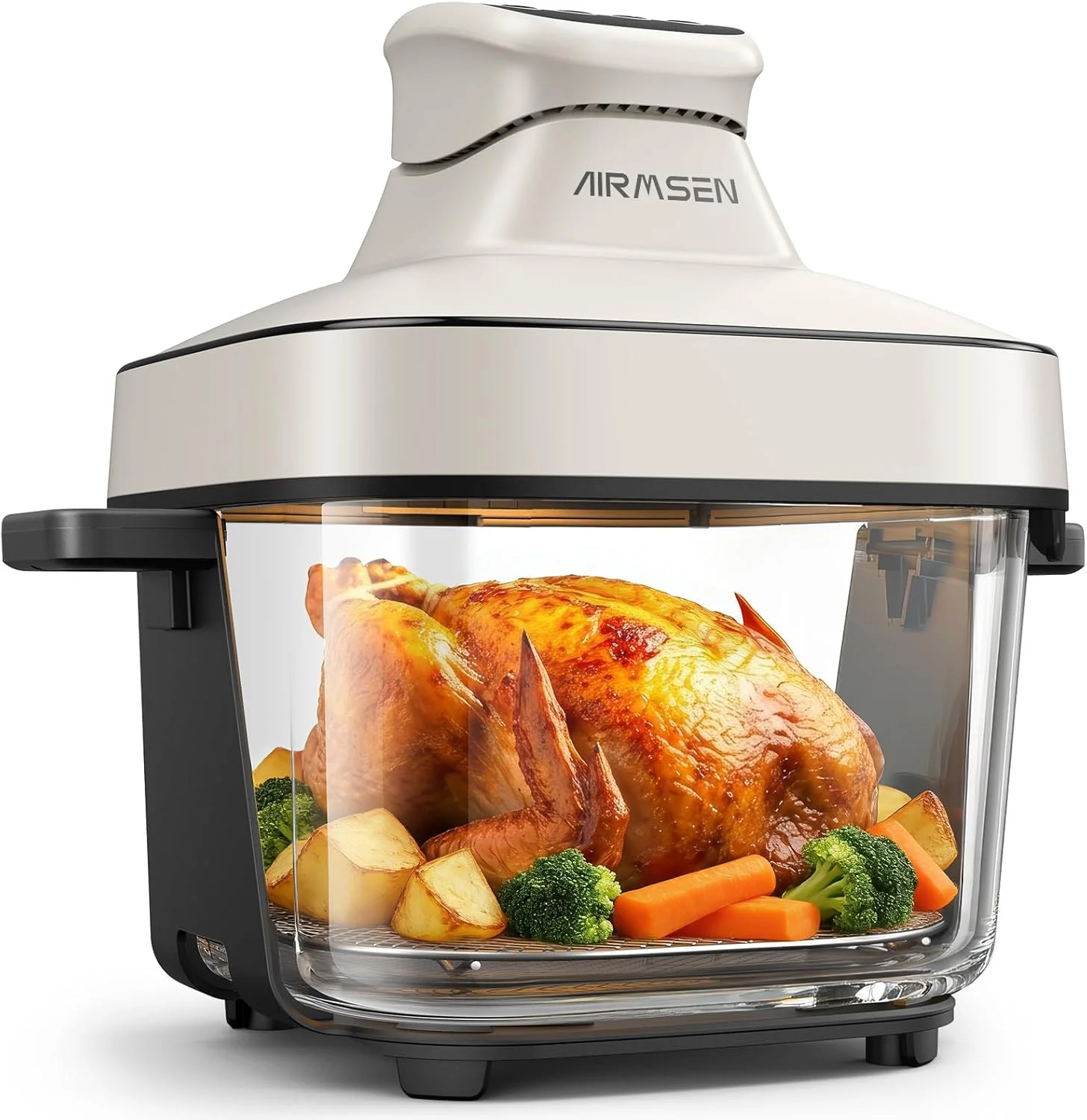
Most mainstream air fryer baskets — from Ninja, Cosori, Instant Pot, and others — are coated with PTFE (Teflon), the most common PFAS-based nonstick material. PTFE begins degrading at 260°C (500°F), releasing chemical byproducts. Air fryers are a higher-risk context than regular pans because the enclosed cavity and high-speed fan distribute any released particles throughout your kitchen, and empty preheating can push basket surface temperatures past the degradation threshold. Scratched baskets release significantly more PFAS. PFAS-free alternatives with verified stainless steel or ceramic baskets exist — Breville Smart Oven Air, Our Place Wonder Oven, and Ninja FlexDrawer are the most documented options.
Nonstick pans are the most direct PFAS exposure route in most kitchens. PTFE is the coating standard across Tefal, Calphalon, All-Clad's nonstick lines, and most products labeled with marketing terms like 'diamond,' 'granite,' or 'titanium' nonstick — all of which use PTFE as the base polymer. PFOA, the processing aid historically used to manufacture PTFE, was phased out of US production by 2015, so modern PTFE cookware carries less PFOA risk than older pans. However, 'PFOA-free' does not mean 'PFAS-free' — the polymer itself qualifies as PFAS under EPA's definition, and replacement processing aids (like GenX) have emerging toxicity concerns. Ceramic-coated alternatives (GreenPan Thermolon, Caraway, Our Place Always Pan) are PFAS-free by structure and have been independently tested with no detectable PFAS.
PFAS appear in baby bottles not as an intentional ingredient but as a byproduct of manufacturing. The FDA has authorized PFAS compounds as process aids in plastic food-contact article production at levels up to 2,000 ppm. No major third-party organization has published a dedicated PFAS leaching study for baby bottle materials — that data gap is real. What we do know: the dominant infant PFAS exposure pathway is tap water used to reconstitute powdered formula, not the bottle itself. Choosing glass (clear, undecorated) or stainless steel eliminates the bottle-material variable. Pura Kiki is the only baby bottle brand with MADESAFE certification, which explicitly screens for PFAS. Silicone nipples and valves are inherently PFAS-free.
The biggest documented risk in food storage is parchment paper — many brands use PFAS coatings to achieve their nonstick, heat-resistant properties. The FDA's June 2025 phase-out covered PFAS in paper-based food packaging (fast-food wrappers, microwave popcorn bags, pizza boxes), but supply chain transition takes time and independent testing has found residual PFAS-treated packaging still in circulation. Ziploc has committed to PFAS-free formulations. Silicone bags and containers (platinum-cure or LFGB-certified) are PFAS-free by chemistry. Glass and stainless steel are always the safest choice, and microwaving food in plastic is the single highest-risk behavior to eliminate — heat dramatically accelerates PFAS migration from any plastic.
An estimated 176 million Americans have PFAS in their tap water above minimal risk thresholds. Not all water filters work. Standard pitcher filters (Brita, PUR) do not reliably remove PFAS. The only technologies with meaningful PFAS removal are reverse osmosis (RO, NSF/ANSI 58 certified — removes 95–99%) and activated carbon block filters (NSF/ANSI 53 or P473 certified — removes 70–99% for long-chain PFAS). The Clearly Filtered pitcher is the most affordable NSF-certified option at around $90. For households with pregnant women or young children near contaminated water sources, under-sink RO is the recommended standard. Never rely on a filter that doesn't carry an NSF certification number for a specific PFAS contaminant.
How pfas (per- and polyfluoroalkyl substances) shows up by product type
PFAS in Air Fryers: What to Know Before You Buy
Most air fryer baskets use PTFE nonstick coatings — a PFAS compound that degrades at temperatures air fryers routinely reach.
PFAS in Cookware: Nonstick Pans, Safety, and Alternatives
PTFE (Teflon) is the standard nonstick coating on most cookware — and it's a PFAS. Here's what that means, which pans to avoid, and what to buy instead.
PFAS cause harm across multiple organ systems, with the strongest evidence in four areas:
Cancer: The WHO's International Agency for Research on Cancer (IARC) classified PFOA as a Group 1 carcinogen (sufficient evidence in humans) in December 2023 — the highest classification. The primary cancers with established links are kidney cancer (RR ~1.9 in the PLCO cohort study) and testicular cancer (RR ~2.0 in the C8 Science Panel study of ~69,000 people exposed near DuPont's West Virginia plant).
Immune suppression: This is the most precisely documented effect in children. A landmark study (Grandjean et al., JAMA 2012) found that each doubling of serum PFOS in children age 5 was associated with a 49% reduction in antibody response to the diphtheria vaccine. The National Toxicology Program concluded PFOA and PFOS are 'presumed immune hazards in humans.'
Thyroid disruption: PFAS structurally mimic thyroid hormones and suppress free T4. A meta-analysis of 22 studies found each doubling of serum PFOS was associated with a 3.2% decrease in free T4. A 2023 study linked PFAS exposure to a 56% increased risk of thyroid cancer.
Pregnancy and development: PFAS cross the placenta. Higher maternal PFAS levels are associated with preeclampsia (OR 2.0), low birth weight, and reduced IQ scores in children. The critical window is early pregnancy when fetal thyroid development depends entirely on maternal T4.
Also established: elevated cholesterol (the most consistently replicated finding across hundreds of studies), reduced fertility in both men and women, and non-alcoholic fatty liver disease.
US Federal (as of 2026): The EPA finalized the first federal drinking water limits for PFAS in April 2024 — 4 parts per trillion (ppt) for PFOA and PFOS, the lowest measurable level. The EPA's Maximum Contaminant Level Goal (MCLG) for both is zero, meaning no level is considered safe. PFOA and PFOS were also designated CERCLA Superfund hazardous substances in July 2024. The FDA phased out PFAS in paper food-contact packaging (pizza boxes, microwave popcorn bags, fast-food wrappers) with a compliance deadline of June 2025. No federal ban on PFAS in cookware or consumer products exists at the federal level.
State level: Minnesota banned PFAS in nonstick cookware effective January 2025 — the first state to do so. Maine enacted the broadest consumer product law, extending to all products by 2032. California, New York, Washington, Vermont, Connecticut, and Colorado have enacted various PFAS product bans taking effect between 2025 and 2028.
EU: The European Chemicals Agency (ECHA) is evaluating a near-universal restriction on all 10,000+ PFAS compounds under REACH, with final opinions expected late 2026 and a Commission decision likely in 2027–2028. If adopted, it will be the broadest chemical restriction ever enacted.
Marketing claims: 'PFOA-free' is a low-bar claim — PFOA was phased out of US manufacturing by 2015, so virtually all modern products qualify. It does not mean PFAS-free. 'PFAS-free' is an unregulated claim with no federal definition. The NSF launched a PFAS-free certification (NSF 537) in March 2025 for food equipment materials — currently the most credible third-party verification available.
Who is most at risk
Look for these
Watch out for
Timeline
1938
PTFE Discovered
DuPont chemist Roy Plunkett accidentally discovers polytetrafluoroethylene (PTFE), later trademarked as Teflon. 3M purchases the Simons electrochemical fluorination process and begins manufacturing PFAS at scale.
1960s–1970s
Evidence Suppressed
Internal 3M and DuPont studies document PFAS accumulating in human blood and causing harm in animal models. Findings are never disclosed to regulators or the public.
2000–2015
Voluntary Phase-Outs
3M voluntarily phases out PFOS production (2000). Eight major manufacturers complete the EPA's PFOA Stewardship Program, eliminating PFOA from US production by 2015.
December 2023
PFOA Classified Group 1 Carcinogen
The WHO's International Agency for Research on Cancer (IARC) upgrades PFOA to Group 1 — sufficient evidence of cancer in humans. Kidney cancer and testicular cancer are the primary endpoints.
April 2024
First US Drinking Water Limits
EPA finalizes Maximum Contaminant Levels for PFOA and PFOS at 4 parts per trillion — effectively near zero. The MCLG (health goal) for both is zero. PFOA and PFOS also designated Superfund hazardous substances.
What this means for your family
Every product scored on safety, efficacy, and usability - so you know which products to trust around pfas (per- and polyfluoroalkyl substances).
Get the Air Fryer shortlist, free
The picks that cleared safety, what to skip, and why price didn’t predict the winner.
No spam. Unsubscribe any time.
Shop smarter
See R3-rated products
PFAS stands for Per- and Polyfluoroalkyl Substances. 'Per-' means all hydrogen atoms on the carbon chain are replaced by fluorine (fully fluorinated). 'Poly-' means some are replaced (partially fluorinated). Together, they describe a class of more than 10,000 distinct synthetic chemicals sharing the same extremely stable carbon-fluorine bond.
The term was coined in 2018 by Harvard professor Joseph Allen. The carbon-fluorine bond in PFAS is the strongest single bond in organic chemistry — no enzyme, microbe, UV light, or environmental condition found under normal conditions can break it. PFAS don't biodegrade in soil or water, they don't break down in the human body, and they accumulate over time. PFOA has a half-life of roughly 3.5 years in human blood — meaning it takes 3.5 years for half of what you've absorbed to leave your body, with the rest cycling through indefinitely.
No — and this is the most important distinction when buying cookware or appliances. PFOA is one specific PFAS compound that was phased out of US manufacturing by 2015. Calling a product 'PFOA-free' is like calling water 'arsenic-free' — technically true and also nearly irrelevant. The product may still contain PTFE (a PFAS polymer), GenX (PFOA's replacement, with its own toxicity concerns), or hundreds of other PFAS compounds. 'PFAS-free' is a broader claim, but it has no federal legal definition. Look for third-party certification (NSF 537 for food equipment, MADESAFE for baby products) to verify the claim.
By EPA and OECD's structural definition, yes — PTFE (polytetrafluoroethylene, marketed as Teflon) qualifies as a PFAS. However, the risk profile differs from PFAS acids like PFOA. Cured, intact PTFE polymer is considered biologically inert at normal cooking temperatures. The primary concerns are: (1) PFOA and GenX were used as processing aids in manufacturing PTFE and may leave residual traces; (2) PTFE begins degrading at 260°C (500°F), releasing breakdown products including gases that are acutely toxic to birds and can cause polymer fume fever in humans at higher temperatures.
PFAS have been detected in the blood of 97% of Americans tested in national surveys. The current US median serum PFOA level is approximately 0.8–1.0 ng/mL; median PFOS is approximately 3.0–4.0 ng/mL. These are lower than 20 years ago (thanks to manufacturing phase-outs), but levels associated with cholesterol elevation and immune effects in epidemiological studies overlap with the 95th percentile of today's population.
Only two filter technologies have strong evidence for PFAS removal: reverse osmosis (RO) removes 95–99% of PFAS including short-chain compounds, and activated carbon block filters certified to NSF/ANSI P473 or 53 remove long-chain PFAS at 70–99% efficiency but are less effective for short-chain variants. Standard pitcher filters like Brita and PUR do not reliably remove PFAS. Look for NSF certification at nsf.org/certified-products-systems — filter by Standard 58 (RO) or 53 (carbon) and verify the contaminant list includes PFOA and PFOS.
True ceramic sol-gel coatings (like GreenPan's Thermolon) are PFAS-free by chemical structure — they're silica-based with no fluoropolymer component. Consumer Reports tested GreenPan products and found no detectable PFAS. However, 'ceramic non-stick' is a marketing term with no legal definition, and some products labeled ceramic are hybrid formulations. Look for an explicit PTFE-free and PFAS-free statement from the brand, ideally backed by published test data or third-party certification.
Pans purchased before 2013–2015 were manufactured using PFOA as a processing aid, and residual PFOA in older coatings is a real concern — especially if the coating is scratched, chipped, or flaking. The risk from intact post-2015 PTFE cookware at normal cooking temperatures (under 260°C / 500°F) is lower, but not zero given GenX replacement compound concerns. The practical guidance: replace any pan with visible coating damage immediately, retire pans purchased before 2015, and avoid preheating any nonstick pan empty on high heat.
Yes — both routes are confirmed. PFAS cross the placenta: cord blood studies consistently detect PFAS in newborns at 20–30% of maternal serum levels. Breast milk is also a transfer route, with studies finding PFOS and PFOA in milk samples. However, the WHO and AAP still recommend breastfeeding for most mothers — the immunological and nutritional benefits outweigh PFAS risk for the majority of the population. The actionable step is reducing PFAS intake before and during pregnancy, primarily by filtering drinking water.
The concern is well-founded. The EPA's own UCMR5 data (the most comprehensive national survey of tap water contaminants, 2023) detected PFAS above health advisory levels in systems serving an estimated 176 million Americans. The EPA's April 2024 rule setting limits at 4 ppt is a regulatory response to that data, not precautionary overcorrection. The challenge is that compliance deadlines extend to 2029, so public water systems are currently operating legally above the new limits. Filtering your own water now with a verified filter is the practical response.
January 2025
State Cookware Bans Begin
Minnesota becomes the first state to ban PFAS in nonstick cookware. FDA revokes 35 authorizations for PFAS in paper food packaging. NSF launches the first PFAS-free certification (NSF 537) for food equipment.