How much ptfe (polytetrafluoroethylene / teflon) exposure is too much?
A synthetic fluoropolymer used as the nonstick coating on most cookware and air fryer baskets. PTFE is classified as a PFAS compound. It's chemically inert at normal temperatures, but begins releasing toxic fumes above 500 degrees F - a real concern with high-heat cooking, overheated pans, and families who own pet birds.
Renee · Founder & Lead Researcher, R3
We score every product the same way and never accept brand payment. We may earn a commission from some links, which never changes a score. How we stay independent.
Quick facts
Get the research before you buy
New picks and safety research, no spam, no sponsors.
The claim: PFOA-free cookware is safe because the harmful chemical has been removed.
The reality: PFOA-free only means one processing chemical (banned since 2015) isn't present. The pan almost certainly still contains PTFE - the fluoropolymer coating itself - plus GenX or other replacement processing aids with emerging toxicity concerns. 'PFOA-free' is a factually accurate but practically misleading label.
PTFE stands for polytetrafluoroethylene - a synthetic polymer where every hydrogen atom on the carbon backbone has been replaced by fluorine. That fluorine sheath is what makes PTFE slippery, heat-resistant, and chemically inert. It's the material behind Teflon, DuPont's original brand name (now owned by Chemours), and it coats the majority of nonstick cookware, air fryer baskets, and bakeware sold in the US today.
Here's what makes PTFE complicated: it's technically classified as a PFAS compound because it contains carbon-fluorine bonds. But PTFE behaves differently from the small-molecule PFAS chemicals (like PFOA and PFOS) that contaminate drinking water and accumulate in blood. PTFE is a high-molecular-weight polymer - it doesn't dissolve in water, it's not bioavailable, and it passes through the digestive tract unchanged if you accidentally ingest a flake of coating. The German Federal Institute for Risk Assessment (BfR) has confirmed that swallowed PTFE particles pose no health risk.
So why is it on our radar? Because PTFE doesn't stay inert forever. When heated above 500 degrees F (260 degrees C), it begins breaking down and releasing toxic fumes. And that's a temperature many kitchens can reach - especially with empty preheating, high-heat searing, or air fryers running at maximum output.
Intact PTFE coating at normal cooking temperatures (under 400 degrees F) is considered safe by the FDA, which has approved PTFE for food contact under 21 CFR 177.1550. The concern starts when PTFE overheats:
An empty nonstick pan on a burner can reach 500 degrees F in under 5 minutes. Air fryers are a particular concern because the enclosed cavity and high-speed fan circulate any released particles throughout the cooking chamber - and they can spike above their set temperature during preheating.
Breathing PTFE degradation fumes causes a condition called polymer fume fever, sometimes called "Teflon flu." Symptoms appear 4-8 hours after exposure: fever, chills, headache, chest tightness, and body aches. It typically resolves within 24 hours. US Poison Control data shows cases have tripled in recent years, reaching over 265 suspected cases in 2023.
The stakes are higher for some groups. People with asthma or chronic lung conditions face more severe reactions. And for pet bird owners, PTFE fumes are a genuine emergency - birds have extremely efficient respiratory systems, and PTFE pyrolysis gases are acutely lethal to parrots, cockatiels, and budgies at temperatures as low as 536 degrees F (280 degrees C). Death can occur within minutes.
This is the most important thing to understand about modern nonstick cookware: PTFE and PFOA are not the same thing.
PFOA (perfluorooctanoic acid) was a processing aid used during PTFE manufacturing from the 1950s until DuPont phased it out under EPA pressure by 2013-2015. PFOA is a confirmed Group 1 carcinogen (WHO/IARC, 2023) linked to kidney cancer, testicular cancer, thyroid disease, and immune suppression. It's the chemical at the center of the DuPont C8 lawsuits and the Dark Waters story.
PTFE (the finished polymer) has no established link to cancer, thyroid disruption, or the chronic health effects associated with PFOA. The polymer itself is biologically inert.
So when a pan says "PFOA-free," that's true - but almost meaningless. All US-manufactured PTFE cookware has been PFOA-free since 2015. The label doesn't tell you whether the pan still contains PTFE (it almost certainly does) or whether the replacement processing aids (like GenX) carry their own risks (emerging evidence says they do).
The vast majority of nonstick cookware and frying pans use PTFE as the base polymer - including products marketed with terms like "diamond," "granite," "titanium," or "marble" nonstick. Those are mineral-infused PTFE, not alternatives to it.
PTFE-free cookware falls into four material families:
Ceramic nonstick uses a sol-gel silica coating instead of fluoropolymers. Caraway Cookware Set, GreenPan Valencia Pro, and Our Place Always Pan are the most tested PTFE-free options - Consumer Reports found no detectable PFAS in GreenPan products. Ceramic coatings wear faster (1-3 year lifespan) but eliminate the fume risk entirely.
Stainless steel has no coating to degrade. All-Clad D3, All-Clad D5, Demeyere Industry5, and Made In Stainless Steel are top performers. Food does stick without proper technique and fat, but that's a cooking skill trade-off, not a safety issue.
Cast iron is naturally PTFE-free when seasoned with oil. Lodge Cast Iron Skillet, , and are excellent family options. Enameled cast iron (like and ) adds a glass-like coating that's also PTFE-free.
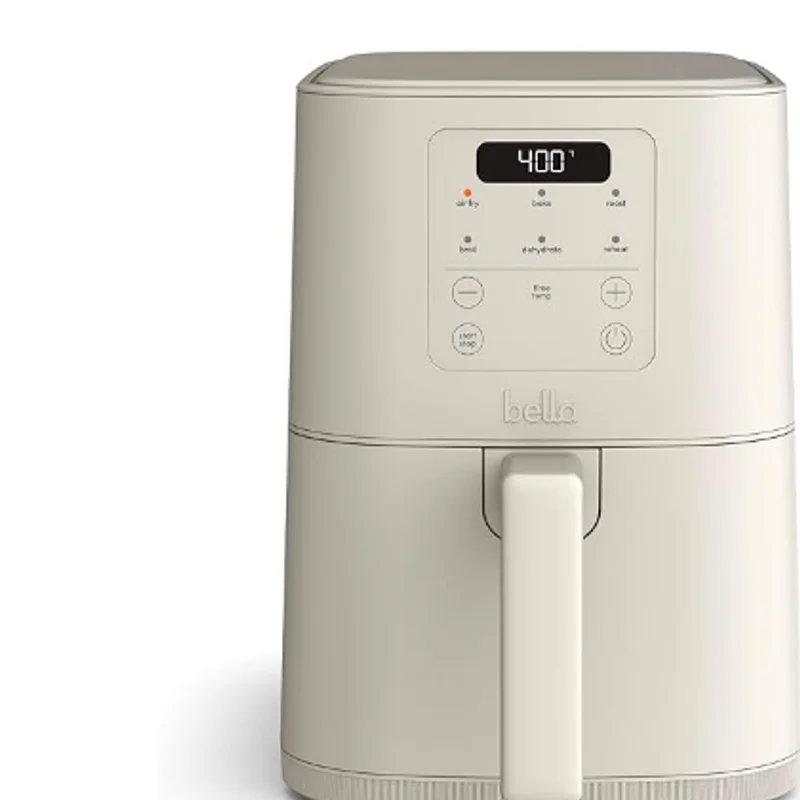
Most mainstream air fryer baskets are PTFE-coated - including popular models from Cosori, Instant Pot, Philips, and many Ninja lines. The enclosed cooking environment and high-speed air circulation make air fryers a higher-risk context than open pans.
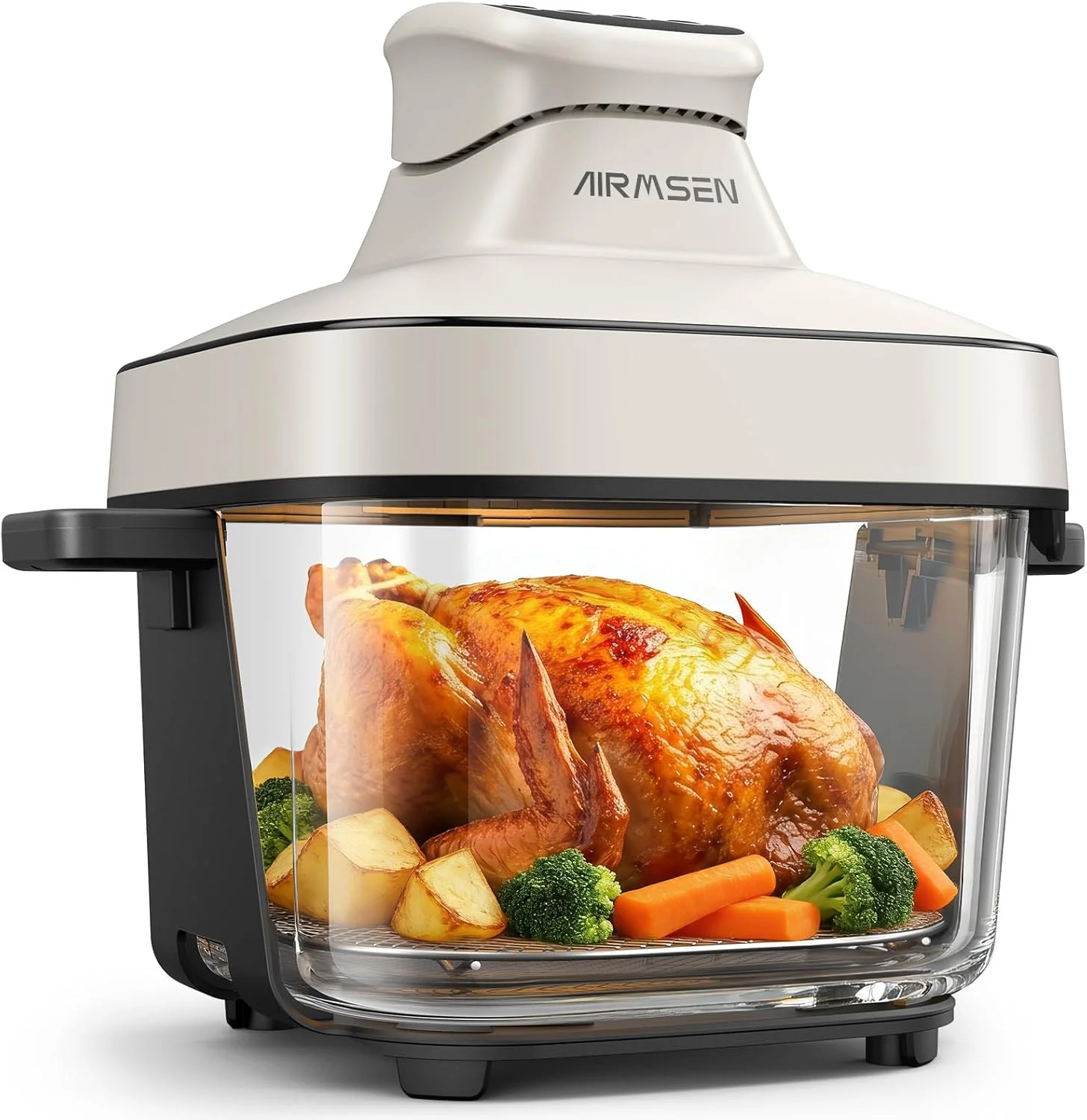
PTFE-free air fryers with verified ceramic or stainless steel baskets include Ninja Crispi Pro (glass bowl with ceramic-coated accessories) and countertop ovens that avoid basket coatings entirely, like the Our Place Wonder Oven and Breville Smart Oven Air.
Labels that indicate PTFE is present: - "Non-stick" with no coating material specified - assume PTFE - "Teflon-coated" or "PTFE-coated" - "Fluoropolymer coating" - "Diamond nonstick," "granite nonstick," "titanium nonstick" - these are PTFE with mineral additives - "PFOA-free" without "PTFE-free" - PFOA was removed, PTFE remains
Labels that indicate PTFE-free: - "Ceramic coating" or "ceramic nonstick" (verify the brand also claims PFAS-free) - "Stainless steel" or "uncoated" - "Cast iron" or "carbon steel" - "PTFE-free AND PFAS-free" stated together - MADESAFE certification
If you're not ready to replace your nonstick pans, these guidelines reduce risk:
Cookware and air fryers are the only product categories where PTFE is heated to temperatures that cause degradation. In other applications (dental floss, clothing), PTFE stays well below its decomposition threshold. The combination of high heat, enclosed cooking spaces, and daily family use makes the kitchen the primary context for PTFE safety decisions.
PTFE's health risks are primarily temperature-dependent, not dose-dependent like small-molecule PFAS.
Polymer fume fever: Inhaling PTFE degradation fumes (above 500 degrees F) causes flu-like symptoms - fever, chills, chest tightness, headache - within 4-8 hours. Typically self-limiting, resolving in 24 hours. At extreme temperatures (above 680 degrees F), PTFE releases hydrogen fluoride and PFIB, which can cause acute lung injury requiring medical attention.
Ingested particles: Flaked or scratched PTFE coating that's swallowed is considered biologically inert - it passes through the GI tract unchanged. The BfR and Columbia University studies confirm no absorption. However, long-term effects of chronic micro/nanoparticle ingestion remain understudied.
Bird toxicity: PTFE pyrolysis gases are acutely fatal to pet birds at temperatures as low as 536 degrees F (280 degrees C). Budgerigars, cockatiels, and parrots are most vulnerable. Death can occur within 17-27 minutes of exposure. This is well-documented in veterinary literature and not a marginal risk - it's a primary safety concern for bird-owning households.
No cancer link for PTFE itself: Unlike PFOA (the manufacturing processing aid), PTFE the polymer has no established association with cancer, thyroid disruption, or endocrine interference. The WHO/IARC Group 1 carcinogen classification applies to PFOA, not PTFE.
GenX concerns: Modern PTFE manufacturing uses GenX (HFPO-DA) as a replacement for PFOA. GenX has emerging toxicity data - EPA detected it in drinking water near manufacturing plants, and North Carolina communities near the Chemours facility have been contaminated. GenX is covered under EPA's 2024 drinking water rule.
US Federal: PTFE is FDA-approved for food contact under 21 CFR 177.1550 (Perfluorocarbon resins). The EPA classifies PTFE as a PFAS under TSCA Section 8(a)(7) reporting requirements, but regulatory actions (drinking water limits, Superfund designations) target mobile PFAS like PFOA/PFOS, not the stable polymer.
US States: Minnesota banned PFAS in nonstick cookware effective January 2025 - the first state to do so, using broad "intentionally added PFAS" language that captures PTFE. Colorado and Maine follow in January 2026. Vermont and Connecticut push bans to 2028. California's comprehensive PFAS cookware bill was vetoed by Governor Newsom in October 2025.
EU: The European Chemicals Agency (ECHA) is evaluating a sweeping PFAS restriction under REACH that explicitly includes fluoropolymers like PTFE. Denmark, Germany, Netherlands, Norway, and Sweden submitted the proposal. ECHA aims to finalize scientific opinions by end of 2026, with a Commission decision likely in 2027-2028. If adopted, PTFE cookware faces potential restriction in the EU.
California Prop 65: PTFE itself is not listed. PFOA (the former processing aid) is listed.
PFOA Stewardship Program: EPA's 2006-2015 program required all major manufacturers to eliminate PFOA from production. All complied. PTFE manufactured after 2013 should contain no PFOA residue.
Marketing claims: "PFOA-free" is a low-bar claim - virtually all modern PTFE cookware qualifies because PFOA was eliminated industry-wide by 2015. "PTFE-free" is a meaningful claim but has no federal legal definition. NSF 537 (launched March 2025) is currently the most credible third-party PFAS-free certification for food equipment.
How to reduce exposure
The most effective step is switching to PTFE-free cookware for high-heat cooking. Ceramic nonstick, stainless steel, cast iron, and carbon steel are all proven alternatives with no fluoropolymer risk. If keeping existing PTFE pans, stay under medium heat (400 degrees F), never preheat empty, ventilate your kitchen, and replace at the first sign of coating damage. For air fryers, choose models with ceramic or stainless steel baskets - or use a countertop convection oven that avoids coated baskets entirely.
Who is most at risk
When to seek medical attention
Seek medical attention if you experience persistent chest tightness, difficulty breathing, or high fever after cooking with nonstick cookware at high temperatures. These may be signs of polymer fume fever from PTFE degradation. Symptoms typically resolve within 24 hours, but severe or prolonged respiratory distress warrants evaluation, especially for people with asthma or underlying lung conditions.
Common product triggers
Product categories to avoid
Look for these
What this does NOT cover
This page covers PTFE as a cookware and consumer product coating. It does not cover industrial PTFE applications (gaskets, seals, wire insulation), PTFE in medical devices (which are regulated separately by the FDA), or the broader PFAS contamination of drinking water and the environment - see our PFAS guide for those topics.
How to verify
For cookware and air fryers: contact the manufacturer directly and ask whether the product uses PTFE, fluoropolymer, or any PFAS-based coating. Brands that are genuinely PTFE-free (Caraway, GreenPan, Xtrema, Lodge) typically state it clearly. For third-party verification, look for MADESAFE certification or NSF 537 PFAS-free certification. Consumer Reports has published independent PFAS testing results for several cookware brands.
Timeline
1938
PTFE Discovered
DuPont chemist Roy Plunkett accidentally discovers polytetrafluoroethylene while working with refrigerant gases.
1945
Teflon Commercialized
DuPont registers the Teflon trademark and begins commercial production of PTFE for industrial applications.
1960s
Nonstick Cookware Boom
PTFE-coated cookware enters mainstream consumer markets. Teflon becomes synonymous with nonstick cooking.
2004
EPA Sues DuPont
EPA files enforcement action against DuPont for concealing evidence that PFOA - the processing aid used to manufacture PTFE - was contaminating water and causing health harm.
2006-2015
PFOA Phased Out
EPA's PFOA Stewardship Program requires 8 manufacturers to eliminate PFOA from production. All comply by 2015. PTFE cookware made after this period is PFOA-free.
What to look for instead
What this means for your family
Every product scored on safety, efficacy, and usability - so you know which products to trust around ptfe (polytetrafluoroethylene / teflon).
Get the Air Fryer shortlist, free
The picks that cleared safety, what to skip, and why price didn’t predict the winner.
No spam. Unsubscribe any time.
Yes - Teflon is DuPont's (now Chemours') brand name for PTFE. Other manufacturers produce identical PTFE coatings under different names (Fluon by AGC, Polyflon by Daikin), but the chemical is the same polytetrafluoroethylene polymer. Any nonstick pan using a fluoropolymer coating is using PTFE regardless of what the brand calls it.
Technically yes. PTFE qualifies as a PFAS under EPA and OECD structural definitions because it contains carbon-fluorine bonds. However, PTFE behaves very differently from the small-molecule PFAS (like PFOA and PFOS) that contaminate water and accumulate in blood. PTFE is a large, inert polymer that doesn't dissolve, isn't bioavailable, and passes through the body unchanged. The health concern isn't PTFE accumulating in your blood - it's what happens when PTFE overheats and breaks down.
PTFE begins off-gassing at 500 degrees F (260 degrees C), with meaningful toxic fume release starting at 572 degrees F (300 degrees C). Above 680 degrees F (360 degrees C), it releases hydrogen fluoride and PFIB - compounds that can cause serious lung damage. An empty nonstick pan on a burner can reach 500 degrees F in under 5 minutes. For context, most searing and stir-frying happens at 400-500 degrees F, right at the lower threshold.
PTFE (the Teflon polymer) has no established link to cancer. The confusion comes from PFOA - a processing chemical formerly used to manufacture PTFE - which the WHO classified as a Group 1 carcinogen in 2023 with links to kidney and testicular cancer. All PTFE cookware made after 2013-2015 is PFOA-free. The real health risk from PTFE itself is polymer fume fever from overheating, not cancer.
PTFE degradation fumes are acutely toxic to birds because of their unique respiratory anatomy - birds extract oxygen far more efficiently than mammals, which means they also absorb airborne toxins much faster. PTFE pyrolysis gases (released above 536 degrees F / 280 degrees C) cause pulmonary hemorrhage and fluid accumulation in birds, leading to death within 17-27 minutes in documented cases. Budgerigars, cockatiels, and parrots are most sensitive. Veterinarians recommend removing all PTFE cookware from bird-owning households.
True ceramic sol-gel coatings (like GreenPan's Thermolon or Caraway's coating) are PTFE-free and PFAS-free by chemical structure - they're silica-based with no fluoropolymer component. Consumer Reports tested GreenPan products and found no detectable PFAS. The trade-off is durability: ceramic coatings typically last 1-3 years versus 3-5 for PTFE. Pure ceramic cookware (like Xtrema) is fully inert but handles differently from nonstick.
It means one specific processing chemical - perfluorooctanoic acid - wasn't used to manufacture the product. Since PFOA was eliminated industry-wide by 2015, virtually all modern cookware qualifies as PFOA-free. The label doesn't tell you whether the pan contains PTFE (it almost certainly does) or whether replacement processing aids like GenX are present. 'PFOA-free' is factually accurate but practically meaningless as a safety indicator. Look for 'PTFE-free AND PFAS-free' together.
Pans manufactured before 2013 may contain PFOA residue and should be retired, especially if the coating is damaged. For post-2015 PTFE pans in good condition, the risk at normal cooking temperatures (under 400 degrees F) is low. Replace any pan with visible scratching, chipping, or flaking immediately. If you cook on high heat regularly, own pet birds, or want to eliminate the risk entirely, switching to stainless steel, cast iron, or ceramic nonstick is the practical solution.
Air fryers present a higher risk context than stovetop pans because: (1) the enclosed cavity concentrates any released fumes, (2) the high-speed fan distributes particles throughout the cooking chamber, and (3) basket surface temperatures can spike above the set temperature during preheating. If your air fryer uses a PTFE-coated basket, never run it empty, stay at or below 400 degrees F when possible, and replace the basket if the coating shows any wear. For a PTFE-free option, look for ceramic-basket models or stainless steel countertop ovens.
No. Scratched or flaking PTFE coatings release more particles into food and degrade at lower temperatures. While ingested PTFE particles are considered inert (they pass through your digestive tract), the exposed substrate beneath the coating may contain aluminum, and the compromised surface off-gasses more readily during cooking. Replace any nonstick pan showing visible coating damage.
Carbon steel offers similar benefits to cast iron at lighter weight. de Buyer Mineral B, Matfer Bourgeat Black Steel, and Merten & Storck all build natural nonstick properties with seasoning.
Watch out for
2015
Chemours Spun Off
DuPont spins off its fluoropolymer business as The Chemours Company. Chemours inherits Teflon brand and begins using GenX as PFOA replacement.
2023
EU PFAS Restriction Proposed
Five EU nations submit a comprehensive PFAS restriction under REACH that explicitly includes fluoropolymers like PTFE in cookware.
2025
State Cookware Bans Begin
Minnesota becomes the first US state to ban PFAS (including PTFE) in nonstick cookware. Colorado and Maine follow in 2026.
A family of 10,000+ synthetic chemicals with an unbreakable carbon-fluorine bond. Found in nonstick cookware, air fryer baskets, food packaging, and drinking water. Called "forever chemicals" because they accumulate in the body and never break down — with links to cancer, immune suppression, and hormone disruption.