PFAS in Air Fryers: What to Know Before You Buy
Most air fryer baskets use PTFE nonstick coatings — a PFAS compound that degrades at temperatures air fryers routinely reach.
Renee · Founder, R3
Quick answer
Most air fryer baskets use PTFE (Teflon) nonstick — a PFAS compound. PTFE begins breaking down at 260°C (500°F), a temperature air fryers can reach during preheating or extended high-heat cooking cycles.
What is PFAS (Per- and Polyfluoroalkyl Substances)?
PFAS (per- and polyfluoroalkyl substances) are a family of over 14,000 synthetic chemicals prized for their nonstick and water-repellent properties. PTFE — the polymer behind the Teflon brand — is the most common PFAS used in cookware coatings. These compounds are called "forever chemicals" because they resist breakdown in the environment and accumulate in the human body over time. For the full science, including how PFAS affect human health and where else they show up in your home, see our complete PFAS guide.
Read the full PFAS (Per- and Polyfluoroalkyl Substances)guide →
How PFAS (Per- and Polyfluoroalkyl Substances) appears in Air Fryers
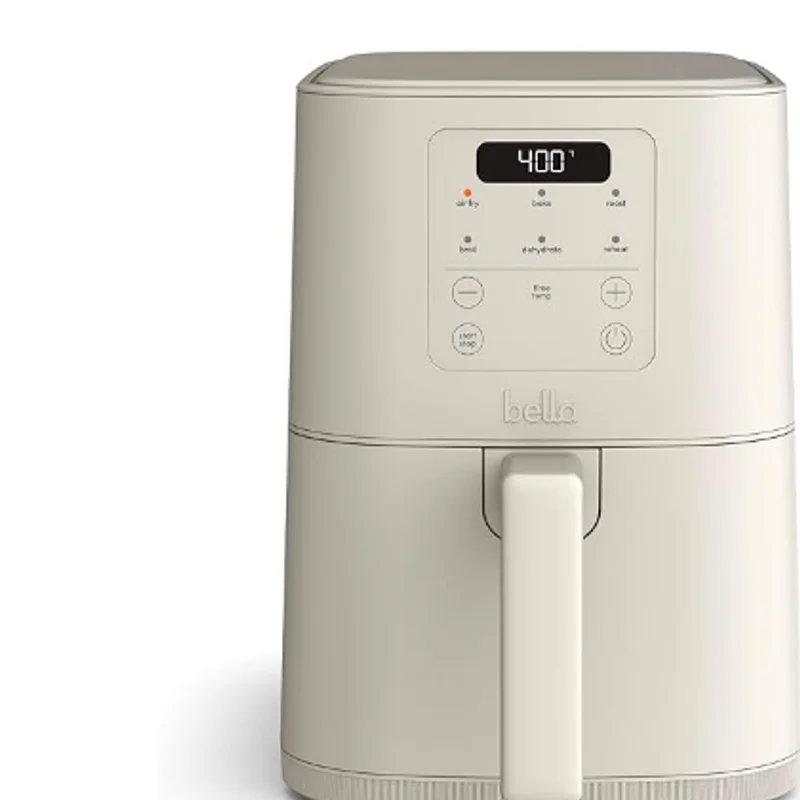
In a typical air fryer, PTFE nonstick coatings appear on the cooking basket, crisper plate, and sometimes the drip tray. These are the surfaces that come into direct contact with your food at high temperatures. Major brands including Ninja, Cosori, Instant Pot, and Chefman apply PTFE coatings to most of their standard basket models.
Air fryers present a higher PFAS exposure risk than conventional nonstick pans for several reasons. First, the enclosed cooking cavity traps heat more efficiently, meaning surface temperatures climb faster and stay elevated longer. Second, forced convection — the fan that makes an air fryer work — circulates superheated air directly over the coated surface, accelerating thermal degradation of the polymer. Third, many users preheat their air fryers empty, which removes the thermal buffer that food provides and allows basket surfaces to overshoot the target temperature.
Risk level: Air Fryers
Avoid
Evidence supports avoiding this ingredient or exposure where possible.
Under normal operating conditions, air fryers reach internal temperatures of 200-260°C (390-500°F). PTFE begins to degrade around 260°C, releasing ultrafine particles and fluoropolymer fumes. During empty preheating — a common step recommended by many air fryer manuals — basket surfaces can exceed 300°C (570°F) within minutes, well into the decomposition range. At 360°C (680°F), PTFE releases highly toxic gases including hydrogen fluoride and perfluoroisobutylene.
The acute toxicity of PTFE fumes is well-documented in veterinary medicine. Pet birds are extremely sensitive to fluoropolymer fume exposure — a condition called polymer fume fever (or "Teflon toxicity") that is often fatal to birds within hours. In humans, PTFE fume inhalation causes flu-like symptoms known as polymer fume fever, with chest tightness, fever, and shortness of breath. The Environmental Working Group has called overheated nonstick cookware a documented health hazard.
Dose context matters. The exposure from a single air fryer meal is small. But PFAS accumulate — every exposure adds to your body's total burden, and these chemicals do not break down. The average American already carries detectable PFAS levels from contaminated water, food packaging, and household products. For families trying to reduce cumulative exposure, the air fryer basket is one of the easier sources to eliminate by choosing PFAS-free alternatives.
How to shop for Air Fryers
When shopping for a PFAS-free air fryer, focus on the basket material rather than marketing claims. The safest option is a fully stainless steel basket with no coating whatsoever — what you see is bare metal. Several brands now offer stainless steel basket inserts or accessories.
Ceramic coatings are a legitimate alternative, but verify the specific technology. GreenPan's Thermolon ceramic coating is independently tested and free of PFAS, PFOA, lead, and cadmium. Generic "ceramic" claims from lesser-known brands may not meet the same standard. Ask manufacturers for third-party test results if they cannot name their coating technology.
When evaluating labels, look for products that state both "PTFE-free" AND "PFAS-free" — you need both terms. A product can be PFOA-free and still contain PTFE. Similarly, "nontoxic coating" and "green coating" have no regulatory definition and should be verified.
Check return policies before buying ceramic-coated models. Some ceramic baskets are prone to chipping or staining after several months of use, and a generous return window gives you a safety net. Stainless steel avoids this issue entirely — it is more durable but may require a light coating of oil to prevent sticking.
How to read the label
Look for these
Frequently asked questions
Do all air fryers have PFAS?
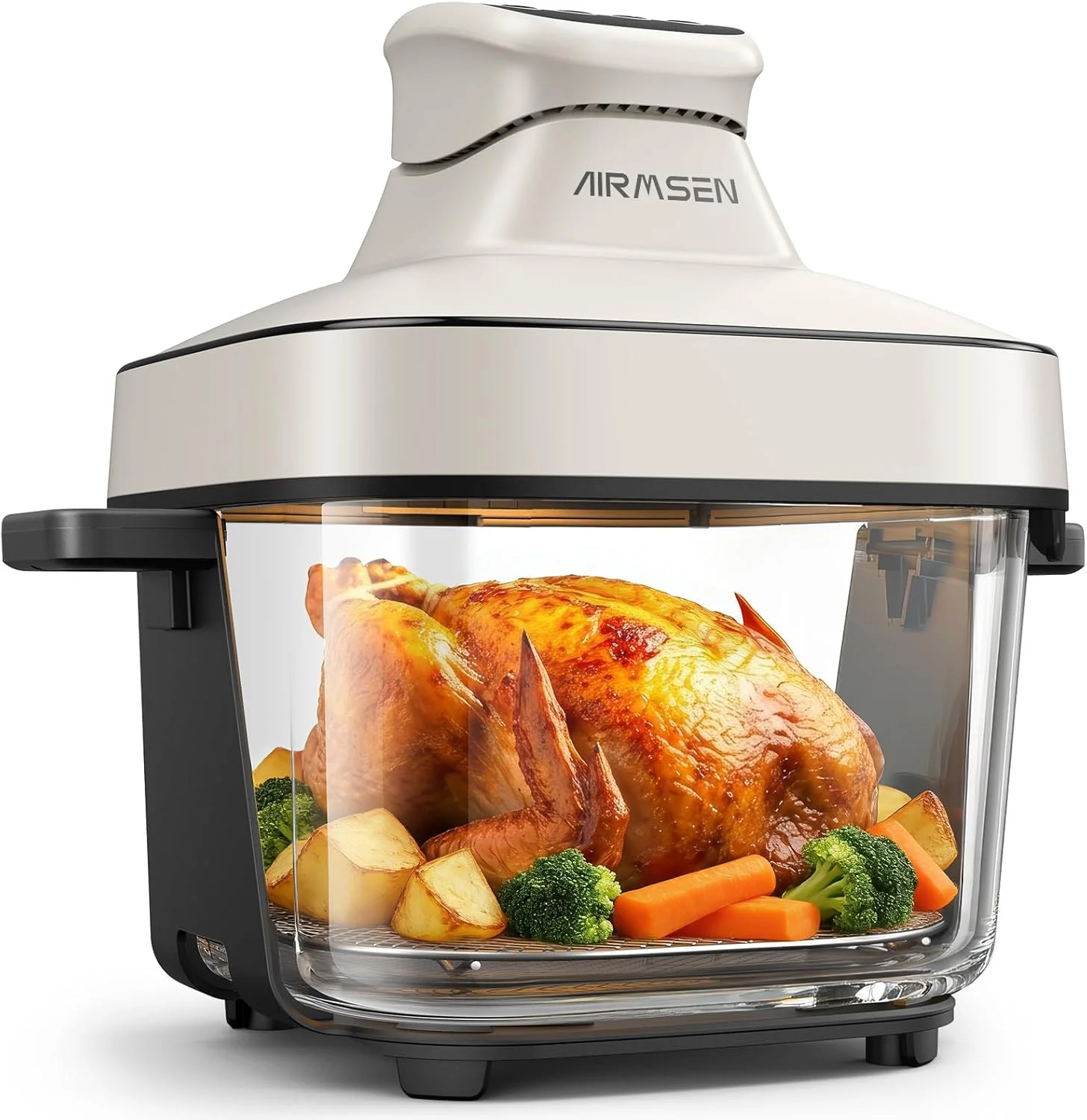
No, but the majority do. Most air fryer baskets from major brands like Ninja, Cosori, and Instant Pot use PTFE nonstick coatings, which are a type of PFAS. However, PFAS-free options exist — look for models with stainless steel baskets, glass chambers, or verified ceramic coatings like GreenPan Thermolon.
Is ceramic coating safe in air fryers?
Genuine ceramic coatings (like GreenPan's Thermolon) are PFAS-free and considered safe. However, the term "ceramic" is unregulated in cookware marketing. Some products labeled "ceramic-infused" or "ceramic-reinforced" still contain PTFE. Always confirm the specific coating technology and look for third-party testing documentation.