Does a "GOTS (Global Organic Textile Standard)" label actually mean anything?
GOTS is the leading certification for organic textiles. To carry the 'organic' GOTS label, a product must be at least 95% certified organic fiber and meet strict limits on processing chemicals, dyes, and wastewater from farm to finished product.
Renee · Founder & Lead Researcher, R3
We score every product the same way and never accept brand payment. We may earn a commission from some links, which never changes a score. How we stay independent.
Quick facts
Get the research before you buy
New picks and safety research, no spam, no sponsors.
The claim: GOTS certified means the product is guaranteed free of all toxins.
The reality: GOTS verifies organic fiber and bans many processing chemicals, but it is not a finished-product test for every heavy metal or PFAS. A 2024 study still found metals in organic tampons. The strongest brands pair GOTS with published lab testing.
GOTS, the Global Organic Textile Standard, is the most demanding organic certification for anything made of fabric or natural fiber. When you see a real GOTS label, a third party has verified not just that the cotton was grown organically, but that the entire chain that turned it into a product, the spinning, dyeing, processing, and even the wastewater and working conditions, met a single strict standard. That is the difference that matters: GOTS certifies the finished product, not just the field.
There are two GOTS label grades, and the gap between them is worth knowing:
Both grades must meet the same processing rules. GOTS bans or tightly limits the toxic inputs that textile manufacturing often relies on: no chlorine bleaching, restrictions on heavy-metal-based dyes, no formaldehyde, and limits on a long list of other hazardous chemicals. It also covers wastewater treatment and basic labor standards. Fiber producers must be certified to a recognized organic farming standard, and certifiers must be internationally accredited (ISO 65 / IFOAM), which is what stops 'organic' from being a word anyone can print.
Here is the trap GOTS solves. In the United States, a brand can write "organic cotton" on a box with very little behind it. The word describes how the cotton was farmed, and even that is hard to verify without a certificate. It says nothing about the dyes, the bleaching, or what an independent lab would find in the finished item.
This is not hypothetical. A 2024 University of California, Berkeley study found that tampons marketed as organic still carried heavy metals, with arsenic actually higher in the organic products. Organic farming does not remove metals that are already in the soil. A GOTS certificate does not test for every metal either, but it is a far stronger signal than an unverified 'organic' claim, because it forces third-party verification of the fiber sourcing and bans the worst processing chemicals.
GOTS shows up on organic cotton tampons, bamboo and organic sheets, baby clothing, and cloth diapers. In R3's tampon rankings, GOTS certification is the top tier of the organic-cotton signal, above an uncertified 'organic' claim, because it is the one most likely to be backed by paperwork. It is not the same as testing the finished product for PFAS or metals, so the strongest brands pair GOTS certification with published independent lab results.
A genuine GOTS product carries a license number and the certifier's name, not just a green logo. You can look up the brand or product in the GOTS public database at global-standard.org. If a brand says 'GOTS' but cannot produce a license number, treat it as a marketing claim, not a certification.
GOTS is the top tier of R3's organic-cotton signal for tampons, above an uncertified 'organic' claim, because it forces third-party verification. But it sits below published heavy-metal and PFAS lab results in what proves a tampon is actually clean.
GOTS is a positive signal, not a hazard. Its value is what it keeps out: chlorine bleaching (a dioxin source), heavy-metal-based dyes, formaldehyde, and many other restricted processing chemicals. Its limit is that it certifies fiber sourcing and processing, not a finished-product test for every contaminant, so it does not by itself guarantee a product is free of trace metals or PFAS.
GOTS is a voluntary private standard, not a government regulation, managed by the non-profit Global Standard gGmbH. Fiber producers must be certified to a recognized organic farming standard, and certifying bodies must hold international accreditation (ISO 65 / IFOAM). Because it is independently audited and traceable, it is far stronger than the unregulated word 'organic' on a label.
How to reduce exposure
Use GOTS to separate verified organic from label-only 'organic', then look for brands that add published third-party testing for metals and PFAS. Look up the license number in the GOTS public database if you want to confirm a claim.
Who is most at risk
Look for these
Watch out for
What this does NOT cover
GOTS certifies organic fiber content and clean processing. It is not a finished-product test for every heavy metal or for PFAS contamination from the supply chain, so it should be read alongside published lab testing, not as a replacement for it.
How to verify
Check for a GOTS license number and certifier name on the product, then verify it in the public database at global-standard.org. No license number means it is a marketing claim.
Timeline
2006
GOTS 1.0
The first unified Global Organic Textile Standard is released.
Ongoing
Revised every few years
GOTS updates its chemical and social criteria on a multi-year cycle.
What to look for instead
What this means for your family
Every product scored on safety, efficacy, and usability - so you know which products to trust around gots (global organic textile standard).
Get the Tampons shortlist, free
The picks that cleared safety, what to skip, and why price didn’t predict the winner.
No spam. Unsubscribe any time.
GOTS, the Global Organic Textile Standard, means a third party has verified that a textile is at least 95% certified organic fiber (for the 'organic' grade) and that the spinning, dyeing, and processing met strict chemical, wastewater, and labor rules. It certifies the whole chain from farm to finished product, not just the cotton field.
Yes, by a wide margin. In the U.S., 'organic cotton' on a box is largely unverified and describes only how the fiber was grown. GOTS is independently audited and traceable, with a license number you can look up, and it also bans many processing chemicals that an 'organic' claim says nothing about.
Not as a finished-product test. GOTS restricts heavy-metal-based dyes and many hazardous processing chemicals, but it does not lab-test the final product for every metal or for PFAS contamination. A 2024 study found metals in organic tampons, so the strongest brands pair GOTS with published independent lab testing.
The 'organic' grade requires at least 95% certified organic fiber. The 'made with organic materials' grade requires at least 70%. Both must meet the same processing and labor rules, but the 95% 'organic' grade is the stronger label to look for.
A genuine GOTS product shows a license number and the certifier's name, not just a logo. You can confirm it in the GOTS public database at global-standard.org. If a brand cannot produce a license number, treat 'GOTS' as a marketing claim rather than a certification.

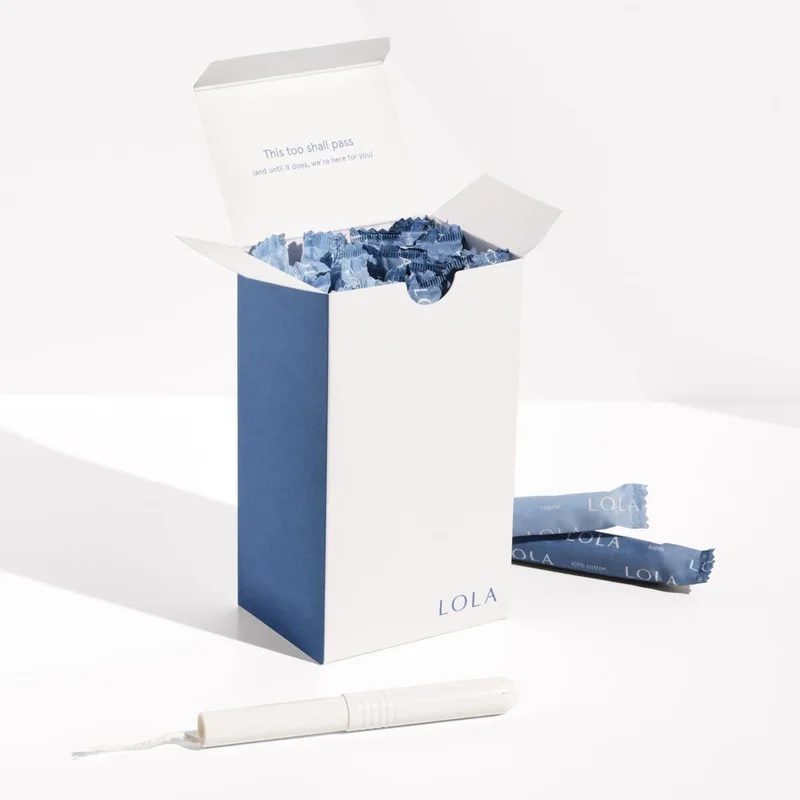
Lola
LOLA 100% Organic Cotton Tampons, Regular, Cardboard Applicator
GOTS$14.99

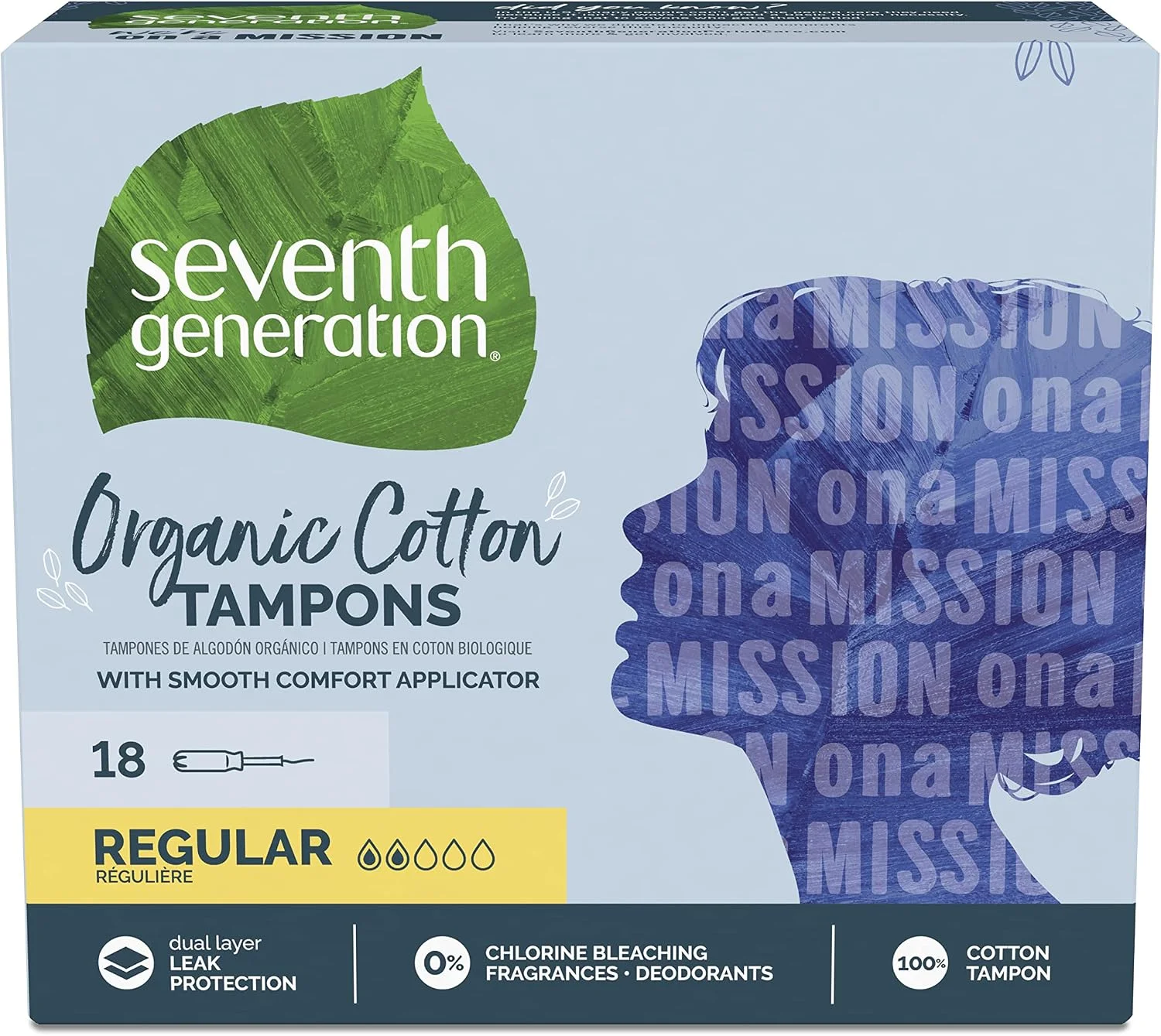
Seventh Generation
Seventh Generation Organic Cotton Tampons, Regular, Comfort Applicator
GOTS$7.49

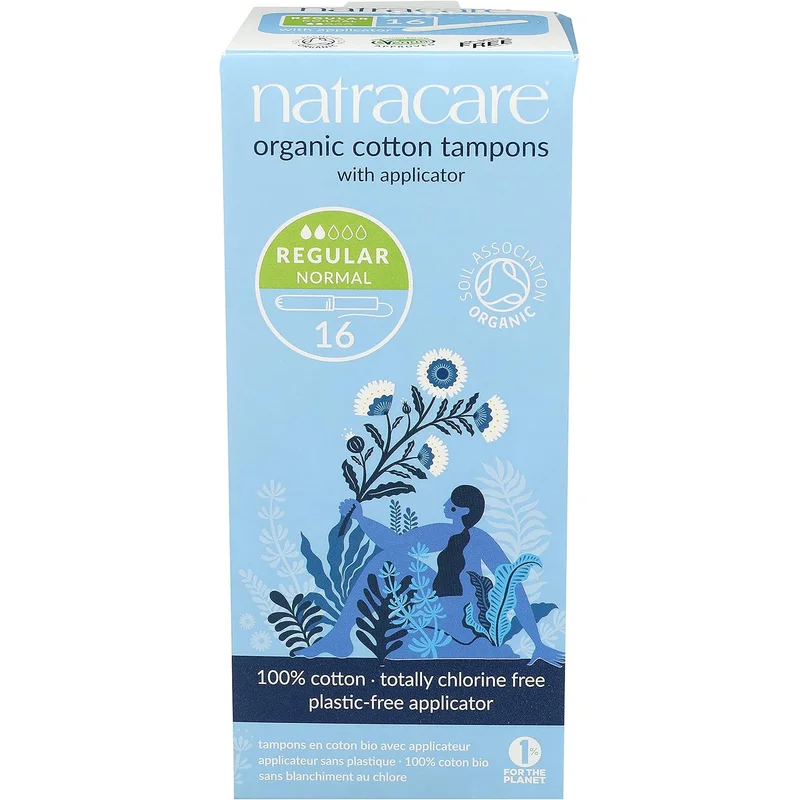
Natracare
Natracare Organic Cotton Tampons, Regular, Cardboard Applicator
GOTS$8.99

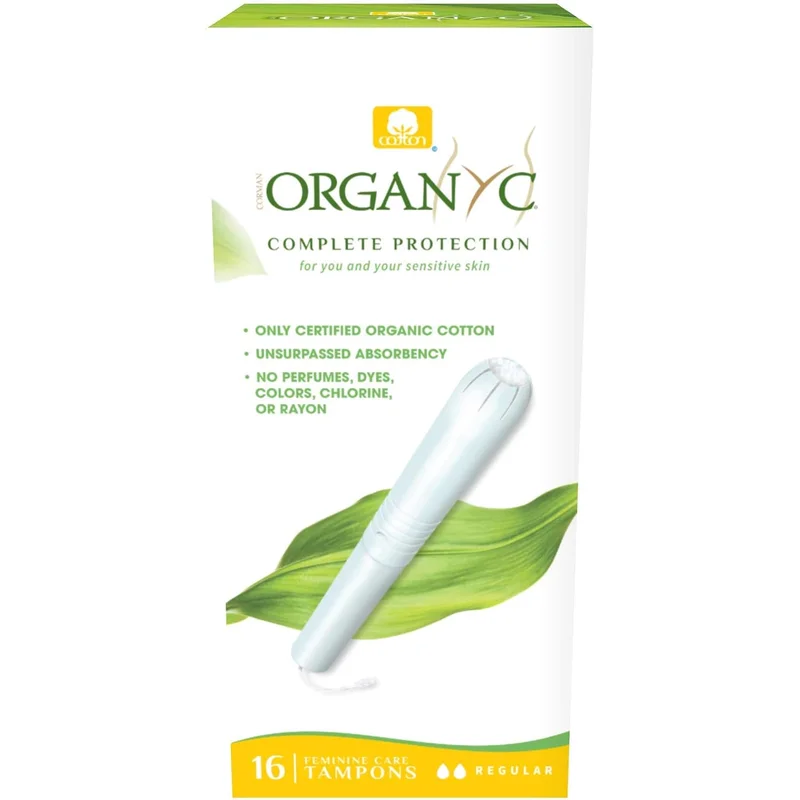
Organyc
Organyc Complete Protection Organic Cotton Tampons, Regular, Cardboard Applicator
GOTS$8.49

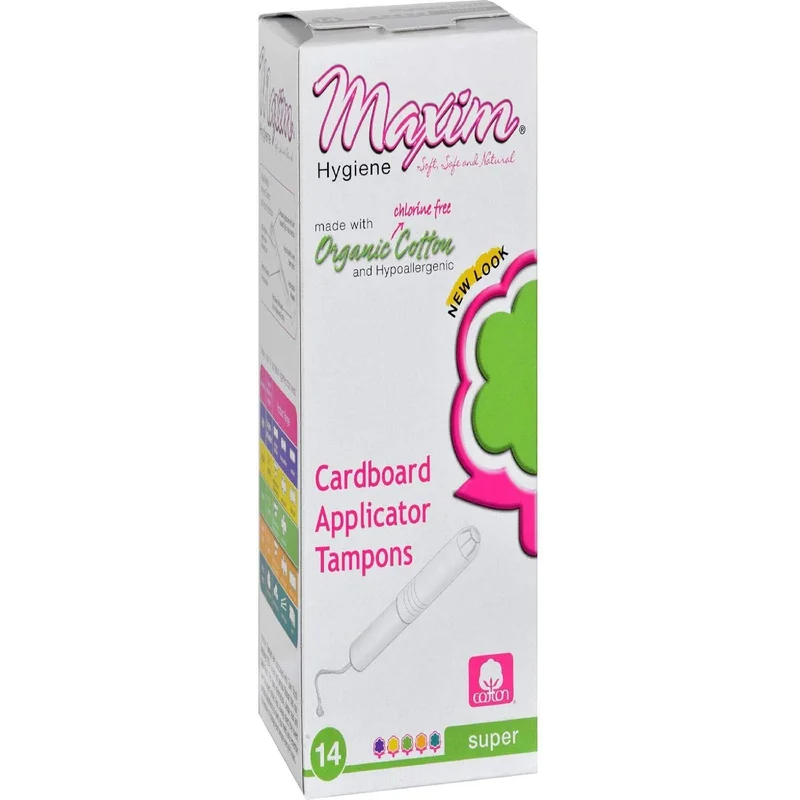
Maxim Hygiene
Maxim Hygiene 100% Certified Organic Cotton Tampons, Cardboard Applicator, Unscented
GOTS$8.99