Does a "EPA Safer Choice" label actually mean anything?
A voluntary US EPA certification program that reviews every ingredient in a cleaning or laundry product against health and environmental safety criteria before the product can display the Safer Choice label. Unlike self-declared marketing claims, Safer Choice requires brand submission of full ingredient formulas, EPA review against a prohibited substance list and toxicity criteria, and ongoing compliance audits. It is the most credible government-backed certification available for household cleaning products in the United States.
Renee · Founder & Lead Researcher, R3
We score every product the same way and never accept brand payment. We may earn a commission from some links, which never changes a score. How we stay independent.
Quick facts
Get the research before you buy
New picks and safety research, no spam, no sponsors.
Walk into any grocery store and you will see dozens of cleaning products making safety-adjacent claims: plant-based, natural, non-toxic, gentle on skin, eco-friendly. None of those phrases require external review. Any brand can print them on any bottle without regulatory approval, independent testing, or any verification at all. They are marketing language.
The EPA Safer Choice label is different. It is the only label on a US household cleaning product that reflects a government-conducted ingredient-by-ingredient safety review before the product reaches store shelves. Understanding exactly what that review involves, what standards it applies, and where its honest limitations lie is one of the most useful things a parent can learn about cleaning product safety.
The Safer Choice program is administered by the United States Environmental Protection Agency, specifically through its Design for the Environment (DfE) framework within the Office of Pollution Prevention and Toxics. The program was launched in 2012 as a successor to the earlier Design for the Environment labeling initiative, retaining the same core technical infrastructure while giving it a more consumer-recognizable name and label.
The program is voluntary. No brand is required to seek certification. But if a brand wants to display the Safer Choice label, it must submit its complete product formula to the EPA and pass a review process. The EPA reviews every ingredient in the formula, including surfactants, solvents, preservatives, pH adjusters, fragrances, colorants, and any other functional or incidental components. Each ingredient is evaluated against the Safer Choice Standard, a publicly available technical document that defines which chemicals are acceptable, which require additional documentation, and which are categorically prohibited.
The resulting label is one of the few signals on a cleaning product that reflects actual third-party (in this case, government-agency) scrutiny of the formula rather than a self-described marketing position.
The Safer Choice Standard organizes ingredients into five functional categories for evaluation purposes: intentional functional ingredients, fragrance ingredients, colorants, preservatives, and processing aids or impurities. Each category has its own review criteria.
For functional ingredients, the EPA evaluates each component against an internal database of chemical safety data, peer-reviewed toxicology literature, and regulatory lists from agencies including the National Toxicology Program, the International Agency for Research on Cancer, and the EU's REACH chemical regulation system. The program uses a classification approach with three tiers:
Green (most preferred): The ingredient has been reviewed and found to have a low concern profile across the key hazard endpoints the EPA evaluates. These endpoints include acute toxicity (immediate harm at high doses), skin and eye irritation, skin sensitization, carcinogenicity, reproductive and developmental toxicity, aquatic toxicity, and persistence or bioaccumulation in the environment. A green-listed ingredient can be used in a Safer Choice certified product without additional restrictions.
Yellow (use with restrictions): The ingredient has some concern in one or more hazard categories but can be used if specific conditions are met -- such as a concentration limit that keeps exposure below a threshold of concern, or if it is used only in products where a particular exposure route (such as spray inhalation) does not apply.
Red (not permitted in Safer Choice products): The ingredient has a hazard profile that disqualifies it from the program. Red-listed chemicals include known or likely human carcinogens, chemicals with endocrine-disrupting properties at low doses, reproductive or developmental toxicants, and persistent bioaccumulative toxic (PBT) substances. Formaldehyde releasers, chlorinated solvents, alkylphenol ethoxylates (APEs), nitrosamines, and a number of other commonly used industrial cleaning chemicals fall into this category.
The program maintains an internal Safer Chemical Ingredients List (SCIL) that documents reviewed chemicals with their designations. Formulators working toward Safer Choice certification can consult the SCIL during product development. When a brand submits a formula, the EPA cross-references every ingredient against the SCIL and applies the relevant criteria.
Ingredients that have not yet been reviewed by the program require additional documentation before the EPA can assign a designation. Brands seeking certification with novel or less commonly used ingredients must provide toxicological data supporting a green or yellow designation before the ingredient can be approved for use in a certified formula.
Fragrance is one of the most important and most nuanced aspects of the Safer Choice program. It is also where the certification has its clearest limitation for families with fragrance sensitivities.
Safer Choice requires that all fragrance ingredients in a certified product be screened against the program's fragrance criteria. The program works with the Research Institute for Fragrance Materials (RIFM) database and applies EPA hazard criteria to fragrance components. Fragrance ingredients that are classified as carcinogens, reproductive toxicants, or environmental sensitizers at the level of the RIFM criteria are prohibited.
However, and this is critical: the specific fragrance components used in a certified product are not publicly disclosed. Under Safer Choice, fragrance is treated as a trade secret. A brand certifies that its fragrance meets the Safer Choice fragrance criteria, and the EPA reviews this against its criteria, but the full list of individual fragrance compounds is not made public on the label or in any publicly accessible database. The label indicates that fragrance has been evaluated, not what compounds are present.
This means that for families who want to know the precise fragrance chemistry, or for families with documented fragrance allergies who need to verify absence of specific sensitizing compounds, the Safer Choice label is not a complete answer. A Safer Choice certified product with fragrance has been reviewed against a set of hazard criteria, but it is not the same level of disclosure as a product that publishes its full fragrance compound list or carries the fragrance-free designation.
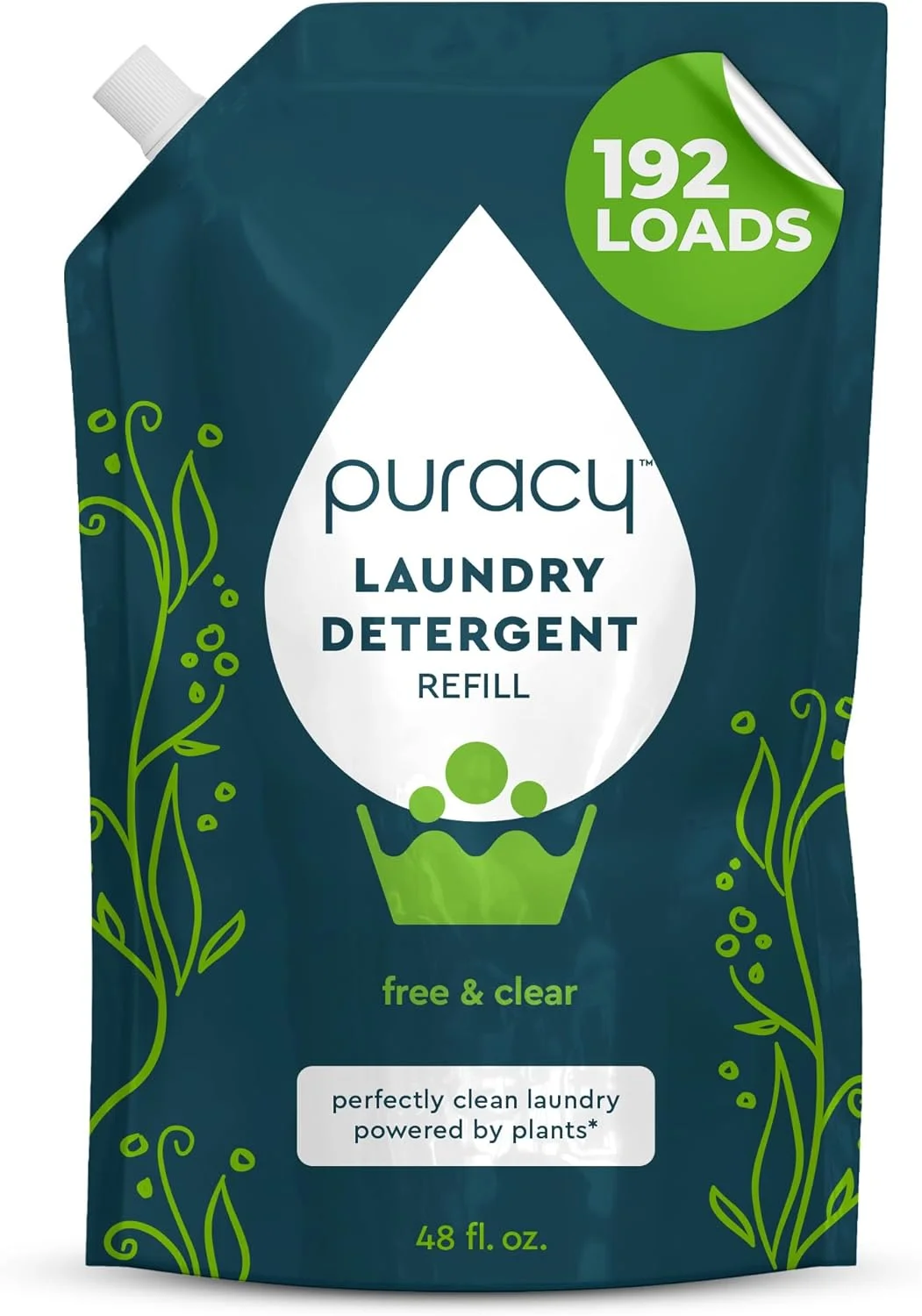
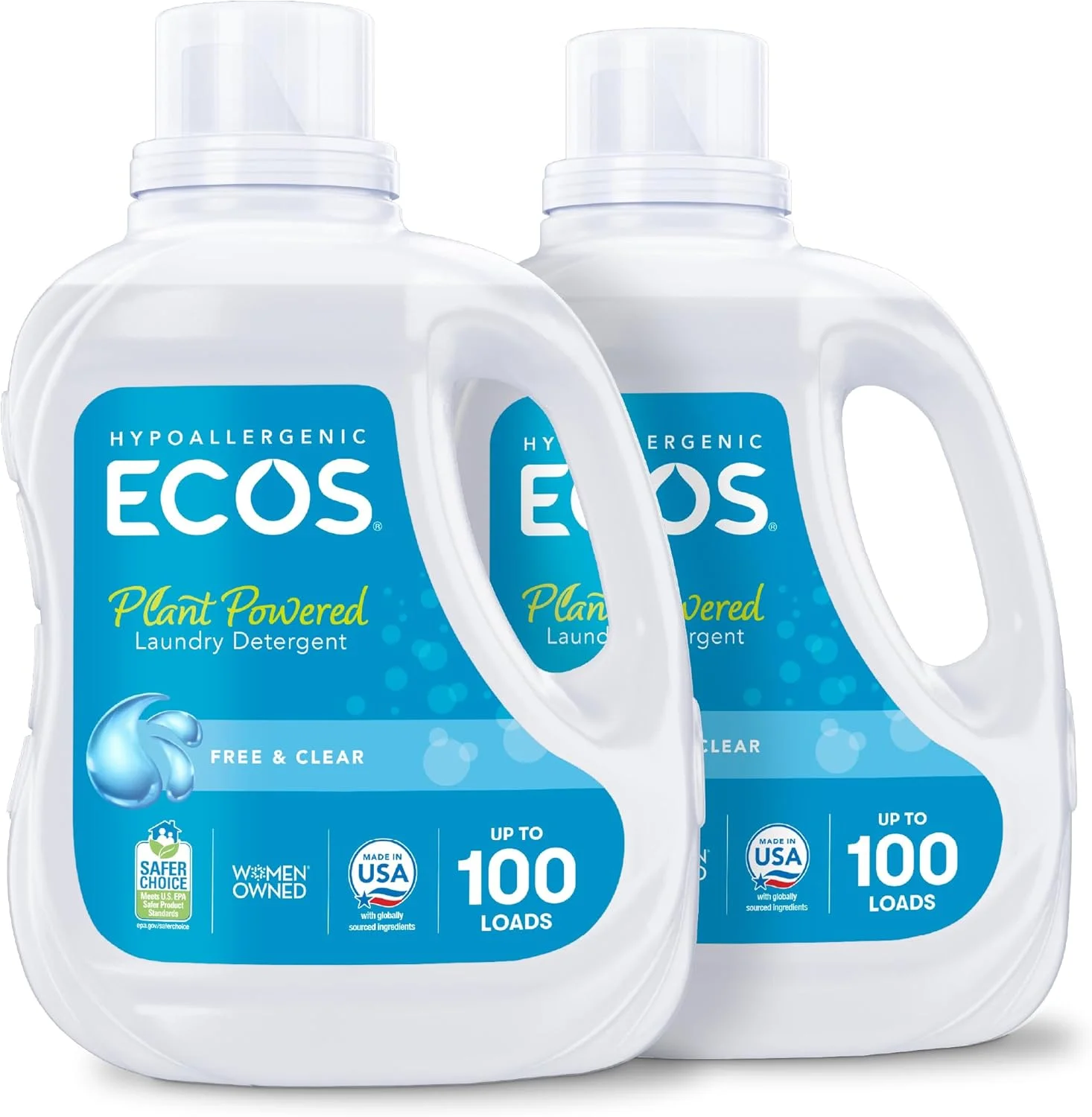
For families prioritizing fragrance avoidance, the most protective choice within the Safer Choice ecosystem is a certified product that is also genuinely fragrance-free, such as the ECOS Free and Clear and Puracy Free and Clear formulas described below. These products have passed the Safer Choice ingredient review without any fragrance component.
Beyond ingredient-level chemical safety, the Safer Choice Standard includes requirements in several other areas that distinguish it from most self-declared claims:
Product performance: Safer Choice certified products are expected to perform effectively for their intended use. The EPA does not want the program to signal a trade-off where "safer" means "does not work." While performance testing requirements are less rigorous than, for instance, NSF performance standards for water filters, the inclusion of any performance consideration is unusual for a chemical safety program.
Packaging sustainability: The Safer Choice Standard requires that certified products use packaging that minimizes waste and environmental impact. Concentrated formulas, refillable systems, and reduced-plastic packaging receive favorable consideration. This is why several Safer Choice certified products, including ECOS, use packaging with post-consumer recycled content.
pH safety: The standard includes pH requirements to ensure products do not cause skin or eye injury under normal use conditions.
VOC content: For products used in ways that create inhalation exposure, the standard includes limits on volatile organic compound content to reduce indoor air quality impacts. This is particularly relevant for spray cleaners and disinfectants, but also applies to laundry products that may off-gas during a hot wash cycle.
Continuous compliance: Certification is not a one-time event. Brands with Safer Choice certification are required to notify the EPA of any formula changes and submit them for re-review. The EPA conducts periodic audits of certified products. If a product is reformulated to include a non-approved ingredient, the brand can lose certification. This ongoing monitoring is what distinguishes Safer Choice from a one-time third-party test certificate.
Parents trying to evaluate cleaning product labels will encounter several different certification programs. Understanding how Safer Choice compares helps clarify what each one offers.
EPA Safer Choice vs. EWG Verified: EWG Verified is administered by the Environmental Working Group, a non-governmental organization. EWG Verified generally applies stricter transparency requirements than Safer Choice: products must disclose all ingredients, including fragrance components individually, at concentrations above a disclosure threshold. EWG Verified also prohibits a broader list of chemicals than Safer Choice in some categories. However, EWG is a private organization rather than a government agency, and its criteria reflect EWG's own science team rather than a federal regulatory standard. Both certifications are meaningful; they reflect different but overlapping philosophies about which chemicals constitute acceptable risk and how much disclosure is required.
EPA Safer Choice vs. USDA Organic: USDA Organic certification applies to agricultural products and certain personal care products that contain agricultural ingredients. For cleaning products, USDA Organic certification means a portion of the formula derives from certified organic agricultural sources. It does not mean the product has been reviewed for chemical safety of synthetic ingredients, because the certification is about sourcing rather than hazard assessment. A product can be USDA Organic certified and contain synthetic fragrances or preservatives that have not been evaluated for safety. Safer Choice is fundamentally about hazard assessment; USDA Organic is about agricultural sourcing standards. They address different questions.
EPA Safer Choice vs. Leaping Bunny: Leaping Bunny certification, administered by Cruelty Free International, certifies that a product and its ingredients were not tested on animals. It has no chemical safety criteria and no requirement for ingredient hazard review. A Leaping Bunny certified product may contain any number of chemicals that Safer Choice would prohibit. These certifications address different concerns and should not be compared as equivalents.
EPA Safer Choice vs. NSF/ANSI 61 (for water treatment products): NSF/ANSI 61 is a performance and safety standard for products that come into contact with drinking water -- water treatment chemicals, filters, plumbing components. It is a different program for a different product category. Not relevant for household cleaning products.
EPA Safer Choice vs. self-declared "plant-based" or "non-toxic": There is no regulatory definition for plant-based, natural, non-toxic, eco-friendly, or similar terms as applied to cleaning products in the United States. No review is required, no standard must be met, no verification is conducted. These are marketing terms. EPA Safer Choice is not a marketing term; it reflects an actual review process with documented criteria and ongoing compliance monitoring.
One of the most common questions about Safer Choice certification in the context of laundry detergents concerns 1,4-dioxane, the probable human carcinogen that forms as an invisible contaminant during the manufacturing of ethoxylated surfactants.
The Safer Choice Standard prohibits ingredients that are "reasonably anticipated to be human carcinogens" or have excessive 1,4-dioxane generation potential. In practice, this means ethoxylated surfactants with high potential for 1,4-dioxane byproduct formation are excluded from the approved ingredient list. A Safer Choice certified laundry detergent either uses non-ethoxylated surfactants (which cannot generate 1,4-dioxane by the ethoxylation pathway) or uses ethoxylated surfactants that have been verified to meet the program's safety threshold.
However, Safer Choice does not currently mandate third-party finished-product testing for 1,4-dioxane as a routine compliance requirement. The program's primary control is at the ingredient review stage. This means Safer Choice certification is a meaningful proxy for low 1,4-dioxane risk but is not a guarantee of any specific ppm threshold in the finished product. The New York State 1 ppm legal limit for laundry detergents (effective December 31, 2023) is the current legal floor for products sold in New York, and most nationally distributed brands have reformulated to meet it. Safer Choice certified products are expected to be at or below that threshold given their ingredient review, but the certification does not replace a 1,4-dioxane certificate of analysis from third-party testing.
For families seeking the highest possible certainty on 1,4-dioxane, the best approach is to look for Safer Choice certification combined with a brand that publishes third-party 1,4-dioxane testing results, or to choose products formulated entirely without ethoxylated surfactants, which cannot generate 1,4-dioxane through this pathway at all.
The certification process involves several steps that distinguish Safer Choice from voluntary industry initiatives with no external review:
Formula submission: The brand submits a complete product formula to the EPA Safer Choice program. This is a confidential submission. The EPA does not publish the formula, but it reviews every component.
Ingredient evaluation: The EPA's technical team reviews each ingredient against the Safer Choice Standard. Ingredients that are on the SCIL with a green designation proceed straightforwardly. Ingredients not yet reviewed, or with yellow designations, may require additional documentation. Ingredients with red designations disqualify the product unless reformulated.
Fragrance review: The brand's fragrance supplier provides information to demonstrate that the fragrance components meet the Safer Choice fragrance criteria. This review is conducted under confidentiality between the supplier and the EPA.
Product evaluation: Beyond the ingredient list, the EPA reviews the product's safety data sheet, pH, packaging, and VOC profile.
Annual re-certification: Certified brands must renew their certification annually, confirm there have been no formula changes, and notify the EPA of any ingredient substitutions. Major reformulations require re-review.
There is no application fee for Safer Choice certification. The program is funded by the EPA as a public benefit initiative. This is one of the meaningful differences from private third-party certifications: the cost structure does not create a financial incentive for the certifying body to approve borderline cases.
Two products in the R3 laundry-detergent database carry EPA Safer Choice certification:
ECOS Plant-Powered Laundry Detergent Free and Clear is manufactured by Earth Friendly Products (ECOS), one of the longest-standing Safer Choice certified brands. The Free and Clear variant is both Safer Choice certified and fragrance-free, making it one of the highest-confidence options for families managing eczema or fragrance sensitivities. ECOS also publishes third-party 1,4-dioxane testing results, providing additional transparency beyond the certification itself. ECOS holds the National Eczema Association Seal of Acceptance.
Puracy Natural Laundry Detergent Free and Clear is Safer Choice certified and formulated with plant-derived, glucoside-based surfactants. The glucoside surfactant system avoids the ethoxylation pathway that generates 1,4-dioxane, and Puracy has published statements confirming testing below 1 ppm. Like ECOS, the Free and Clear variant is genuinely fragrance-free.
Two additional R3 products in this category are worth knowing in the context of Safer Choice, even though they do not carry the certification:
Branch Basics Concentrate is not Safer Choice certified but is formulated without ethoxylated surfactants (using decyl glucoside and lauryl glucoside instead), which means it cannot contain 1,4-dioxane through the ethoxylation pathway. Branch Basics prioritizes full ingredient transparency and publishes its complete formula.
Blueland Laundry Detergent Tablet Unscented is also not Safer Choice certified but uses surfactants derived from coconut and corn without ethoxylation, discloses its full ingredient list, and uses plastic-free packaging. For families prioritizing zero-waste alongside safety, Blueland is a strong alternative to certified liquid options.
In R3's scoring methodology for laundry detergent, EPA Safer Choice certification is a meaningful safety signal but is evaluated alongside ingredient transparency, 1,4-dioxane test data, fragrance status, and formulation approach. Safer Choice certification receives weight in the scoring model; products formulated without ethoxylated surfactants and with full ingredient disclosure can score equivalently or higher by addressing the same risks through structural formulation choices.
Unlike some industry certifications where the label itself is the only verification available, Safer Choice certification can be independently confirmed through EPA public databases:
This search is free and publicly accessible. If a product claims Safer Choice certification but does not appear in the EPA's own database, the claim is not verified. This is particularly important when evaluating products from brands that use general "EPA-recognized" or "EPA-compliant" language without specifically stating Safer Choice certification -- these terms do not mean the same thing as certification, and the distinction matters.
The Safer Choice label itself appears as a small, standardized EPA logo. It is not a third-party organization's badge; it carries the EPA name and carries the legal implications that come with a government agency endorsement. Misuse of the label is a federal matter, which provides a deterrent against counterfeiting that private certification marks do not have.
For laundry detergent, EPA Safer Choice certification is the strongest government-backed safety signal available. It means every ingredient -- surfactants, enzymes, preservatives, fragrance if present -- has been reviewed against federal health and environmental criteria. Among R3-scored options, ECOS Plant-Powered Free and Clear and Puracy Natural Free and Clear both hold Safer Choice certification and are fragrance-free. Families who want to go further than certification can add Branch Basics Concentrate and Blueland Laundry Tablet Unscented to their consideration set -- these products avoid ethoxylated surfactants entirely, structurally eliminating the 1,4-dioxane formation pathway rather than managing it through ingredient selection.
Look for these
What this does NOT cover
Specific fragrance compound disclosure: fragrance ingredients are reviewed against EPA criteria but not publicly listed. Families with documented fragrance allergies who need to verify absence of specific compounds cannot get that information from the Safer Choice label alone. Finished product testing for 1,4-dioxane: Safer Choice screens ingredients but does not require routine third-party testing of the finished product for 1,4-dioxane at a specific ppm threshold. This is a gap for some ethoxylated surfactant-based formulas. Microbial disinfection efficacy: Safer Choice is a chemical safety certification, not a disinfection efficacy standard. It does not verify that a certified cleaner kills specific pathogens. Packaging material safety (beyond sustainability criteria): the standard addresses packaging waste and sustainability, but does not evaluate packaging materials for chemical migration into the product. Agricultural sourcing standards: Safer Choice does not address whether ingredients are organically farmed, non-GMO, or fair-trade sourced. Performance testing beyond a general expectation of efficacy: cleaning performance is not rigorously quantified as part of certification. Non-cleaning product categories: EPA Safer Choice is specifically designed for cleaning, laundry, and related chemical products. It does not apply to food contact materials, personal care products, cookware coatings, or other product types.
How to verify
1. Go to epa.gov/saferchoice/products and search by product name or brand. 2. Confirm the product appears in the certified product listing with an active certification date. 3. Verify the specific product variant matches -- certifications apply to specific formulas, and a brand may have some certified and some non-certified products under the same name. 4. For 1,4-dioxane specifically, ask whether the brand publishes third-party testing results in addition to holding Safer Choice certification. 5. Check whether the product is fragrance-free or contains evaluated fragrance -- both can be Safer Choice certified, but they represent different exposure profiles for fragrance-sensitive families.
What this means for your family
Every product scored on safety, efficacy, and usability - so you know which laundry detergent to trust around epa safer choice.
Get the Laundry Detergent shortlist, free
The picks that cleared safety, what to skip, and why price didn’t predict the winner.
No spam. Unsubscribe any time.
A brand must submit its complete product formula to the EPA, which reviews every ingredient against the Safer Choice Standard. Each ingredient is evaluated for acute toxicity, skin and eye irritation, carcinogenicity, reproductive and developmental toxicity, endocrine disruption, and environmental persistence. Ingredients on the prohibited list disqualify the product. Fragrance ingredients are reviewed against EPA fragrance criteria. The brand must also demonstrate that the product performs effectively, meets pH and VOC requirements, and uses sustainable packaging. After initial certification, brands must renew annually and notify the EPA of any formula changes.
No. EPA Safer Choice is administered by the federal Environmental Protection Agency and reflects government-conducted ingredient review. EWG Verified is administered by the Environmental Working Group, a non-governmental organization. EWG Verified generally requires more fragrance ingredient transparency -- certified products must disclose individual fragrance compounds above concentration thresholds, which Safer Choice does not require. Both certifications prohibit many of the same harmful chemicals, but they use different standards developed by different organizations. A product can hold one but not the other; some hold both.
Not with certainty. Safer Choice screens ingredients and prohibits ethoxylated surfactants with high 1,4-dioxane generation potential, making certified products substantially lower risk. However, the certification does not require third-party finished-product testing for 1,4-dioxane at a specific ppm threshold. For the highest confidence, look for Safer Choice certification combined with published third-party test results showing 1,4-dioxane below 1 ppm, or choose products formulated entirely without ethoxylated surfactants.
Yes. Safer Choice does not require fragrance-free formulas. It requires that fragrance ingredients be reviewed against the program's fragrance safety criteria, which prohibit sensitizing compounds and carcinogens in fragrance. A product with a screened, compliant fragrance can be certified. However, the specific fragrance compounds used are not disclosed publicly -- fragrance is treated as a trade secret. For families with fragrance allergies or sensitivities, a Safer Choice certified AND fragrance-free product provides more certainty than a certified but fragranced product.
No. The EPA Safer Choice program does not charge application or certification fees. It is a publicly funded government program. This is an important distinction from private certifications where the certifying body's revenue comes from the brands it certifies, which can create pressure to approve borderline cases. The absence of a fee structure reduces that incentive.
Search the EPA's official certified product database at epa.gov/saferchoice/products. Enter the product or brand name and confirm the specific product appears with an active certification. Because the Safer Choice label carries the EPA name, misrepresentation of Safer Choice certification has federal legal exposure, which provides a stronger deterrent than misuse of private certification marks.
Safer Choice is specifically designed for cleaning, laundry, and related chemical products -- including laundry detergents, dish soaps, surface cleaners, floor cleaners, and degreasers. It does not apply to personal care products like shampoos or lotions, food contact materials, cookware coatings, or other product types. For personal care products, EWG Verified and MADESAFE are more relevant certification programs.
Plant-based, natural, non-toxic, and eco-friendly are unregulated marketing terms in the United States. No review is required, no standard must be met, and no government agency verifies the claim before the product reaches shelves. Safer Choice reflects an actual EPA review process with documented criteria, a prohibited substances list, ongoing compliance monitoring, and annual re-certification. A product bearing the Safer Choice label has had every ingredient examined by a government agency. A product bearing only marketing language has had nothing examined by anyone outside the company.