Compare Dutch Oven
Staub Cast Iron Round Cocotte Dutch Oven (5.5 qt) scores higher on safety - here's why.
The most important dimensions, side by side.
7-day free trial · Cancel anytime
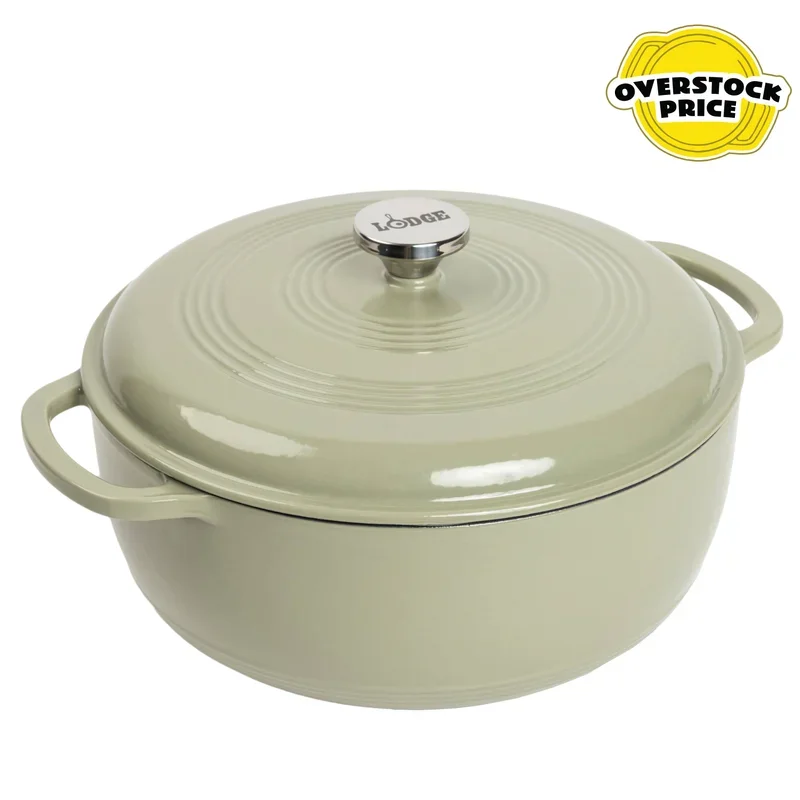
Lodge's interior enamel has been tested against US food-safety standards and confirmed compliant — that's a real, documented result, not just a marketing claim. The difference from EU-certified alternatives is that LFGB imposes stricter heavy-metal limits and requires ongoing batch testing. Lodge clears the US bar; it doesn't clear the higher EU bar. For everyday family cooking, that's a reasonable trade at this price.
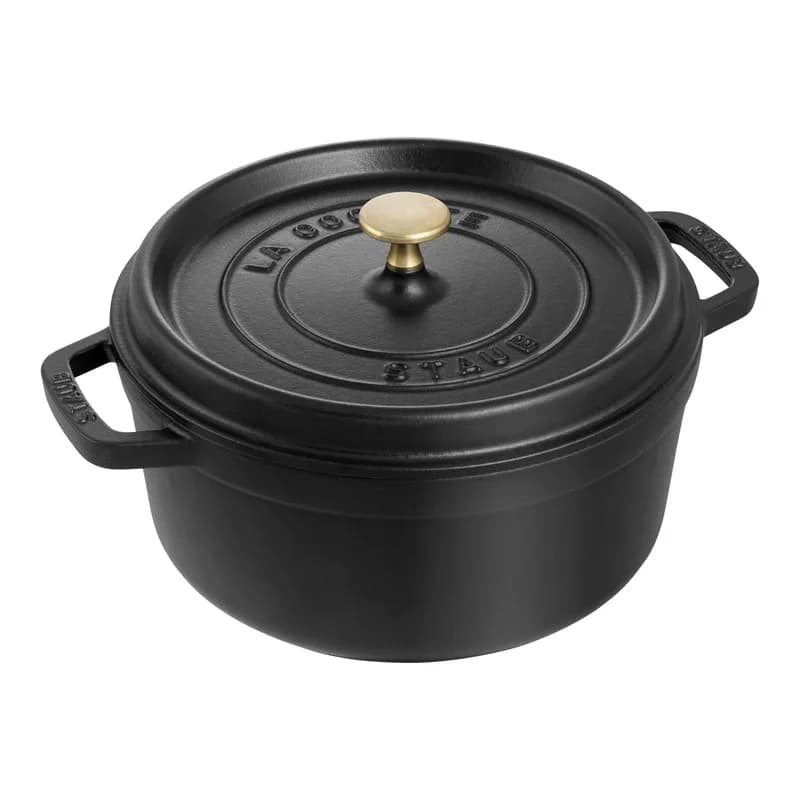
The interior is French porcelain enamel — a glass-like surface fused to the cast iron that won't leach lead or cadmium into your food. Staub manufactures under strict EU standards that legally require this. It's a strong safety baseline, even though no US lab has independently confirmed it batch by batch.
No independent third-party safety certification — like LFGB or NSF/ANSI 51 — has been issued for this product. Lodge's regulatory compliance is documented through ASTM testing and Prop 65 disclosure, which is meaningful but not the same as independent lab certification. If having a formal third-party cert matters to you, LFGB-certified alternatives like Le Creuset carry that credential.
No independent lab has tested this product's enamel for the US market — there's no NSF certification or third-party safety report on file. The brand's EU manufacturing standards are strong and legally enforced, but if independently verified lab results matter to you, they're not available here yet.
Five hundred degrees is the number that unlocks the full Dutch oven recipe book. No-knead bread needs it for proper crust and rise. High-heat searing before a braise needs it. Aggressive roasting needs it. Lodge hits this mark, which means you're not giving anything up.
Safe to 500°F means you can bake no-knead bread (which actually needs that heat for proper crust and oven spring), sear at high heat before a braise, or roast aggressively. No temperature ceiling gets in your way.
Six quarts handles a whole chicken, a double batch of chili, or six portions of soup without crowding. It's the size that fits a family of four to six without becoming a restaurant stockpot that's awkward on a home burner.
5.5 quarts is the sweet spot for families — fits a whole chicken, a full pot of soup for 6, a large batch of chili, or a standard no-knead bread loaf. Big enough to be truly useful, not so large it's awkward on a home burner. If you regularly cook for 8 or more, consider the 7.25 qt instead.
The lid seals tightly enough that steam stays in the pot — your braise keeps its moisture throughout the cook. What it doesn't do is actively direct that condensation back over the food the way Staub's interior nubs do. For pot roast, chili, or braised chicken, you won't notice the difference. For a long daube or precision wine braise, the self-basting design has a real edge.
The lid has interior spikes that collect steam and drip it back over the food in a steady, even pattern — so your braise is essentially self-basting the whole time without you touching it. That's the difference between meat that's been continuously moistened and meat that dried out while steam dripped off randomly. The spikes take a bit more effort to clean; a soft brush gets into them easily.
Lodge is heavy. That's normal for cast iron and part of what makes it retain and distribute heat so well. Before you commit, think about how you'll move it: lifting a fully loaded 22+ pound pot in and out of your oven, and then pouring into serving bowls. If you already cook with cast iron regularly, this is familiar territory. If this is your first, try it at the store first.
This pot weighs 12.5 lbs empty. Add food, liquid, and the lid and you're moving 20+ lbs — at oven height, potentially. If you have a wall oven or any wrist or shoulder concerns, test your comfort with this weight before buying. It's not a dealbreaker for most people, but it becomes fatiguing if you use it several times a week.
Lodge backs this pot for your lifetime. If the enamel develops a manufacturing defect — not normal wear, not cosmetic sand-casting bumps, but an actual defect — they cover it. At under $90 with a lifetime commitment, that's a meaningful assurance. Read the full warranty terms to understand what 'limited' excludes, but the core protection is real.
Lifetime limited warranty means Staub stands behind the enamel and construction for the life of the pot. The 'limited' part matters — cosmetic sand-casting variations and misuse damage aren't covered. But genuine manufacturing defects in the enamel? Covered. Read the Zwilling warranty terms so you know the line before you need it.
The light cream interior is a genuine cooking advantage that usually costs two or three times more. You can see exactly when the fond on the bottom is turning golden, when your aromatics are caramelized, when the liquid has reduced to the right consistency. It will stain from turmeric and tomato — that's the trade-off — but baking soda paste handles most stains and it doesn't affect food flavor or safety.
The black interior is Staub's signature — and a real trade-off. You genuinely cannot see fond development, how far aromatics have browned, or how much your sauce has reduced without either experience or a flashlight. Experienced cooks often prefer this; they know what done looks like by smell and timing. If you're newer to braising, expect a learning curve that a cream-interior pot (like Le Creuset) wouldn't require.
Lodge says you can put this in the dishwasher — and after a long braise, that matters. Hand washing extends enamel life over many years of use, but knowing the dishwasher is there as a backup removes a friction point from weeknight cooking. The option is real, not a caveat-heavy asterisk.
You can run it through the dishwasher if needed — the brand confirms it won't cause immediate damage. But hand washing is the right move for an expensive pot you plan to use for decades. Dishwasher detergent is aggressive, and the enamel finish will hold up longer with a quick hand wash.
Everything you need to make the call — who each one is for, and who should skip it.
Go for it if you...
You want a serious, capable Dutch oven for family cooking but don't want to spend $250–$350 on Le Creuset or Staub — Lodge delivers the core cooking performance at a genuinely different price point.
You bake no-knead bread and need 500°F oven clearance in a pot with a tight-fitting lid — Lodge meets both requirements and is one of the most affordable ways to do so.
You care about monitoring fond and browning precisely — the light cream interior gives you the cooking visibility most buyers don't expect to find under $90.
You want lifetime warranty coverage on enameled cookware — Lodge backs this pot against manufacturing defects for the life of the original owner.
You cook for a family of four to six and need a pot that handles a whole chicken, a large batch of chili, or six portions of soup without sizing up — 6 quarts hits the family sweet spot exactly.
You already cook braises and stews regularly and want the best self-basting lid in the category — Staub's spike system genuinely outperforms a smooth lid for moisture return.
You bake no-knead bread and need a 500°F-safe pot that can handle the thermal demands of proper oven spring and crust.
You want premium enameled cast iron manufactured under EU LFGB standards (lead/cadmium-free, legally audited) at a step below Le Creuset pricing.
You cook for a family of 4–6 and need a pot large enough for a whole chicken, a full pot of chili, or a generous batch of soup without upgrading to a bulky 7qt.
You plan to keep this pot for decades and want lifetime warranty coverage on the enamel and construction.
The main thing to know
Lodge's enamel is US-tested and Prop 65 compliant — real documentation, not a marketing claim — but it doesn't reach the stricter LFGB standard that EU-manufactured Dutch ovens must meet. For families who cook acidic dishes frequently with young children and want the highest possible enamel documentation, the $150–$200 premium for Le Creuset or Staub is buying that certification ceiling.
The black interior is Staub's defining trade-off — experienced cooks love it, but if you're still learning to read a braise by sight, you'll find yourself guessing more than you should with a $299 pot.
Skip this if you...
You have young children and cook acidic dishes — tomato sauces, wine-heavy braises, citrus stews — multiple times a week, and want the highest documentation standard for the food-contact surface. LFGB-certified alternatives like Le Creuset or Staub provide that higher certification ceiling.
You or someone in your household has wrist issues or a wall oven above counter height — 13.5 lbs empty means a fully loaded pot exceeds 22 lbs, and that's a real physical demand for regular weekly use.
You want Staub-style self-basting performance where interior condensation nubs actively return moisture across the food surface — Lodge's flat lid doesn't have that feature.
You're new to Dutch oven cooking and want to monitor your braise visually — the black interior makes it much harder to see fond development and browning without significant experience.
You need to lift a heavy pot frequently, have wrist or shoulder limitations, or use a wall oven at height — 12.5 lbs empty and 20+ lbs loaded is real weight to manage regularly.
You require independently lab-verified safety certifications for US market distribution — Staub's LFGB compliance is strong but not the same as a lot-by-lot third-party test report.
Neither of these quite what you're looking for?
I've reviewed all Dutch Oven options at every price pointEvery Dutch Oven in our database is scored using R3's V4.2 deterministic rubric — the same inputs always produce the same score. For this comparison, we evaluated Lodge and Staub across 3 independent criteria: Safety (45%), Efficacy (25%), Usability (30%). No sponsored rankings. No paid placements.
Straight answers — no sponsored content, no filler.
I'd start with Staub Staub Cast Iron Round Cocotte Dutch Oven (5.5 qt) - it scored 6.7/10 overall in our V4.2 rubric. Safety carries 50% of our scoring weight, followed by performance (20%), usability (20%), and value (10%). Check which pillar matters most to your family and compare those specific scores.
We use our V4.2 deterministic rubric with four weighted pillars: Safety (50%), Efficacy (20%), Usability (20%), and Value (10%). Every score is reproducible - the same product data produces the same score. Each product is evaluated across multiple criteria within each pillar.
Not necessarily. The overall score reflects our weighted rubric, but your priorities may differ. If you care most about safety, compare the safety scores directly. If budget drives your decision, the value scores and prices tell a clearer story. The "right" pick is the one that matches what matters most to your family.
Not the right match? Explore these alternatives in the same category.