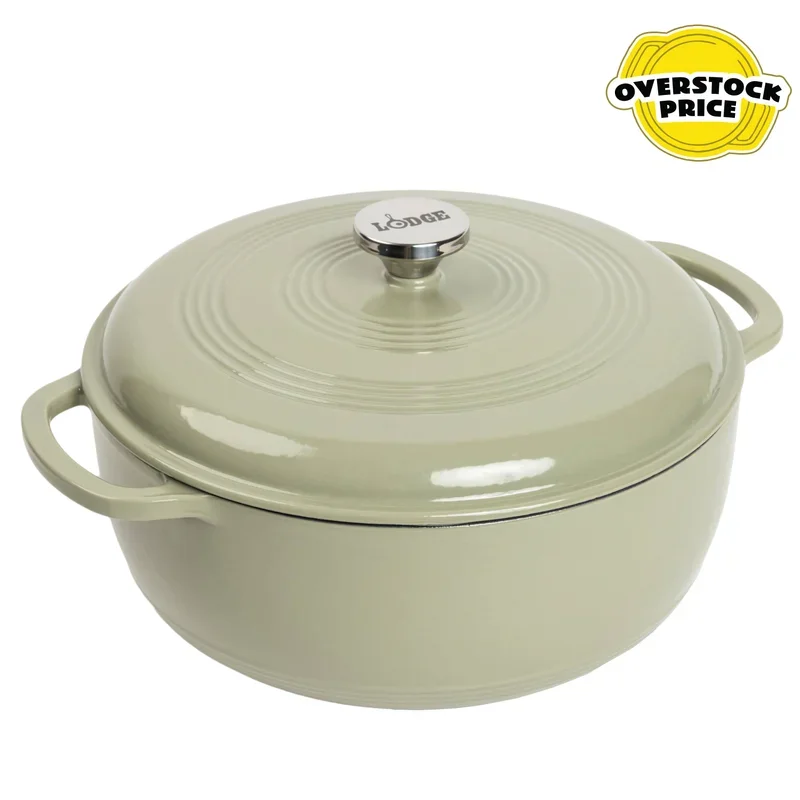
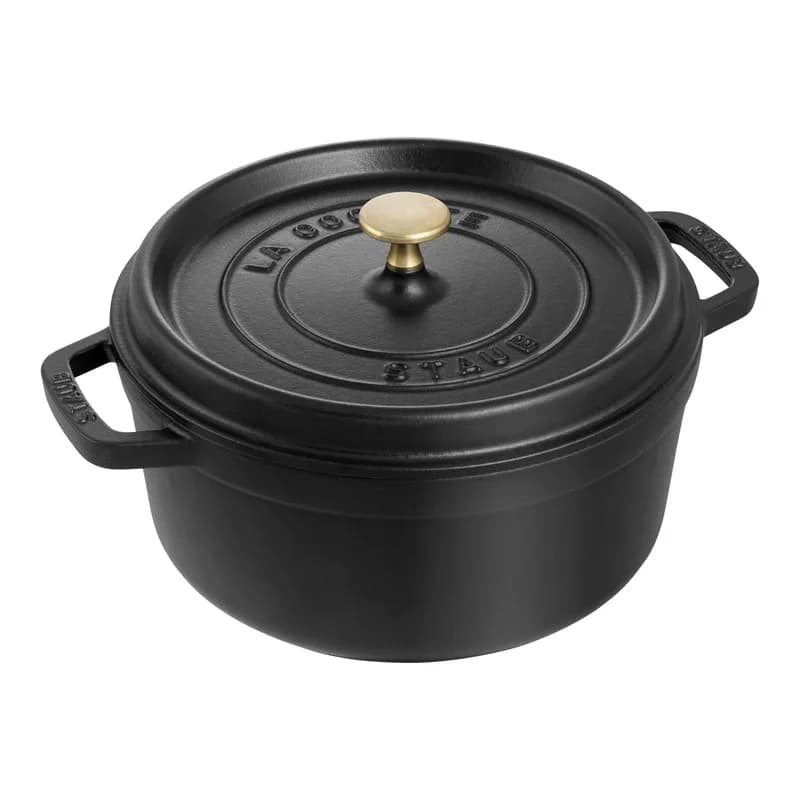
Compare Dutch Oven
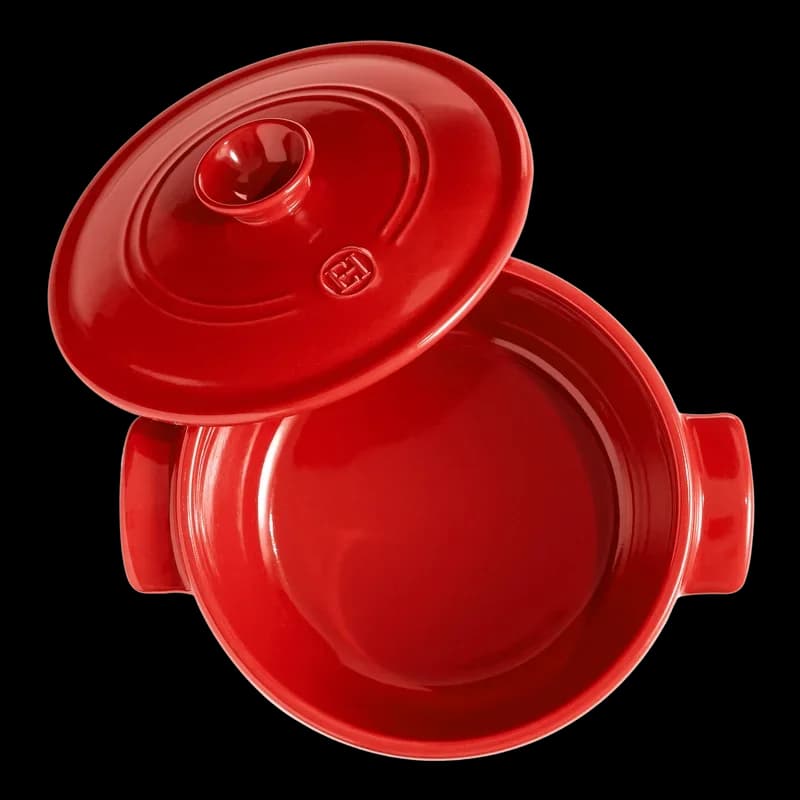
Emile Henry Flame Round Dutch Oven (5.5 qt) scores higher on safety - here's why.
The most important dimensions, side by side.
7-day free trial · Cancel anytime
Emile Henry's Flame ceramic is made from natural high-fired clay with no PTFE, no PFAS, and no lead or cadmium — the brand is straightforward about this. It's a different approach from enameled cast iron, but the goal is the same: a surface that won't leach anything into your food. We're working from Emile Henry's own documentation here, not a third-party lab report.
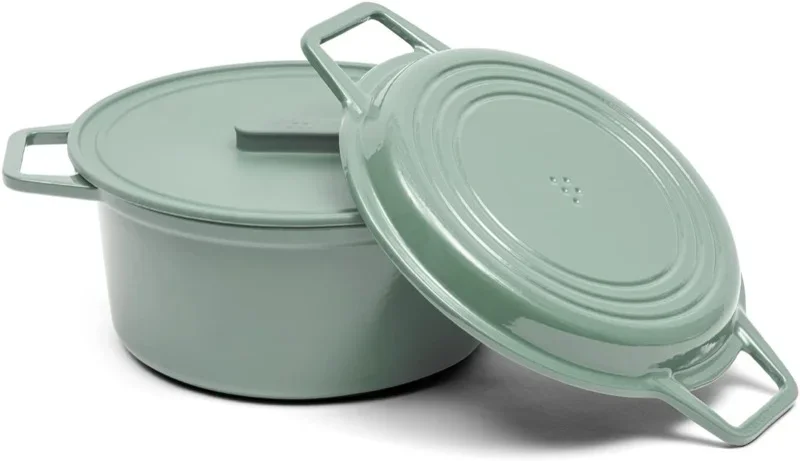
Misen describes the interior as non-toxic and PFAS-free — language that sounds reassuring and is probably accurate. The issue is that there is no independent lab result, certificate, or regulatory document behind it. The strongest Dutch oven brands in this category earn their safety positioning through testing. Misen earns it through assertion.
No independent lab has formally certified this product's food-contact materials — there's no NSF listing, SGS report, or Mamavation verification on record. Emile Henry documents EU food contact compliance and Prop 65 compliance on their own FAQ, which is meaningful coming from a 175-year-old French manufacturer. The brand's claims check out with what we know about their materials — the independent certification simply doesn't exist yet.
There is no food-safety certification of any kind attached to this product — no European food contact compliance, no FDA documentation, no independent lab report. Other Dutch oven brands at similar and lower price points file at least one tier of compliance documentation. Misen has none.
Four hundred eighty-two degrees covers everything from slow braises to chili to roast chicken without issue. If you bake no-knead bread at 500°F, you'll need to drop the temperature slightly — most bakers find 450°F works just as well. For soups, stews, and braises, this ceiling never comes up.
Five hundred degrees is the number that matters for Dutch oven cooking. Below it, you can't bake a proper no-knead loaf. At it, you can do everything a Dutch oven is designed to do — from stovetop sear to oven braise without switching pots. Misen hits this ceiling.
Five and a half quarts is the ideal family size — large enough for a whole chicken, a full pot of chili, or six bowls of soup, without being too big for a standard burner. If you regularly cook for more than eight people, the 7.25 qt version is worth considering.
5.5 quarts hits the family sweet spot precisely. It's big enough for a whole bird or a double batch of soup, small enough that you're not wrestling a restaurant-scale pot on a home stovetop. Misen got this size exactly right.
The interior dots on the lid catch steam and direct it back down evenly over whatever you're cooking — so your braise self-bastes the entire time without you lifting the lid and losing heat. It's a practical advantage for long slow cooks. The one cleaning note: a soft brush is easier than a cloth for cleaning around the dots.
The lid seals tightly and keeps your braise moist — that's the job, and Misen's lid does it. The upgrade from here would be interior condensation nubs that direct moisture more precisely back over the food. Misen doesn't have those, but for the vast majority of family recipes, you won't notice their absence.
At 8.8 lbs empty, this is significantly lighter than a cast iron Dutch oven of the same size — typically 11–13 lbs. Fully loaded, expect 18–22 lbs, which is manageable with a confident two-hand grip. For cooks with wrist issues or limited upper body strength, the lighter ceramic body is a meaningful everyday advantage over cast iron.
Misen is the lightest enameled cast iron Dutch oven in our review — noticeably lighter than Lodge or Our Place. That's a real cooking-life difference for anyone who moves the pot often or has any upper body limitations. You're still lifting something substantial when it's loaded, but the starting point is lower than the alternatives.
Ten years of warranty coverage is meaningful — Emile Henry is confident enough in their ceramic construction to back it for a decade of regular use. A well-maintained Dutch oven can last 20–30 years, so this doesn't cover the full lifespan, but it's solid coverage for the typical family ownership window.
Misen advertises a lifetime guarantee prominently — but that guarantee covers their carbon steel and stainless pans. The Dutch oven gets a 1-year limited warranty. That's a crucial distinction that isn't obvious when browsing the site. At $145, with Lodge offering lifetime coverage at roughly $90, the warranty gap is hard to ignore.
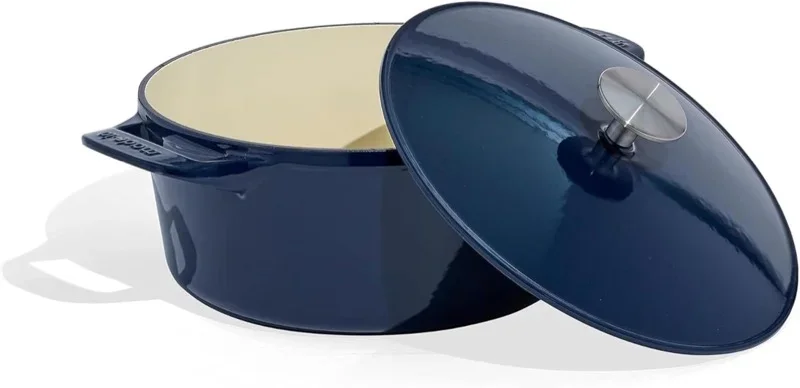
The pale interior lets you see exactly what's happening while you cook — fond forming on the bottom, aromatics going golden rather than burnt, liquid reducing to the right consistency. That's a real cooking advantage over dark interiors where you're guessing. The downside is cosmetic: turmeric, tomato sauce, and red wine will stain over time, though it doesn't affect taste or safety and baking soda paste clears most stains. We're basing the interior color on product imagery rather than a published spec.
The cream interior is the best thing Misen did with this pot from a cooking experience standpoint. You can see exactly when your fond is turning golden, when your shallots are caramelized, when the braise has reduced enough to deglaze. It's the same interior choice that makes Le Creuset easier to cook with than Staub — and Misen delivers it at a fraction of the price.
This goes straight into the dishwasher after a long braise — no soaking, no scrubbing, no babysitting. That matters more on a weeknight when the pot is hot and full of residue. Hand washing is better for long-term finish preservation, but the flexibility to machine-wash is a genuine daily-use advantage.
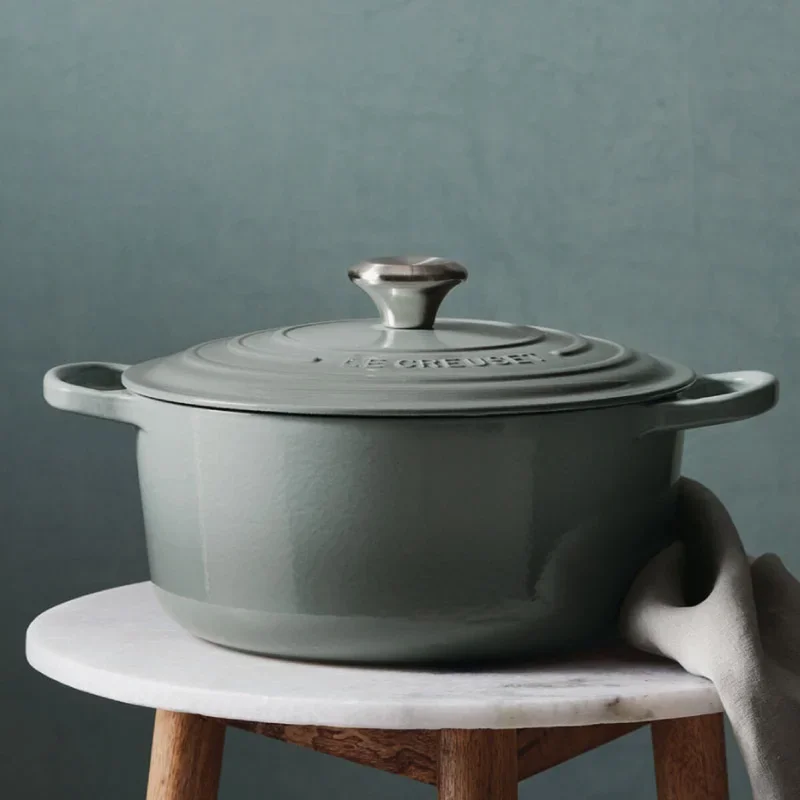
After a long braise, you'll be washing this by hand. Misen recommends it to protect the enamel surface. Lodge and Le Creuset both approve dishwasher use for their enameled Dutch ovens — Misen is more restrictive. It's a minor thing on any given night, but over years of weekly cooking it adds up.
Everything you need to make the call — who each one is for, and who should skip it.
Go for it if you...
You find cast iron too heavy for daily use and want a genuine full-size Dutch oven that's lighter to lift and maneuver.
You braise regularly and want a self-basting lid that channels moisture back over your food without constant lid-lifting.
You cook weeknight soups, stews, and chili for a family of 4–6 and need a pot that goes from stovetop to oven to dishwasher.
You want a light-colored interior that lets you see fond forming, aromatics browning, and liquid reducing while you cook.
You want 500°F oven clearance and an ideal 5.5 qt capacity in the lightest cast iron Dutch oven in this review, and the cream interior and performance specs at $145 fit your budget better than heavier alternatives.
You bake no-knead bread or do serious braising regularly and want a single pot that handles both techniques without restriction.
You have wrist concerns or a wall oven and need the most manageable cast iron option — at 11 lbs, Misen is noticeably easier to handle than Lodge (13.5 lbs) or Our Place (13.8 lbs).
You are comfortable relying on the brand's self-declared safety positioning and aren't concerned by the absence of independent third-party verification for the enamel.
The main thing to know
The Emile Henry Flame is lighter than cast iron, self-basting, dishwasher-safe, and made from food-safe ceramic — but no independent lab has verified those safety claims, which is the most significant gap holding back an otherwise well-designed Dutch oven.
Misen markets this Dutch oven to health-conscious families but provides no verifiable safety documentation for the interior enamel — no lab results, no certifications, nothing independently confirmed. The brand's lifetime guarantee does not apply to enameled cast iron. Buyers should know both facts before purchasing.
Skip this if you...
You bake artisan bread at 500°F and need a Dutch oven that can handle that temperature — this is rated to 482°F.
You require independent third-party lab certification before purchasing food-contact cookware.
You cook at very high heat for hard searing — cast iron's superior thermal mass handles that better than ceramic.
You want verified safety documentation for the interior food-contact surface — Misen's 'non-toxic' claim is self-declared with no independent evidence, and comparable brands at lower price points file at least one tier of compliance documentation.
You expect lifetime warranty coverage on a Dutch oven at this price — Misen's advertised lifetime guarantee explicitly does not cover enameled cast iron, and the 1-year warranty is the weakest protection in this category.
You cook acidic foods — long tomato sauces, wine braises, citrus-heavy dishes — frequently with young children and want the highest possible confidence in the food-contact surface.
You want dishwasher convenience after weeknight cooking — Lodge and Le Creuset both approve dishwasher use; Misen recommends hand washing only.
Neither of these quite what you're looking for?
I've reviewed all Dutch Oven options at every price pointEvery Dutch Oven in our database is scored using R3's V4.2 deterministic rubric — the same inputs always produce the same score. For this comparison, we evaluated Emile Henry and Misen across 3 independent criteria: Safety (45%), Efficacy (25%), Usability (30%). No sponsored rankings. No paid placements.
Straight answers — no sponsored content, no filler.
I'd start with Emile Henry Emile Henry Flame Round Dutch Oven (5.5 qt) - it scored 6.8/10 overall in our V4.2 rubric. Safety carries 50% of our scoring weight, followed by performance (20%), usability (20%), and value (10%). Check which pillar matters most to your family and compare those specific scores.
We use our V4.2 deterministic rubric with four weighted pillars: Safety (50%), Efficacy (20%), Usability (20%), and Value (10%). Every score is reproducible - the same product data produces the same score. Each product is evaluated across multiple criteria within each pillar.
Not necessarily. The overall score reflects our weighted rubric, but your priorities may differ. If you care most about safety, compare the safety scores directly. If budget drives your decision, the value scores and prices tell a clearer story. The "right" pick is the one that matches what matters most to your family.
Not the right match? Explore these alternatives in the same category.