Compare Coffee Grinders
Which scores higher on safety? R3 breaks it down.
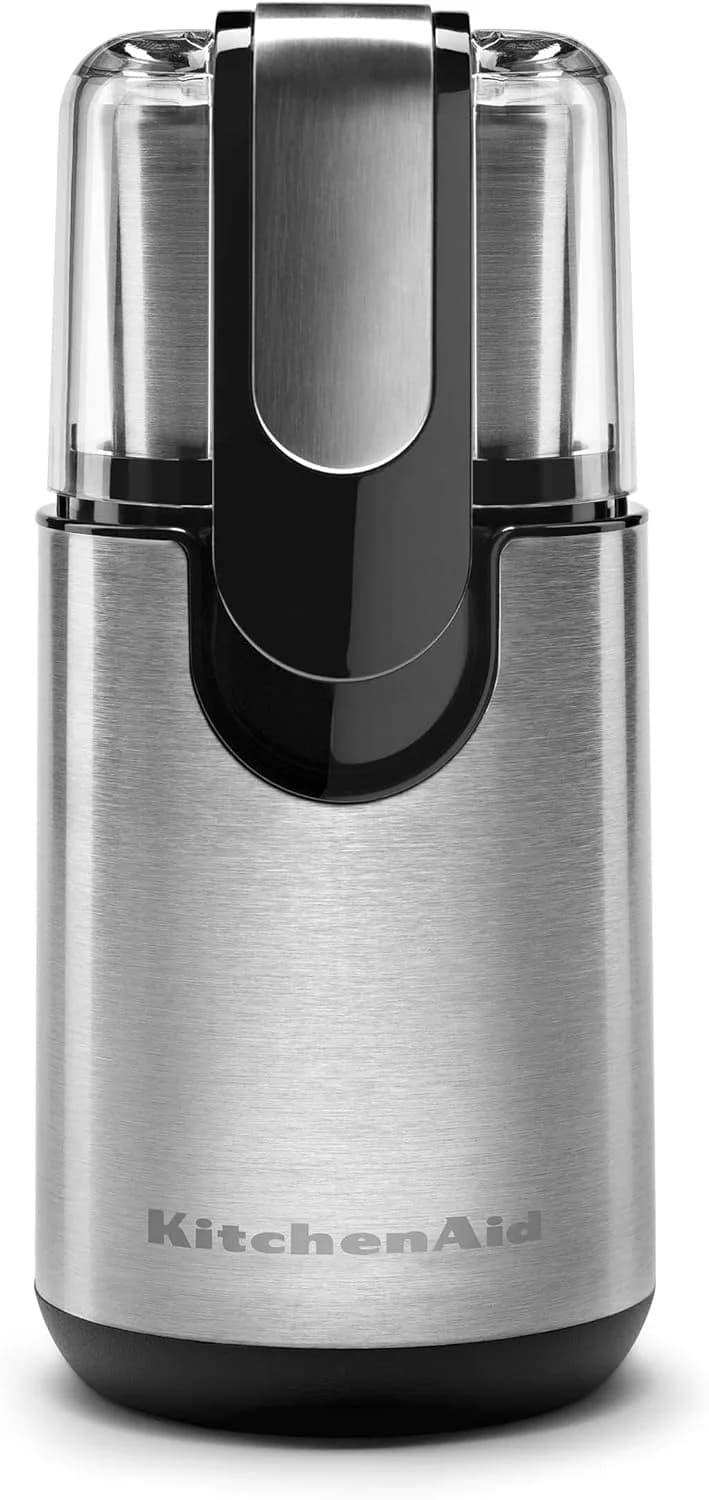
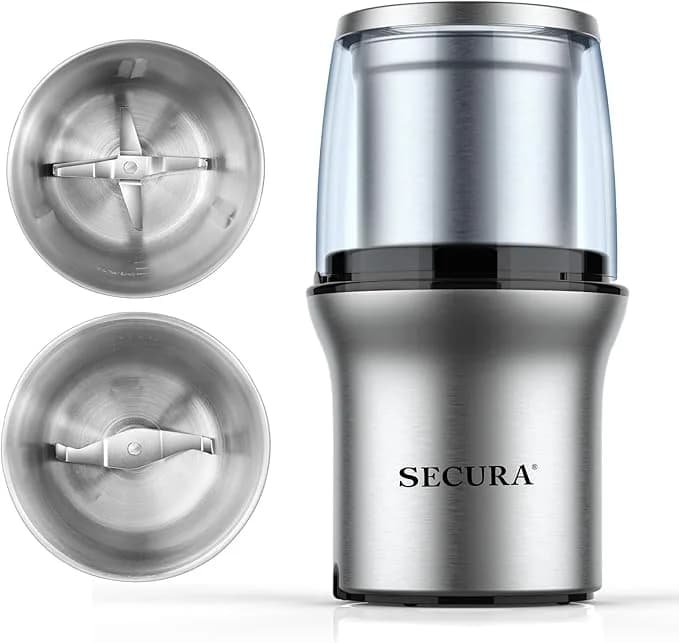
R3 scored the KitchenAid BCG111OB 7.1/10 and the Secura Electric Coffee Grinder 7.1/10 on the same coffee grinders scoring system, weighing safety, efficacy, and usability. The overall scores are close; the pillar breakdown below shows where they differ.
The most important dimensions, side by side.
See which one actually scores higher — and why
Free account unlocks full safety scores, spec-by-spec breakdown, and the R3 verdict on KitchenAid BCG111OB vs Secura Electric Coffee Grinder.
Unlock the full KitchenAid BCG111OB vs Secura Electric Coffee Grinder breakdown
Free account unlocks all safety scores, complete spec comparison, scoring rationale, and the R3 verdict on which one to buy.
Everything you need to make the call - who each one is for, and who should skip it.
Go for it if you...
You make standard drip coffee and want the safest material profile available — full stainless steel bowl and blade with no plastic food contact.
You want an easy-to-clean grinder: the bowl, blade, and lid are all dishwasher-safe and the bowl removes for direct pouring.
You're grinding for a household batch (up to 12 cups) and want a simple one-button operation.
You're replacing a blade grinder and want a clear upgrade in material quality without switching to burr.
Chemical safety in your daily coffee routine is your top priority and you want confirmed stainless steel throughout the entire grinding path
You brew drip or French press coffee at home and don't need espresso-grade grind precision
Easy bowl cleaning matters to you — the removable stainless bowl makes hygiene maintenance genuinely simple
You want a compact blade grinder backed by a 2-year manufacturer warranty for household use
The main thing to know
The blade mechanism cannot produce consistent grind particle size — this is a design-class characteristic that limits the grinder to basic drip coffee and prevents precision extraction for pour-over, espresso, or French press regardless of how carefully it's used.
This is a blade grinder — it cannot produce the consistent grind size that espresso and most specialty brewing methods require. If extraction quality is a priority, no amount of excellent material safety closes this gap.
Skip this if you...
You make pour-over, espresso, or French press and need consistent grind size — the blade mechanism cannot achieve this.
You want to dial in a grind setting for your brew method — there are no grind settings, just pulse-by-feel timing.
You're open to spending slightly more ($40-50) for an entry-level burr grinder, which would score significantly higher on efficacy.
You need consistent espresso or pour-over grinds — a blade grinder fundamentally cannot deliver the particle size control these methods require
Your budget extends to $50–80, where entry-level burr grinders resolve the grind consistency limitation while still offering safe materials
You're grinding for 3+ people daily — the 73g bowl will require mid-session refills more often than competing models with larger capacity
Neither of these quite what you're looking for?
I've reviewed all Coffee Grinders options at every price pointEvery Coffee Grinders in our database is scored using R3's deterministic scoring system - the same inputs always produce the same score. For this comparison, we evaluated KitchenAid and Secura across 3 independent criteria: Safety (56%), Efficacy (32%), Usability (12%). No sponsored rankings. No paid placements.
Straight answers - no sponsored content, no filler.
Both scored close to 7.1/10, so the better choice depends on your priorities. Safety is our top-weighted scoring pillar, followed by efficacy, and usability. Check which pillar matters most to your family and compare those specific scores.
R3 uses a deterministic scoring system - the same inputs always produce the same score. We evaluate each Coffee Grinders across Safety, Efficacy, Usability using independently verified data. No sponsored rankings. No paid placements. Every score is fully reproducible.
Not necessarily. The overall score reflects how we weight those three pillars, but your priorities may differ. If you care most about safety, compare the safety scores directly. If budget drives your decision, the prices tell a clearer story. The "right" pick is the one that matches what matters most to your family.
Not the right match? Explore these alternatives in the same category.