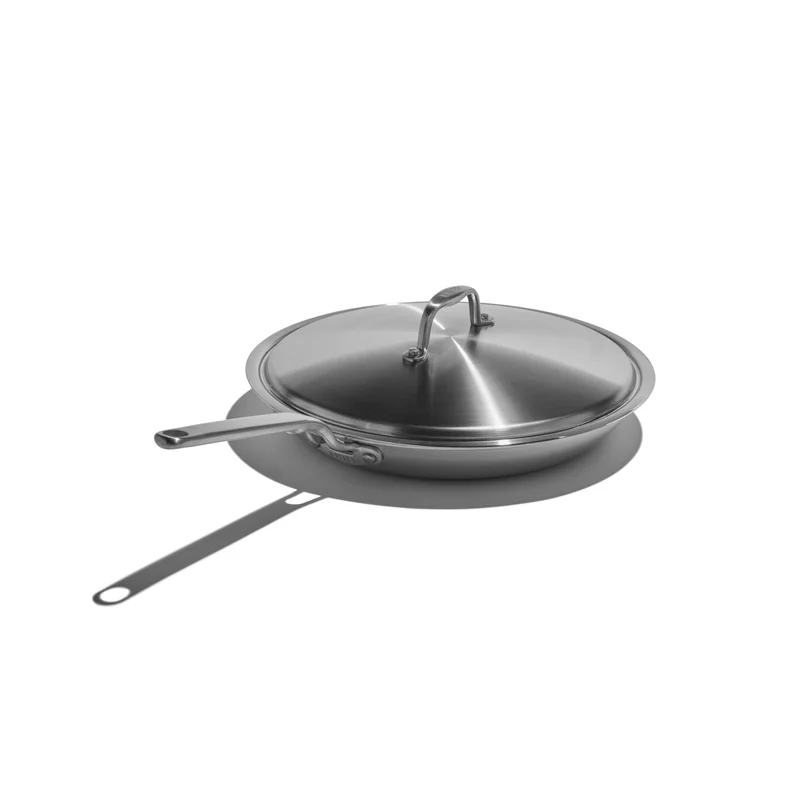
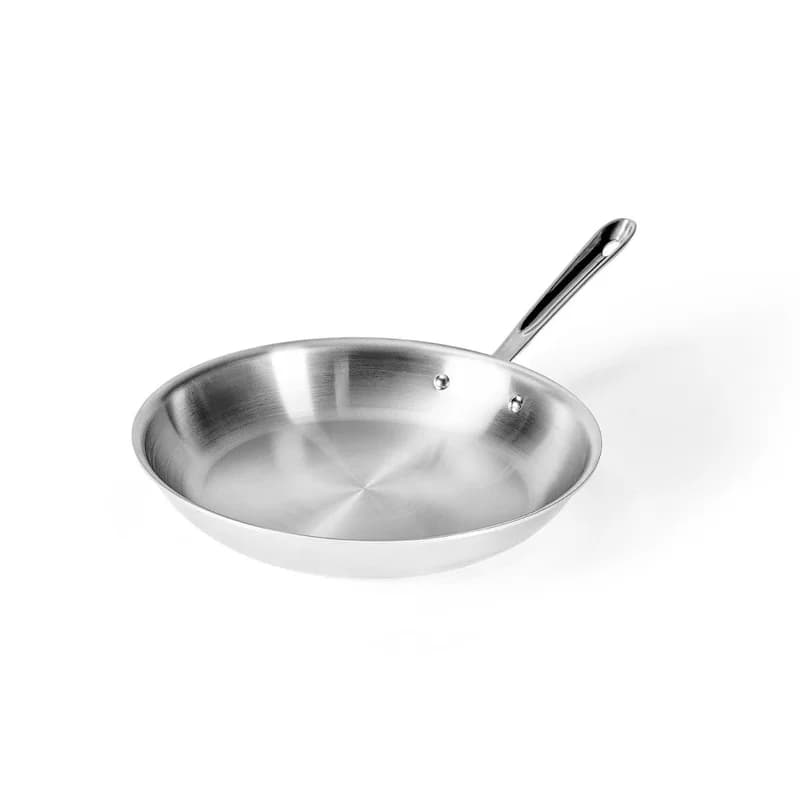
Compare Stainless Steel Pans
Heritage Steel Eater Series 12-inch Frying Pan scores higher on safety - here's why.
R3 scored the Cuisinart Chef's Classic Stainless 10-Inch Open Skillet 5.7/10 and the Heritage Steel Eater Series 12-inch Frying Pan 8.9/10 on the same stainless steel pans scoring system, weighing safety, efficacy, and usability. The Heritage Steel Eater Series 12-inch Frying Pan comes out ahead.
The most important dimensions, side by side.
See which one actually scores higher — and why
Free account unlocks full safety scores, spec-by-spec breakdown, and the R3 verdict on Cuisinart Chef's Classic Stainless 10-Inch Open Skillet vs Heritage Steel Eater Series 12-inch Frying Pan.
Unlock the full Cuisinart Chef's Classic Stainless 10-Inch Open Skillet vs Heritage Steel Eater Series 12-inch Frying Pan breakdown
Free account unlocks all safety scores, complete spec comparison, scoring rationale, and the R3 verdict on which one to buy.
Everything you need to make the call - who each one is for, and who should skip it.
Go for it if you...
You want a budget uncoated stainless pan under $46 from a brand that publicly discloses what's in the steel.
You primarily cook eggs, sauces, sautés, or other flat-bottomed tasks where sidewall heat doesn't matter.
You need a lifetime-warranted stainless pan for occasional stovetop-to-oven use up to 550°F.
Nickel sensitivity is not a concern for your household.
You want the highest-scored stainless steel pan in this category with the best oven rating
You frequently use the stovetop-to-oven workflow and benefit from 800°F headroom
You want USA-made cookware with the most transparent steel grade disclosure in the category
Weight efficiency matters — 2.9 lbs for a 12-inch 5-ply pan is the best ratio here
You want a pan with lid included at the $150 price point
The main thing to know
The disk-bottom base is the defining limitation. The aluminum core only covers the flat base — sidewalls run hot and cold unevenly, which matters if you regularly sear proteins or stir-fry.
Heritage Steel uses nickel-containing stainless steel — the same as most premium cookware. If you have a diagnosed metal sensitivity and have been told to avoid nickel, this pan isn't for you. New pans release more nickel until they're broken in over the first several cooking sessions.
Skip this if you...
You sear proteins regularly and need even heat up the sides of the pan — fully-clad 3-ply construction makes a real difference here.
You have nickel sensitivity and need a nickel-free stainless alloy — this pan's food-contact surface contains nickel.
You want the best cooking performance at this price tier — ZWILLING Motion or Tramontina tri-ply fully-clad alternatives exist near the same price.
You have a diagnosed metal sensitivity that requires nickel-free cookware — look for pans made from nickel-free grade stainless
You prefer a brand with wider retail availability — Heritage Steel is primarily direct-to-consumer
Neither of these quite what you're looking for?
I've reviewed all Stainless Steel Pans options at every price pointEvery Stainless Steel Pans in our database is scored using R3's deterministic scoring system - the same inputs always produce the same score. For this comparison, we evaluated Cuisinart and Heritage Steel across 3 independent criteria: Safety (54%), Efficacy (44%), Usability (2%). No sponsored rankings. No paid placements.
Straight answers - no sponsored content, no filler.
I'd start with Heritage Steel Heritage Steel Eater Series 12-inch Frying Pan - it scored 8.9/10 overall in our scoring system. Safety is our top-weighted scoring pillar, followed by efficacy, and usability. Check which pillar matters most to your family and compare those specific scores.
R3 uses a deterministic scoring system - the same inputs always produce the same score. We evaluate each Stainless Steel Pans across Safety, Efficacy, Usability using independently verified data. No sponsored rankings. No paid placements. Every score is fully reproducible.
Not necessarily. The overall score reflects how we weight those three pillars, but your priorities may differ. If you care most about safety, compare the safety scores directly. If budget drives your decision, the prices tell a clearer story. The "right" pick is the one that matches what matters most to your family.
Not the right match? Explore these alternatives in the same category.