Compare Rice Cookers
Aroma ARC-753S Select Stainless Rice Cooker scores higher on safety - here's why.
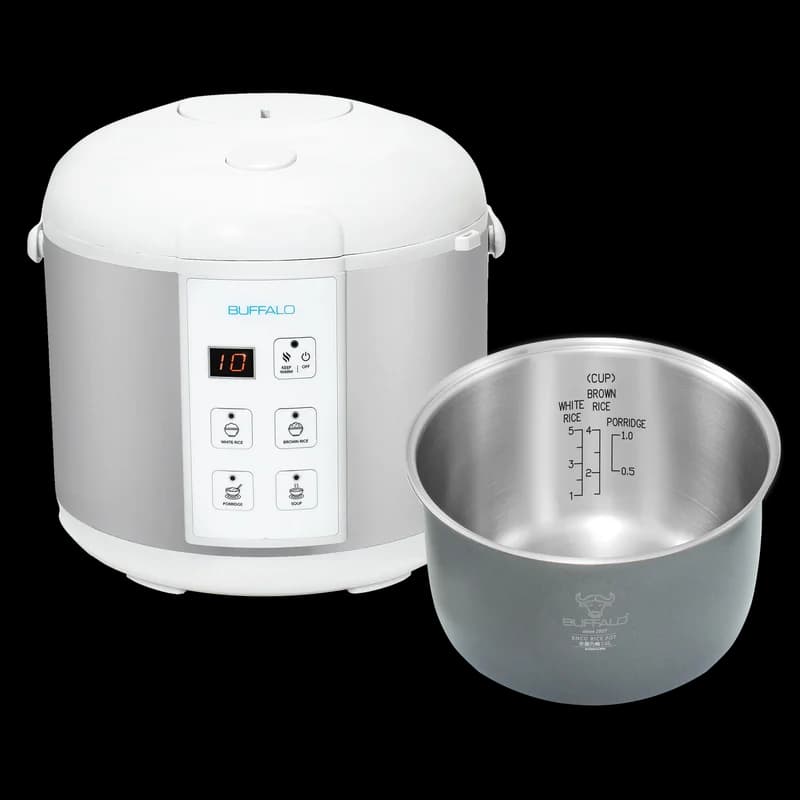
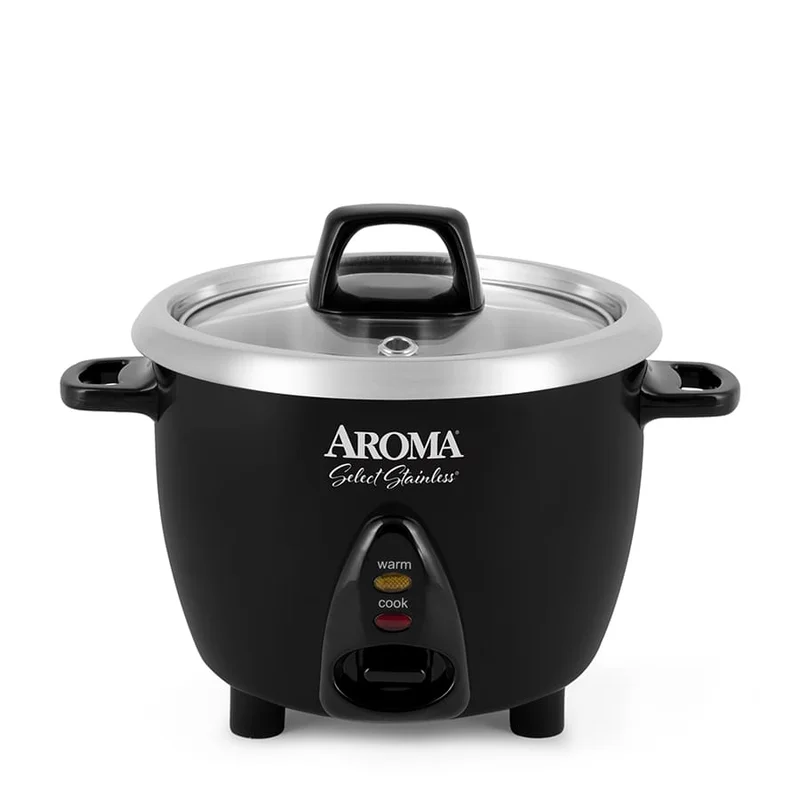
R3 scored the Buffalo Classic Rice Cooker Clad Stainless Steel 8.3/10 and the Aroma ARC-753S Select Stainless Rice Cooker 9.4/10 on the same rice cookers scoring system, weighing safety, efficacy, and usability. The Aroma ARC-753S Select Stainless Rice Cooker comes out ahead, led by its safety score (10.0/10 vs 9.0/10).
The most important dimensions, side by side.
See which one actually scores higher — and why
Free account unlocks full safety scores, spec-by-spec breakdown, and the R3 verdict on Buffalo Classic Rice Cooker Clad Stainless Steel vs Aroma ARC-753S Select Stainless Rice Cooker.
Unlock the full Buffalo Classic Rice Cooker Clad Stainless Steel vs Aroma ARC-753S Select Stainless Rice Cooker breakdown
Free account unlocks all safety scores, complete spec comparison, scoring rationale, and the R3 verdict on which one to buy.
Everything you need to make the call - who each one is for, and who should skip it.
Go for it if you...
Avoiding PTFE, PFAS, and ceramic coatings is your top priority — stainless steel is the safest inner pot material available
You cook primarily white rice and porridge, where basic resistive heating performs adequately
You want a dishwasher-safe inner pot that doesn't require careful handling to protect a coating
You're working within a $139 budget and want clean stainless construction without stepping up to IH pricing
Avoiding PTFE and PFAS is your top priority — stainless steel is the only coating-free option
You cook mostly white rice and occasionally brown rice — basic heating handles both adequately
You want a dishwasher-safe inner pot that requires no special handling
You're on a budget — this is the most affordable stainless steel rice cooker with ETL certification
The main thing to know
The stainless steel inner pot earns top marks for safety, but the basic resistive heating is a real limitation — brown rice will be less consistent than MICOM or IH models. The missing UL/ETL certification is worth resolving if electrical safety compliance matters to you.
Basic resistive heating means brown rice and specialty grains will be less consistent than on a MICOM or IH model. If your household cooks mostly white rice and prioritizes a coating-free pot at an affordable price, this is the top safety pick in the category.
Skip this if you...
You cook brown rice, GABA rice, or specialty grains regularly — basic resistive heating produces less consistent results and you'll want MICOM or IH technology
You require a UL or ETL certified appliance — Buffalo's certification status could not be confirmed from available sources
You regularly cook brown rice, GABA rice, quinoa, or specialty grains — basic resistive heating produces less consistent results and MICOM or IH technology will serve you better
You need 4+ cooking modes or steam functionality
You're willing to pay $150+ for stainless steel with induction heating — look at Zojirushi NS-TSC series
Neither of these quite what you're looking for?
I've reviewed all Rice Cookers options at every price pointEvery Rice Cookers in our database is scored using R3's deterministic scoring system - the same inputs always produce the same score. For this comparison, we evaluated Buffalo and Aroma Housewares across 3 independent criteria: Safety (89%), Efficacy (8%), Usability (4%). No sponsored rankings. No paid placements.
Straight answers - no sponsored content, no filler.
I'd start with Aroma Housewares Aroma ARC-753S Select Stainless Rice Cooker - it scored 9.4/10 overall in our scoring system. Safety is our top-weighted scoring pillar, followed by efficacy, and usability. Check which pillar matters most to your family and compare those specific scores.
R3 uses a deterministic scoring system - the same inputs always produce the same score. We evaluate each Rice Cookers across Safety, Efficacy, Usability using independently verified data. No sponsored rankings. No paid placements. Every score is fully reproducible.
Not necessarily. The overall score reflects how we weight those three pillars, but your priorities may differ. If you care most about safety, compare the safety scores directly. If budget drives your decision, the prices tell a clearer story. The "right" pick is the one that matches what matters most to your family.
Not the right match? Explore these alternatives in the same category.