Compare Running Shoes
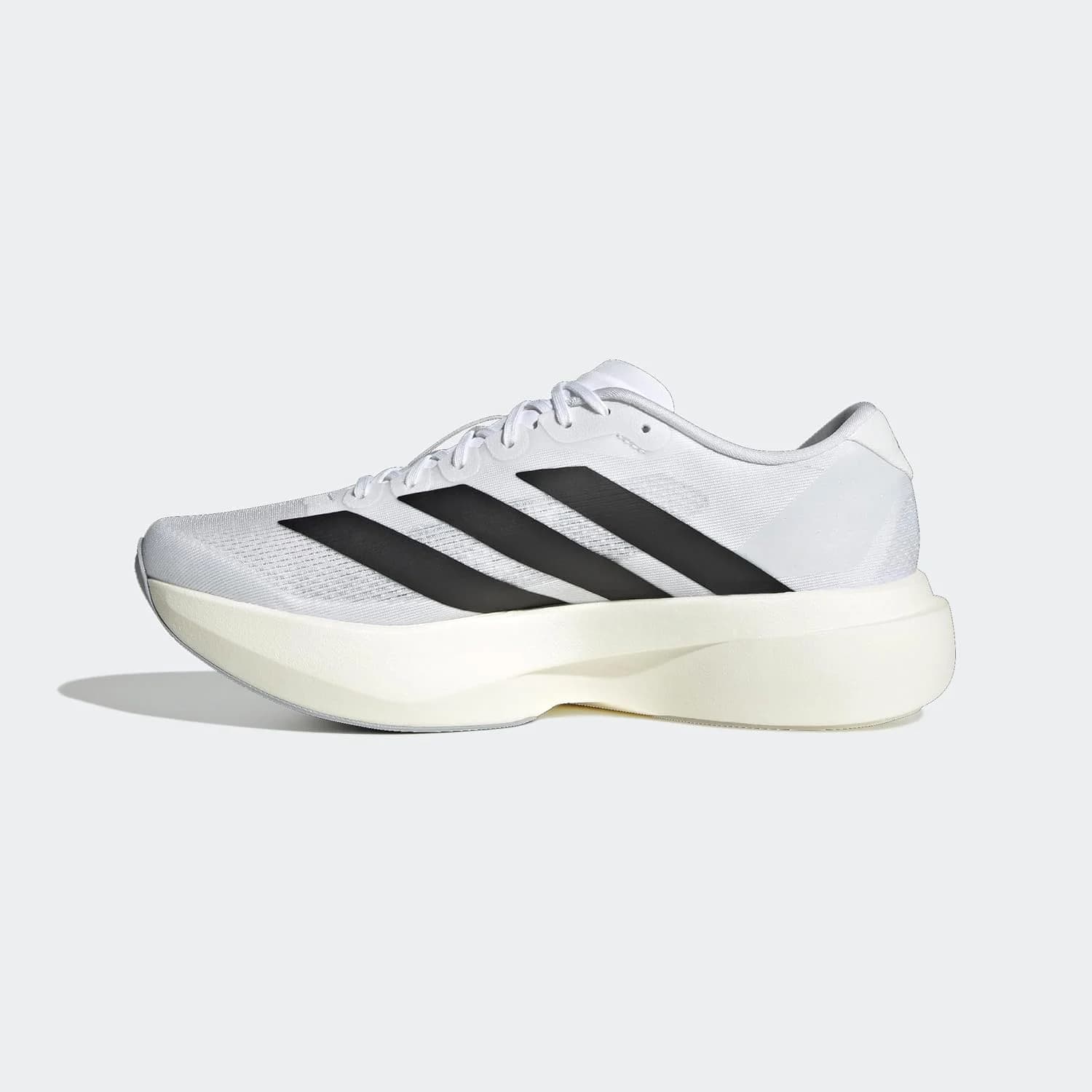
adidas Adizero Evo SL scores higher on safety - here's why.
R3 scored the adidas Adizero Evo SL 7.7/10 and the Saucony Endorphin Speed 5 4.4/10 on the same running shoes scoring system, weighing safety, efficacy, and usability. The adidas Adizero Evo SL comes out ahead, led by its safety score (7.1/10 vs 3.4/10).
The most important dimensions, side by side.
See which one actually scores higher — and why
Free account unlocks full safety scores, spec-by-spec breakdown, and the R3 verdict on adidas Adizero Evo SL vs Saucony Endorphin Speed 5.
Unlock the full adidas Adizero Evo SL vs Saucony Endorphin Speed 5 breakdown
Free account unlocks all safety scores, complete spec comparison, scoring rationale, and the R3 verdict on which one to buy.
Everything you need to make the call - who each one is for, and who should skip it.
Go for it if you...
You want one lively, well-cushioned shoe for daily miles and the occasional fast day.
You value a springy, high-energy foam that keeps everyday runs feeling fun.
You need to dial in your fit and want a normal or wide option.
You want an outsole that grips in the wet and holds up over a lot of miles.
You want one lively shoe for tempo days and faster training runs
You value a wide-width option and a flexible, versatile ride
You want a longer-lived alternative to a pure carbon race shoe
You run mostly in dry conditions where the thin outsole matters less
The main thing to know
The PFAS-free claim and chemical-management program are adidas's own statements, not an independent certificate covering this exact shoe. That keeps the safety standing from a perfect mark even though everything checks out.
This is the most versatile of the three shoes: a lively nylon-plated tempo trainer that lasts longer than a carbon racer and comes in a wide width. The catch is material transparency. Saucony discloses neither a PFAS-free statement nor any chemical-safety program for this shoe, so you cannot verify its materials, and the mostly exposed-foam outsole grips poorly in the wet.
Skip this if you...
You require an independent third-party chemical certificate printed on the shoe rather than a brand statement.
You want a stiff carbon plate for racing.
You prefer a maximal, tall-stack cushioned ride over a lighter, more responsive one.
You want independently verified, PFAS-free, chemically certified materials
You run often in the wet and need a grippy, durable outsole
You want a stiff carbon plate for maximum race-day propulsion
Neither of these quite what you're looking for?
I've reviewed all Running Shoes options at every price pointEvery Running Shoes in our database is scored using R3's deterministic scoring system - the same inputs always produce the same score. For this comparison, we evaluated adidas and Saucony across 3 independent criteria: Safety (67%), Efficacy (22%), Usability (10%). No sponsored rankings. No paid placements.
Straight answers - no sponsored content, no filler.
I'd start with adidas adidas Adizero Evo SL - it scored 7.7/10 overall in our scoring system. Safety is our top-weighted scoring pillar, followed by efficacy, and usability. Check which pillar matters most to your family and compare those specific scores.
R3 uses a deterministic scoring system - the same inputs always produce the same score. We evaluate each Running Shoes across Safety, Efficacy, Usability using independently verified data. No sponsored rankings. No paid placements. Every score is fully reproducible.
Not necessarily. The overall score reflects how we weight those three pillars, but your priorities may differ. If you care most about safety, compare the safety scores directly. If budget drives your decision, the prices tell a clearer story. The "right" pick is the one that matches what matters most to your family.
Not the right match? Explore these alternatives in the same category.