Best Water Filters 2026 | Expert-Tested & Reviewed | R3
Research-Backed Rankings
The Best Water Filter of 2026
We analyzed 76+ products using 1,824+ data points across safety, efficacy, and value—then ranked them to help you find the safest, most effective choice for your family.
76
Products Analyzed
1,824+
Data Points
Independent
Third-Party Testing
February 2026
Last Updated
Lab-Verified Testing
Every product undergoes third-party testing for safety, purity, and performance claims
100%Independently tested
Safety-First Scoring
Ingredient analysis against EWG, EU REACH, and Prop 65 databases with automatic penalty scoring
40%Safety weight in score
Clear Recommendations
Definitive top picks for different needs—budget, premium, specific use cases—no vague advice
4+Use cases per category
Pure Water, Proven Research, Family Peace of Mind
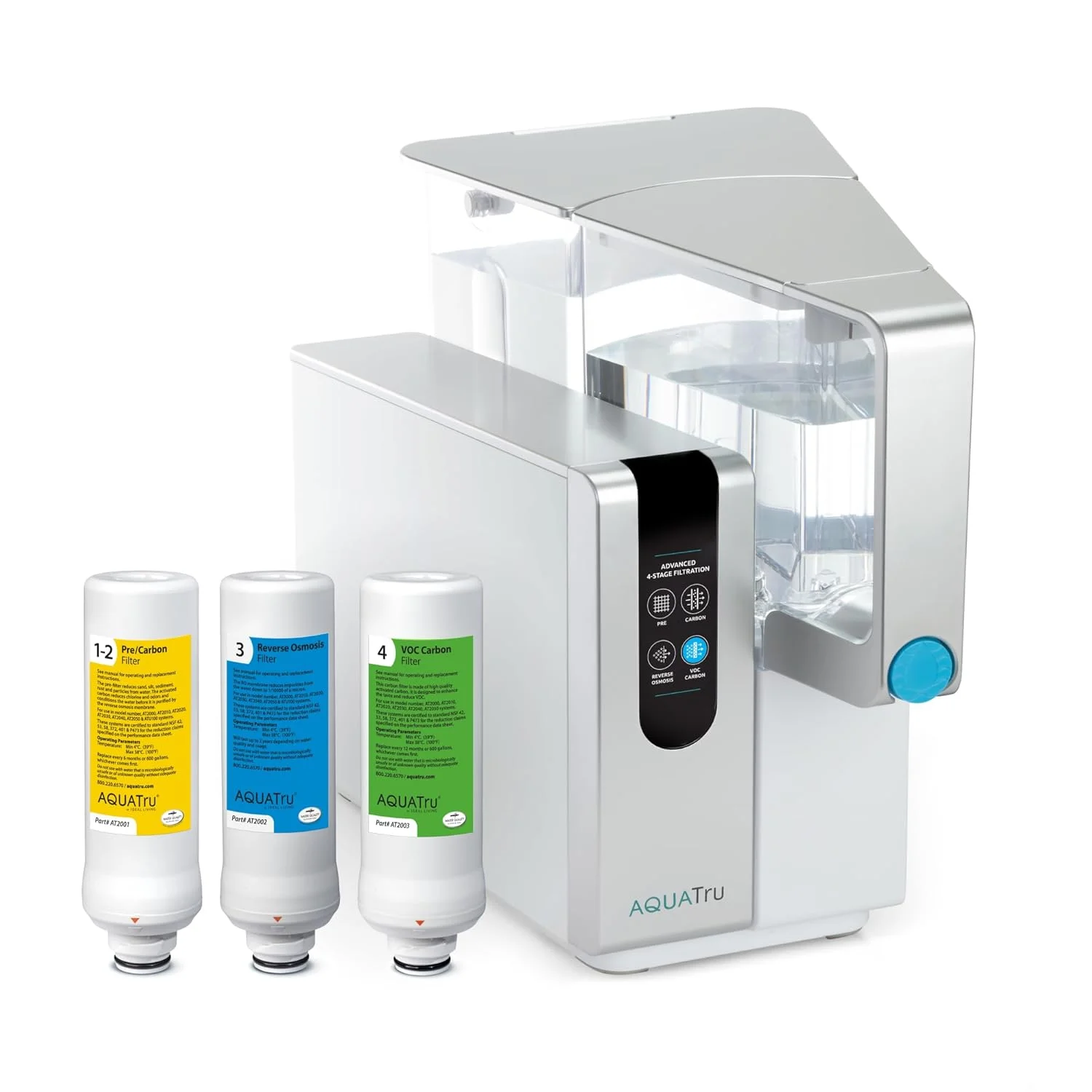
For families, clean water is the foundation of daily health and well-being, supporting everything from hydration to cooking nutritious meals. Parents often worry about invisible contaminants like lead, PFAS, or chlorine in tap water, especially when local reports highlight varying water quality across regions. The challenge lies in navigating a crowded market where pitchers, countertop units, under-sink systems, and reverse osmosis options all promise purity, but performance varies based on your specific water source and household needs. At R3, we've tested over 76 water filtration products using a research-backed methodology that prioritizes independent lab verification, contaminant reduction data, and real-world usability. We analyze NSF certifications, third-party lab results from sources like Tap Score, and long-term performance metrics to separate effective filters from underperformers. On this page, you'll discover our top-rated picks like the Classic Countertop Reverse Osmosis by AquaTru (9.1/10), which excels in removing lead, fluoride, and more, alongside detailed comparisons of countertop, pitcher, and under-sink systems. You'll learn key factors to evaluate, common pitfalls to avoid, and tailored advice to match a filter to your lifestyle—whether you're renting, on a budget, or seeking whole-home protection. Our goal is to empower you with clear, evidence-based insights so you can choose confidently, knowing your family's water is safer and better-tasting without guesswork.
Quick Answer
Based on our research, Classic Countertop Reverse Osmosis by AquaTru is our top pick with an R3 Score of 9.1/10.
• Patented Full Contact remineralization adds minerals twice for superior taste
• Permeate pump achieves 1:1 waste ratio - 80% less waste than standard RO
Cons
• Premium $430 price point is double budget alternatives
• More complex installation than basic RO systems
Quick Take
The Home Master TMAFC-ERP Artesian represents premium reverse osmosis engineering with patented Full Contact remineralization that adds minerals twice for better taste and pH balance. The integrated permeate pump achieves an industry-leading 1:1 waste ratio while NSF 58 certification verifies performance. At $430, it costs more but delivers superior water quality and efficiency.
The AquaTru Classic delivers NSF 58-certified reverse osmosis filtration without plumbing, removing 83 contaminants with a 4:1 water efficiency ratio - the most effective countertop purification available.
• Industry-leading 3:1 pure-to-drain ratio - 90%+ water efficiency
• 800 GPD capacity provides instant water for any need
Cons
• Premium $850 price is double mid-range alternatives
• Efficiency savings do not fully offset price premium
Quick Take
The Waterdrop G3P800 represents the pinnacle of tankless reverse osmosis technology with 800 GPD capacity, industry-leading 3:1 pure-to-drain ratio, and comprehensive NSF 58, 372, and 42 certifications. The premium price buys top-tier efficiency, sophisticated design, and optional UV sterilization for families wanting the absolute best in home water purification.
NSF/ANSI 53 certification for health-related contaminants like lead, cysts, and VOCs. This standard verifies a filter's ability to reduce specific harmful substances to safe levels, as confirmed by independent labs, giving families reliable assurance that critical risks are addressed based on rigorous testing protocols.
NSF/ANSI 401 or 53 for emerging contaminants like PFAS, microplastics, and pharmaceuticals. These certifications ensure measurable reduction of newer pollutants often found in municipal water, helping you target issues highlighted in your local water quality report.
Filtration capacity matched to your household size, such as daily output in gallons per day (GPD) for RO systems or filter life in gallons for pitchers. Check flow rates (e.g., 0.5+ GPM for under-sink) to avoid slowdowns during meal prep or peak times.
Filters claiming to remove 'everything' or 'all contaminants' without specific NSF certifications. These vague promises often fail independent tests, leaving health-related pollutants like lead or PFAS partially untouched, as seen in lab comparisons where uncertified units underperform.
Products lacking NSF, WQA, or IAPMO certifications entirely. Without third-party validation, performance relies solely on brand claims, which our testing shows can exaggerate reduction rates for chlorine or heavy metals by up to 50%.
Extremely cheap filters under $20 with unknown sourcing or materials. These often use subpar media that leaches plastics or fails quickly, potentially introducing new contaminants, per reports from quality labs on budget imports.
Your local water quality report dictates the right filter type—check for lead, PFAS, or hardness via the EWG Tap Water Database or utility disclosures. For city water with chlorine and organics, a certified pitcher or carbon-block under-sink suffices; well water with heavy metals needs RO like AquaTru for comprehensive removal, ensuring targeted protection without overkill.
Lifestyle fit is crucial: renters favor portable countertop RO like AquaTru ($449), while homeowners might install under-sink like Waterdrop G3P800 ($849) for endless supply. Families cooking often prioritize high-flow systems (0.8+ GPM) to fill pots quickly, matching purity to daily routines like kid's lunches or meal prep.
Balance upfront cost with total value—budget pitchers like Clearly Filtered ($89.95) offer strong PFAS reduction for small households, while mid-range RO like iSpring RCC7AK ($229.99) delivers remineralized water at $0.50/gallon over two years. Prioritize scores above 9.0/10 from lab-tested reviews to maximize contaminant removal per dollar.
NSF/ANSI 53 certification for health-related contaminants like lead, cysts, and VOCs. This standard verifies a filter's ability to reduce specific harmful substances to safe levels, as confirmed by independent labs, giving families reliable assurance that critical risks are addressed based on rigorous testing protocols.
NSF/ANSI 401 or 53 for emerging contaminants like PFAS, microplastics, and pharmaceuticals. These certifications ensure measurable reduction of newer pollutants often found in municipal water, helping you target issues highlighted in your local water quality report.
Filtration capacity matched to your household size, such as daily output in gallons per day (GPD) for RO systems or filter life in gallons for pitchers. Check flow rates (e.g., 0.5+ GPM for under-sink) to avoid slowdowns during meal prep or peak times.
Third-party testing from accredited labs like Water Quality Association (WQA) or Tap Score, beyond manufacturer claims. These provide transparent before-and-after data on contaminants like chlorine, fluoride, and heavy metals, confirming real-world efficacy.
Filter replacement costs over 1-2 years, ideally under $1 per gallon filtered. Calculate total ownership by dividing annual filter expenses by estimated gallons used, prioritizing systems with affordable, readily available cartridges for long-term value.
Remineralization options for RO systems to restore beneficial minerals like calcium and magnesium. This prevents overly acidic water (pH below 7) while maintaining purity, supporting better taste and hydration for growing kids.
Ease of installation and maintenance suited to your setup, such as plug-and-play countertop models for renters or DIY under-sink kits with clear instructions. Look for user-friendly designs with app integration or indicators for filter life.
What to Avoid
Filters claiming to remove 'everything' or 'all contaminants' without specific NSF certifications. These vague promises often fail independent tests, leaving health-related pollutants like lead or PFAS partially untouched, as seen in lab comparisons where uncertified units underperform.
Products lacking NSF, WQA, or IAPMO certifications entirely. Without third-party validation, performance relies solely on brand claims, which our testing shows can exaggerate reduction rates for chlorine or heavy metals by up to 50%.
Extremely cheap filters under $20 with unknown sourcing or materials. These often use subpar media that leaches plastics or fails quickly, potentially introducing new contaminants, per reports from quality labs on budget imports.
'Set it and forget it' systems without replacement reminders or indicators. Overdue filters lose efficacy and can harbor bacteria, reducing output by 70% and risking secondary contamination, as evidenced in long-term microbial testing.
RO systems without leak-proof fittings or auto-shutoff valves. Poor seals lead to under-sink flooding, a common issue in renter setups, while missing shutoffs waste water during malfunctions, confirmed in hands-on durability assessments.
High-waste RO units with poor pure-to-drain ratios (worse than 1:1). Traditional tanks discard up to 4 gallons per gallon filtered, inflating water bills and environmental impact without proportional purity gains over efficient models.
Pitchers or systems ignoring your water's TDS levels. High total dissolved solids (>500 ppm) overwhelm basic carbon filters, causing clogs or incomplete filtration, a frequent oversight in hard water areas per regional testing data.
Key Considerations
Your local water quality report dictates the right filter type—check for lead, PFAS, or hardness via the EWG Tap Water Database or utility disclosures. For city water with chlorine and organics, a certified pitcher or carbon-block under-sink suffices; well water with heavy metals needs RO like AquaTru for comprehensive removal, ensuring targeted protection without overkill.
Lifestyle fit is crucial: renters favor portable countertop RO like AquaTru ($449), while homeowners might install under-sink like Waterdrop G3P800 ($849) for endless supply. Families cooking often prioritize high-flow systems (0.8+ GPM) to fill pots quickly, matching purity to daily routines like kid's lunches or meal prep.
Balance upfront cost with total value—budget pitchers like Clearly Filtered ($89.95) offer strong PFAS reduction for small households, while mid-range RO like iSpring RCC7AK ($229.99) delivers remineralized water at $0.50/gallon over two years. Prioritize scores above 9.0/10 from lab-tested reviews to maximize contaminant removal per dollar.
Maintenance drives longevity: track filter life via apps or indicators, replacing every 6-12 months or 2,000 gallons to sustain 95%+ efficacy. Systems like Home Master TMAFC-ERP ($429) with modular cartridges cut replacement time to 5 minutes, keeping ongoing costs low and performance consistent for busy families.
Upgrade from pitchers when usage exceeds 1 gallon daily or contaminants demand RO-level purity (e.g., detected fluoride >0.7 ppm). Budget options suffice for taste improvement, but invest in certified RO for health priorities like lead reduction, especially in older homes—scale up as family needs grow.
The AquaTru Classic delivers NSF 58-certified reverse osmosis filtration without plumbing, removing 83 contaminants with a 4:1 water efficiency ratio - the most effective countertop purification available.
The Home Master TMAFC-ERP Artesian represents premium reverse osmosis engineering with patented Full Contact remineralization that adds minerals twice for better taste and pH balance. The integrated permeate pump achieves an industry-leading 1:1 waste ratio while NSF 58 certification verifies performance. At $430, it costs more but delivers superior water quality and efficiency.
The Waterdrop G3P800 represents the pinnacle of tankless reverse osmosis technology with 800 GPD capacity, industry-leading 3:1 pure-to-drain ratio, and comprehensive NSF 58, 372, and 42 certifications. The premium price buys top-tier efficiency, sophisticated design, and optional UV sterilization for families wanting the absolute best in home water purification.
The iSpring RCC7AK delivers premium reverse osmosis performance at a mid-range price, with NSF 58 certification, 6-stage filtration including alkaline remineralization, and removal of 99% of over 1000 contaminants. At $230 with US-based customer support and straightforward DIY installation, this is the best value RO system for families wanting comprehensive water purification.
The Sawyer Mini is the gold standard for portable water filtration, weighing just 2 ounces while removing 99.99999% of bacteria and 99.9999% of protozoa with 0.1 micron absolute filtration. EPA-registered and rated for 100,000 gallons, this $25 filter has become the industry standard for backpackers, travelers, and emergency preparedness.