Key Specs
Warranty Type
Lifetime
Certifications
—
Dishwasher safe
No
Handle Heat Safe
Yes
Field Company
#4 of 9 frying pans tested
$165.00
What the product listing won't tell you
Know before you buy
At $165, you're paying a premium for lightweight cast iron that still demands the same upkeep as a $30 skillet — no dishwasher, hand-dry after every wash, and re-season when the surface starts to look dull.
You cook on induction and want a surface with no synthetic coating — cast iron is naturally PFAS-free and works on every heat source.
Field Company
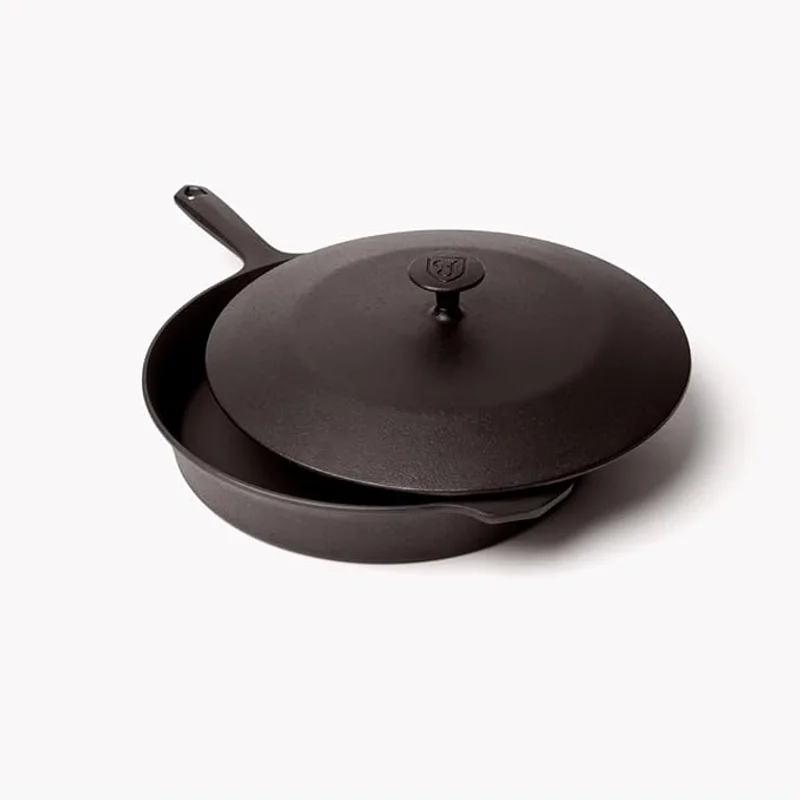
Field Company No. 10 Cast Iron Skillet
Field Company
Field Company No. 10 Cast Iron Skillet
We may earn a commission. It doesn't affect our scores.
You want a pan that outlasts nonstick by decades — the seasoning builds up over time rather than wearing off.
You do most of your cooking on the stovetop at moderate heat and have the patience for a 10-minute preheat before searing.
You need to cook for a full family — the No. 10 cooking surface is smaller than it sounds and won't fit more than two portions comfortably.
You want quick, responsive heat — cast iron holds temperature well but reacts slowly, so high-heat stir-fries or fast temperature drops aren't this pan's strength.
You're weighing this against Lodge — Field Company's lighter casting is a real difference, but not a $130 difference for most cooks.
Safety standards and ingredients related to Field Company No. 10 Cast Iron Skillet
Every term is independently researched and sourced.
Full Safety DictionarySpecs the product listing doesn't explain
What your food and family come into contact with every use
Noise, maintenance, and what happens if something goes wrong
Additional product details
5 criteria — open any layer to see exactly what we found
9
Safety
Excellent
4.4
Efficacy
Below average
5.2
Usability
Fair
“Does cast iron actually have zero synthetic coatings or hidden chemicals?”
Criteria
The cooking surface is bare cast iron — machined and stone polished, with no synthetic coating between your food and the pan. You're cooking on iron and polymerized oil, so nothing can chip, flake, or degrade into a meal. It requires hand-washing and periodic re-seasoning, but there's no coating to wear out.
No third-party safety certifications are listed. That's not a concern here — bare cast iron has no synthetic coating, so there's no PFAS or nonstick chemistry that would need certifying. The surface is iron and oil, full stop.
Field Company seasons with grapeseed oil, which has a high smoke point and polymerizes reliably into a solid release layer. It's a strong factory seasoning choice — functionally similar to flaxseed oil and better than lower-smoke-point alternatives.
R3 verdict
Cast iron is about as clean as cookware gets — it's iron, seasoned with oil, nothing else. No synthetic coatings, no PFAS, no chemicals burning off when the pan gets hot.
Field Company specifically uses grapeseed oil for seasoning, which has a high smoke point and a neutral flavor, so you know exactly what's touching your food. That kind of transparency is rare in cookware, and if you've spent time reading about Teflon or ceramic coating trade-offs, it's a genuine relief.
“What's the highest oven temperature this skillet can safely handle?”
Criteria
No oven-safe temperature is listed for this pan. That's a real gap — cast iron typically handles very high oven temps, but without a confirmed spec you can't plan recipes that require finishing or baking in the oven.
This pan works on induction cooktops. Cast iron's ferromagnetic base is naturally induction-compatible, so no adapter or special setup is needed.
R3 verdict
“Will a No. 10 skillet actually fit a meal for a family of four?”
Criteria
The cooking surface is 8.5 inches — enough for a single egg or one portion, but you'll need multiple batches for family meals. At $165, that size limits its everyday utility as your primary pan.
R3 verdict
The No. 10 name suggests a larger pan than you get — the actual cooking surface runs closer to 8 to 9 inches, which works well for one or two people. For a family of three or more, that gets limiting fast.
You'll be cooking chicken thighs, vegetables, and eggs in batches rather than all at once, which adds time and cleanup. It's a great pan for a solo lunch or a side dish, but if you're feeding four regularly, plan to run it in rotation.
“How often does cast iron really need re-seasoning in daily use?”
Criteria
Cast iron requires periodic re-seasoning when the surface looks dry or starts sticking. Every use means hand-washing, immediate drying, and occasionally rubbing in a thin layer of oil. If you're coming from nonstick, that's a real shift in routine.
This pan can't go in the dishwasher. Dishwasher detergent strips the seasoning and can cause rust, so every use requires hand-washing and immediate drying.
R3 verdict
“Does the lifetime warranty cover normal wear, or is it full of exclusions?”
Criteria
Field Company backs this pan with a lifetime warranty. Exclusions typically cover commercial use, accidents, and misuse — normal home cooking should be covered, but read the terms before assuming full protection.
The cast iron handle gets hot during stovetop use. You'll need an oven mitt or handle cover every time you cook — don't plan on grabbing it bare-handed mid-recipe.
R3 verdict
Already have an account? Log in
Verified retailer — current pricing
Starting price
$165
We earn a small commission on purchases. It never influences our scores — R3 is funded by readers, not brands.
Alternatives that address specific trade-offs
Why this matters: Cast iron requires more upkeep than modern nonstick. Hand-wash only, dry it right away, and re-season the surface when it looks dull or food starts st

Matfer Bourgeat
Scores 2.2/10 on maintenance burden vs 1.0 here

Xtrema
Scores 10.0/10 on maintenance burden vs 1.0 here

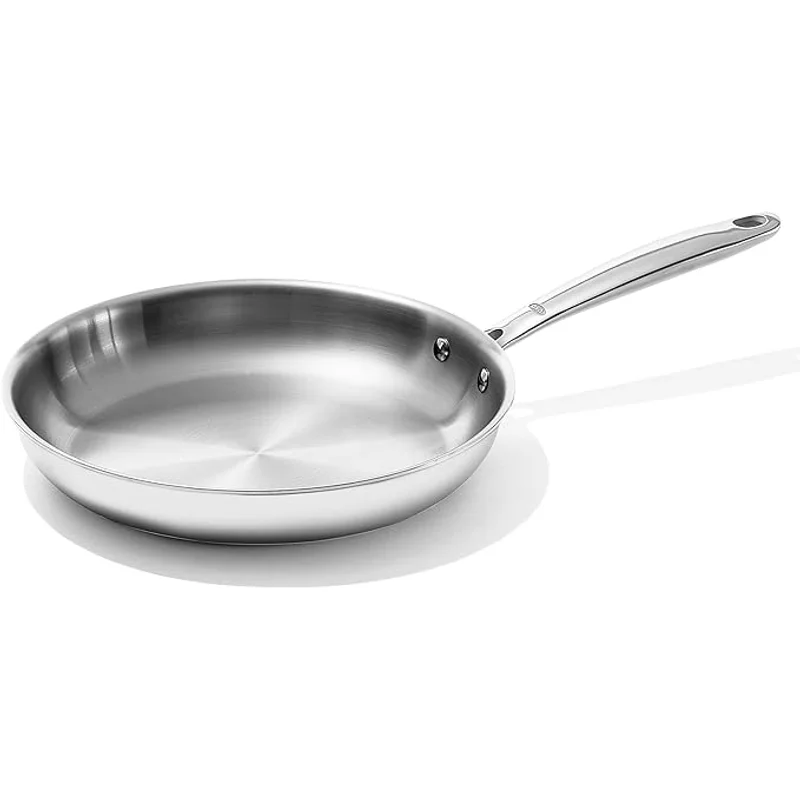
OXO
Scores 6.4/10 on maintenance burden vs 1.0 here
Didn't find the frying pan you need?
See all frying pans we reviewed#4 of 9 frying pans reviewed
For parents who want complete clarity about what's on their cookware and want to avoid synthetic coatings.
On the stovetop, this skillet is fully induction-compatible — a real advantage as induction ranges become standard in newer homes. The gap is oven use: Field Company doesn't publish a stated oven-safe temperature for this pan, which likely means the handle design limits how hot you can go.
That matters for cast iron specifically, since most people buy it to move from stovetop to oven in one step. If that's part of how you cook, you'll want a clearer answer before buying.
If your cooking happens primarily on the stovetop and you rarely need oven finishing or baking.
For solo or duo households; not practical for families who need to cook larger portions efficiently.
Cast iron requires more upkeep than modern nonstick. Hand-wash only, dry it right away, and re-season the surface when it looks dull or food starts sticking — which happens more often than cookware brands tend to advertise.
If your household has been cooking with ceramic or stainless that goes straight into the dishwasher, this is a real adjustment. It's manageable once it becomes habit, but if low-maintenance cookware is a priority, be honest with yourself about whether you'll keep up with it.
Cast iron requires more upkeep than modern nonstick. Hand-wash only, dry it right away, and re-season the surface when it looks dull or food starts sticking — which happens more often than cookware brands tend to advertise.
If your household has been cooking with ceramic or stainless that goes straight into the dishwasher, this is a real adjustment. It's manageable once it becomes habit, but if low-maintenance cookware is a priority, be honest with yourself about whether you'll keep up with it.
Only if you're genuinely committed to hand-washing and regular seasoning maintenance.
Field Company backs this skillet with a lifetime warranty, and cast iron earns that confidence — a well-maintained pan can genuinely last generations. One thing worth knowing upfront: the handle gets hot enough during normal cooking to be a real burn risk.
That's worth taking seriously in any kitchen, especially with kids around or anyone who grabs handles without thinking. An oven mitt or silicone handle cover solves it, but it's not something you want to discover mid-cook.
For adult-only kitchens; the handle heat safety concern makes this risky for households with young children.