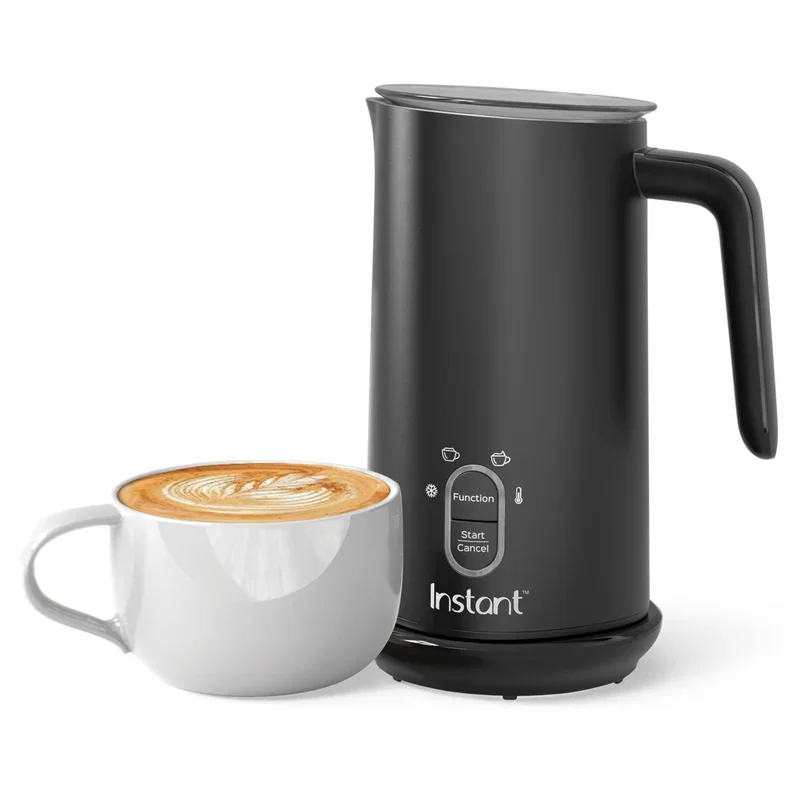
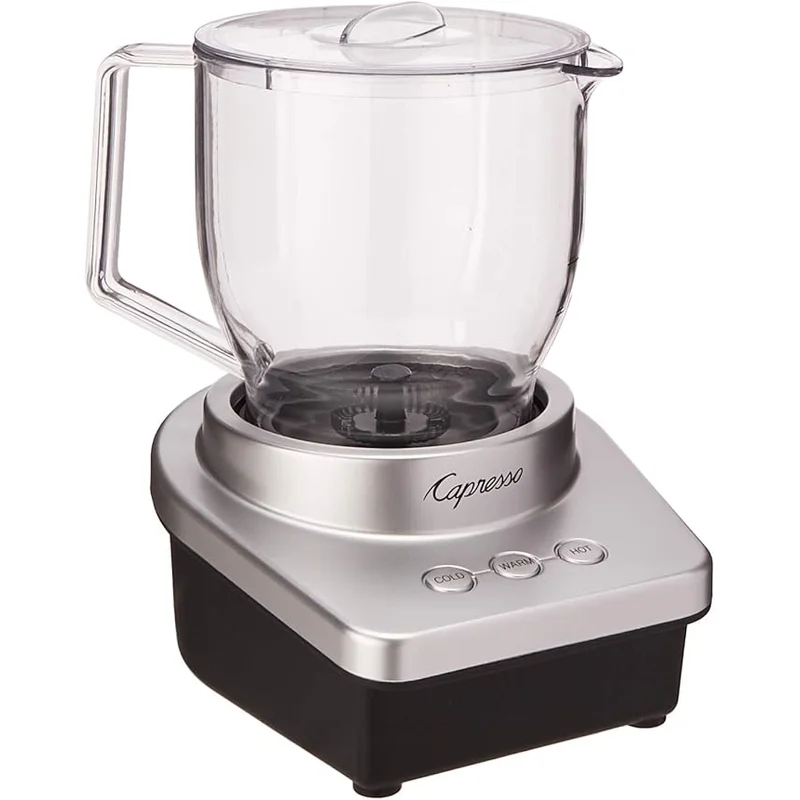
Compare Milk Frothers
Which scores higher on safety? R3 breaks it down.
R3 scored the Secura 4-in-1 Automatic Milk Frother 17oz 9.3/10 and the Secura 17oz Electric Milk Frother and Steamer 4-in-1 9.3/10 on the same milk frothers scoring system, weighing safety, efficacy, and usability. The overall scores are close; the pillar breakdown below shows where they differ.
The most important dimensions, side by side.
See which one actually scores higher — and why
Free account unlocks full safety scores, spec-by-spec breakdown, and the R3 verdict on Secura 4-in-1 Automatic Milk Frother 17oz vs Secura 17oz Electric Milk Frother and Steamer 4-in-1.
Unlock the full Secura 4-in-1 Automatic Milk Frother 17oz vs Secura 17oz Electric Milk Frother and Steamer 4-in-1 breakdown
Free account unlocks all safety scores, complete spec comparison, scoring rationale, and the R3 verdict on which one to buy.
Everything you need to make the call - who each one is for, and who should skip it.
Go for it if you...
You want a verified 304 stainless steel jug with an explicitly Teflon-free interior -- confirmed by name in the product title.
You want two bare stainless steel whisks -- one for frothing, one for heating, both coating-free.
You make multiple drink types -- four modes cover hot froth, cold froth, hot milk, and more.
You want BPA-free documentation on all food-contact materials -- confirmed on the brand page.
Dishwasher-safe parts and auto-off are non-negotiable for your morning routine.
You want a verified 304 stainless steel jug explicitly confirmed in the product listing -- not just a generic 'stainless' label.
You want a Teflon-free, coating-free interior -- confirmed with no non-stick lining touching your milk.
You want a bare stainless steel whisk with no coating to degrade.
Budget is a factor -- at $30, this is the best material documentation per dollar in this category.
You need dishwasher-safe parts and auto-off for truly effortless daily use.
The main thing to know
The only independent certification Secura carries is for electrical safety, not food-contact materials. That is the norm for this category, but it means material assurances rest on Secura's own documentation rather than independent lab testing.
The only independent certification Secura carries is for electrical safety -- not for food-contact materials. That is the norm for this product category, but it means food-material assurances rest on Secura's own claims, not third-party lab verification.
Skip this if you...
You want independent food-contact lab certification -- Secura carries electrical safety certification only.
Budget is the absolute priority -- the base 17oz model delivers identical safety and efficacy scores at $30 instead of $40.
You only ever make one type of froth and four modes would go unused.
You want independent food-contact lab certification -- Secura carries electrical safety certification only, which is typical for this category.
You need adjustable temperature -- the Secura uses fixed temperature modes with no manual override.
Neither of these quite what you're looking for?
I've reviewed all Milk Frothers options at every price pointEvery Milk Frothers in our database is scored using R3's deterministic scoring system - the same inputs always produce the same score. For this comparison, we evaluated Secura and Secura across 3 independent criteria: Safety (89%), Efficacy (9%), Usability (2%). No sponsored rankings. No paid placements.
Straight answers - no sponsored content, no filler.
Both scored close to 9.3/10, so the better choice depends on your priorities. Safety is our top-weighted scoring pillar, followed by efficacy, and usability. Check which pillar matters most to your family and compare those specific scores.
R3 uses a deterministic scoring system - the same inputs always produce the same score. We evaluate each Milk Frothers across Safety, Efficacy, Usability using independently verified data. No sponsored rankings. No paid placements. Every score is fully reproducible.
Not necessarily. The overall score reflects how we weight those three pillars, but your priorities may differ. If you care most about safety, compare the safety scores directly. If budget drives your decision, the prices tell a clearer story. The "right" pick is the one that matches what matters most to your family.
Not the right match? Explore these alternatives in the same category.