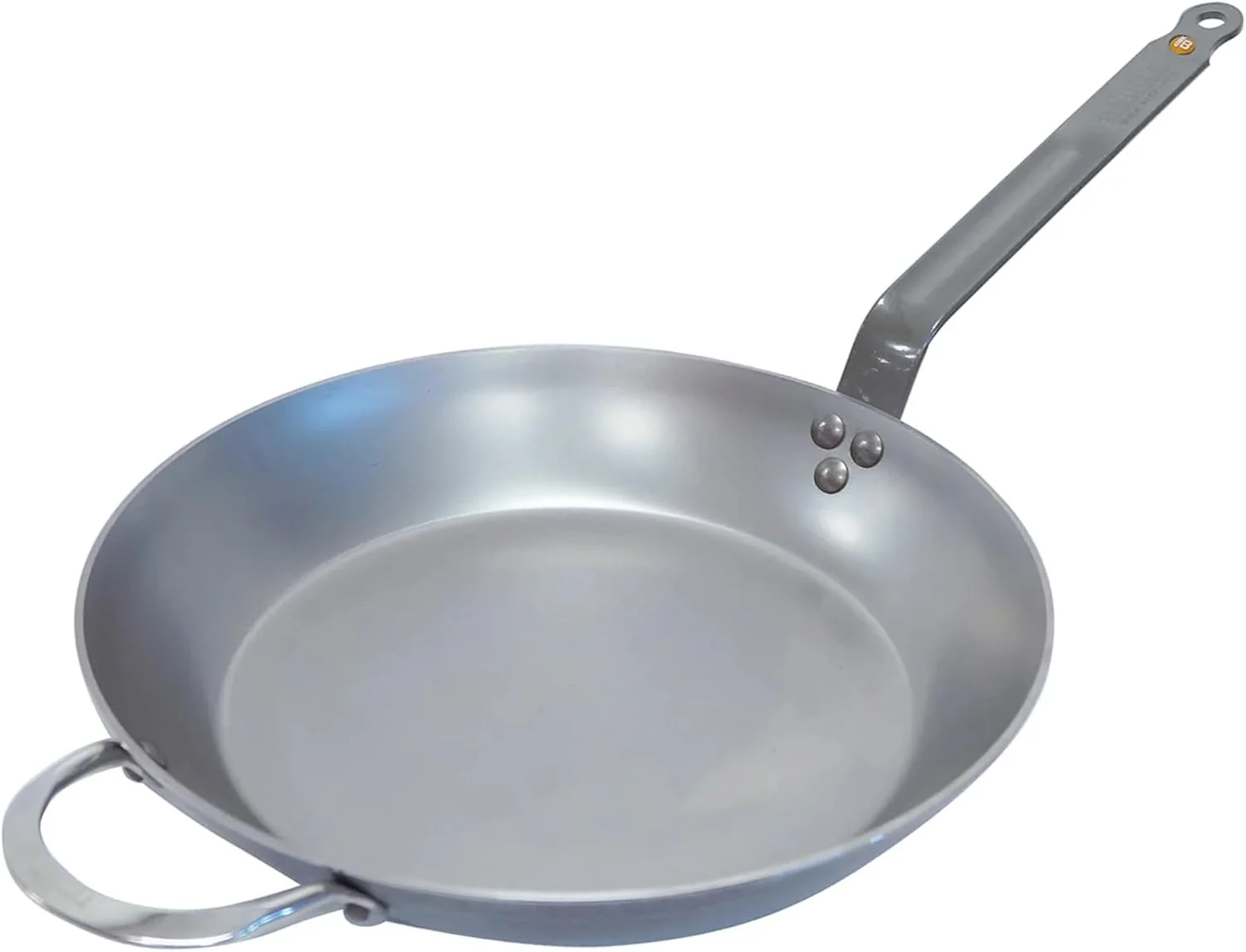
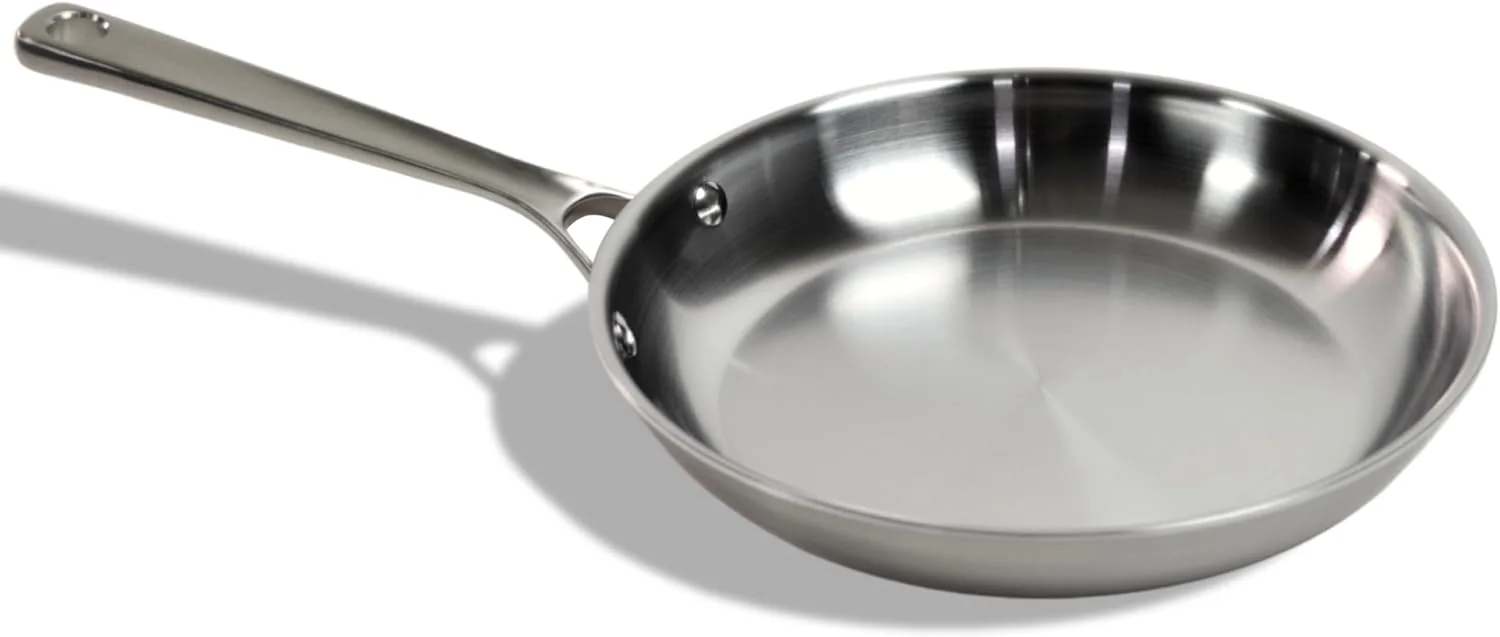
Compare Carbon Steel Pans
Which scores higher on safety? R3 breaks it down.
The most important dimensions, side by side.
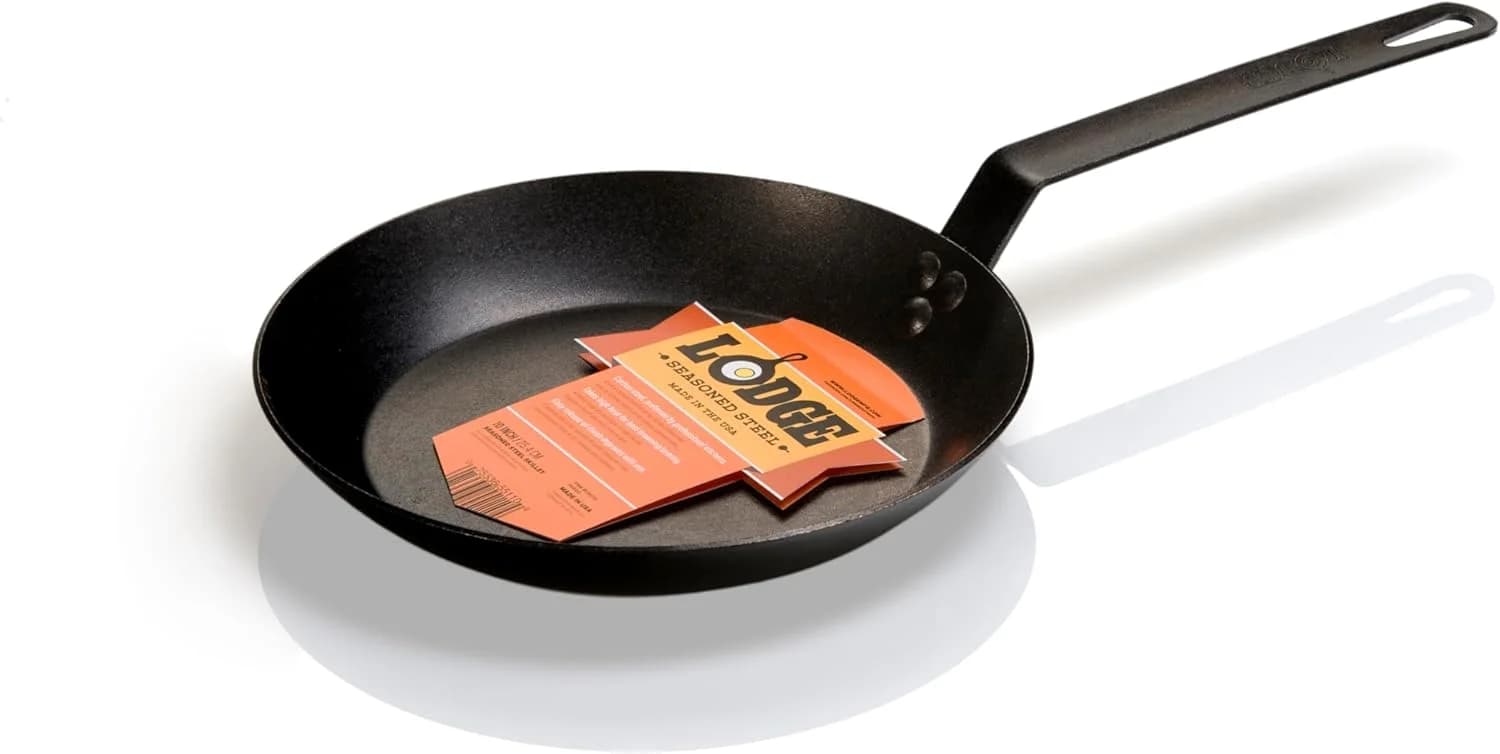
Lodge explicitly calls this pan PFAS-free in the product name, listing bullets, and on their brand website — one of the clearest PFAS-free disclosures in the category at this price.
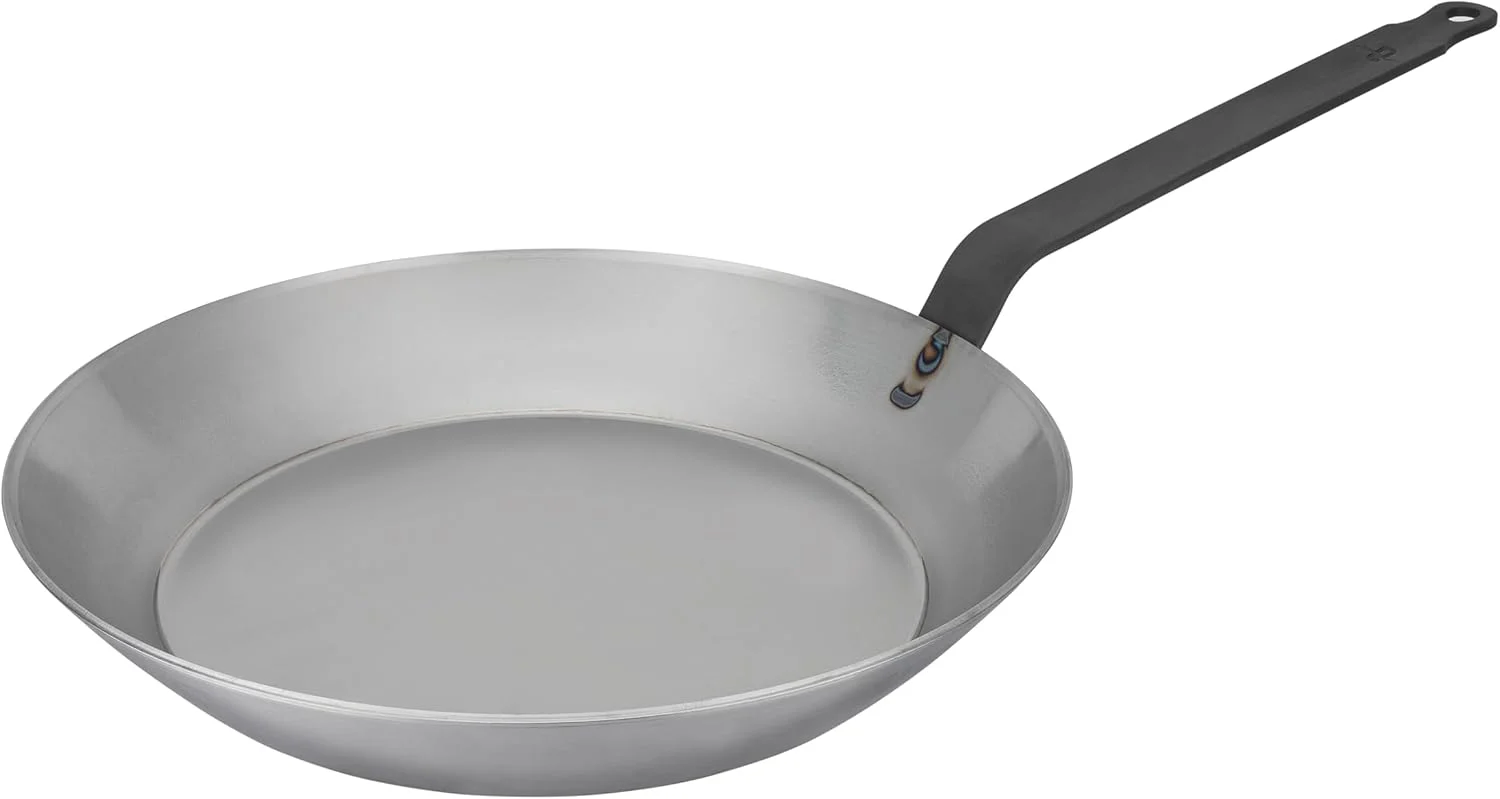
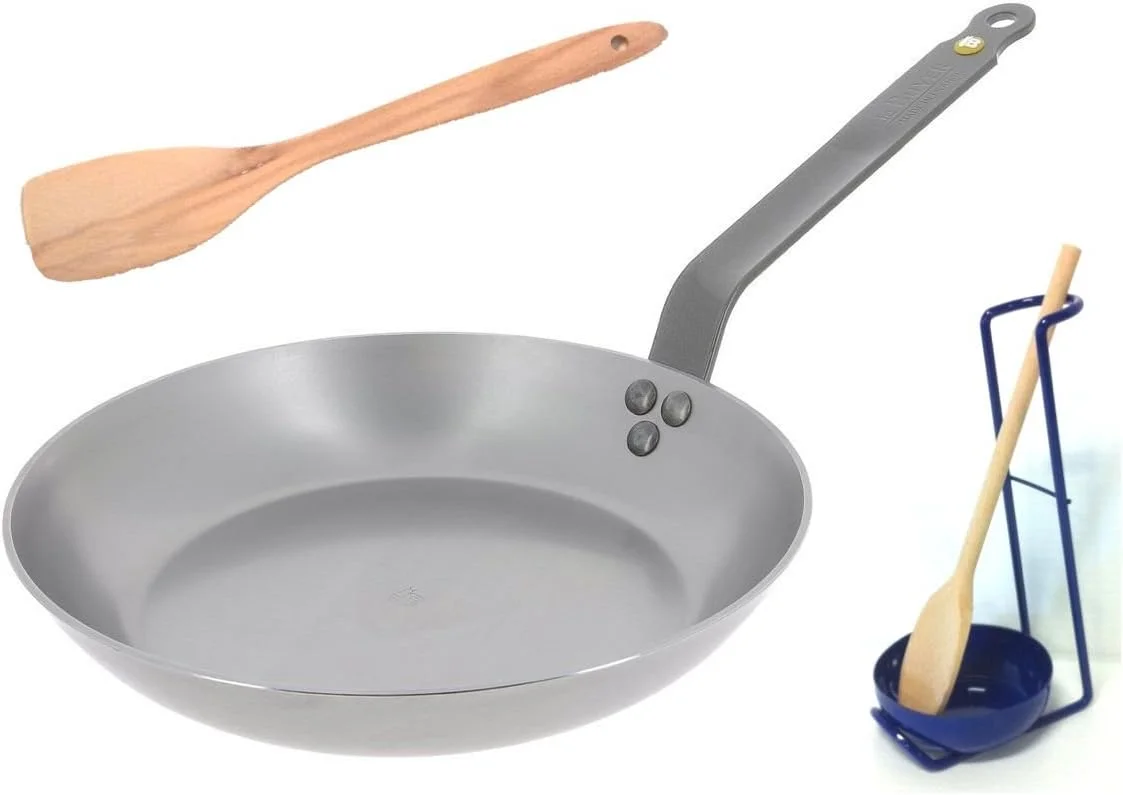
Matfer explicitly claims this pan is PFAS-free, and bare carbon steel backs that claim up by material definition — there's no polymer substrate for PFAS to exist in. This is as clean as it gets for a cooking surface.
The factory seasoning is baked-on vegetable oil — chemically safe and PTFE-free. It ships ready to cook, though the exact oil type (listed as soybean oil in the description) is not always prominent.
The cooking surface is bare carbon steel — no coatings of any kind. There's nothing to chip, scratch, or degrade over time, and zero risk of synthetic chemicals reaching your food.
Lodge doesn't restrict acidic foods, which is the norm for carbon steel. A well-seasoned pan handles moderate acidity fine, though prolong acidic cooking can strip seasoning on any carbon steel pan.
This is an important limitation to know about before buying. In 2024, French food safety authorities tested Matfer pans and found elevated iron and trace metals leaching into food under acidic cooking conditions — at levels exceeding EU safety limits. Matfer issued guidance to avoid cooking acidic foods (tomatoes, citrus, wine, vinegar) in their pans. If you regularly make tomato sauces, wine braises, or citrus-based dishes, this pan is not the right choice for those recipes.
At 2.8mm (12-gauge), this Lodge is thicker than most budget carbon steel pans — enough mass for good searing and reliable seasoning adhesion, and rare for Lodge to disclose this specification directly.
Matfer does not publish the pan's thickness anywhere. This matters because thicker carbon steel holds heat more evenly and resists warping — especially important on induction cooktops. We can't evaluate cooking performance without this spec, and the lack of disclosure itself is a transparency concern. If Matfer disclosed gauge thickness, this score would likely rise significantly.
The 3-rivet carbon steel handle is sturdy and oven-safe, but the rivet crevices can trap moisture and promote rust at the joint — a minor maintenance consideration for humid kitchens.
The handle is welded directly to the pan body with no rivets — a big deal for carbon steel care. Rivets create tiny gaps where water collects and rust starts. The welded design eliminates that entirely. The all-iron construction also means you can put this pan in any oven, including under the broiler, without worrying about a handle that can't take the heat.
Ships pre-seasoned with vegetable oil — you can cook immediately without any setup step. The factory seasoning is a starting point and builds with use.
The pan arrives with a factory protective coating, but Matfer doesn't tell you what kind it is. That creates a problem at first use — different coatings require different removal methods (hot soapy water, steel wool, or just high heat). Using the wrong method can damage the cooking surface before you've even seasoned it. Check third-party guides for Matfer first-use prep before you start.
Not published by the manufacturer. The all-metal construction strongly implies high-temperature oven safety, but Lodge has not stated a specific limit.
Matfer doesn't publish an official oven-safe temperature rating for this pan. Given the all-iron construction, it almost certainly handles any home oven temperature — but without a stated spec we can't confirm it. In practice, all-iron carbon steel is routinely used under the broiler without issue.
Confirmed induction-compatible by Lodge — works on all stovetop types including induction, gas, electric, and ceramic.
Works on induction cooktops — confirmed by the brand. Carbon steel is magnetic by nature, so this is expected, but the explicit confirmation is reassuring.
At $39.90, the Lodge 10" is the most affordable PFAS-free carbon steel option in this category with a disclosed gauge specification.
At $113, this is a premium-priced carbon steel pan. You are paying for the professional French construction — bare iron, welded handle, no coatings. Comparable performance is available for less if the construction details aren't your priority.
Everything you need to make the call - who each one is for, and who should skip it.
Go for it if you...
You want a PFAS-free carbon steel pan under $40 made in the USA with a disclosed gauge specification.
You are new to carbon steel and want a pre-seasoned, ready-to-cook option that works on all cooktops including induction.
You want solid 2.8mm gauge heat performance at a budget price — comparable gauge to entry-level French carbon steel.
You cook primarily on the stovetop and value transparency: Lodge is one of the few brands that puts 'PFAS-Free' in the product name itself.
You want bare carbon steel with no coatings of any kind and an explicit PFAS-free claim directly from the brand.
You are an experienced cook who already avoids acidic ingredients in your carbon steel and won't miss that cooking use case.
The welded iron handle — with no rivets to trap moisture and no oven temperature limit — is important to you.
You cook on induction and want a confirmed-compatible pan with professional French construction.
The main thing to know
No oven-safe temperature rating is published by Lodge despite the all-metal construction. The riveted handle has minor rivet-crevice moisture concern compared to welded alternatives.
In 2024, French food safety regulators documented iron and trace-metal migration exceeding EU safety limits when Matfer pans were tested under acidic cooking conditions. Matfer issued guidance to avoid acidic foods — a real restriction that rules out tomato sauces, wine braises, and citrus dishes.
Skip this if you...
You need a confirmed oven temperature rating for high-heat recipe finishing — Lodge does not publish a specific ceiling.
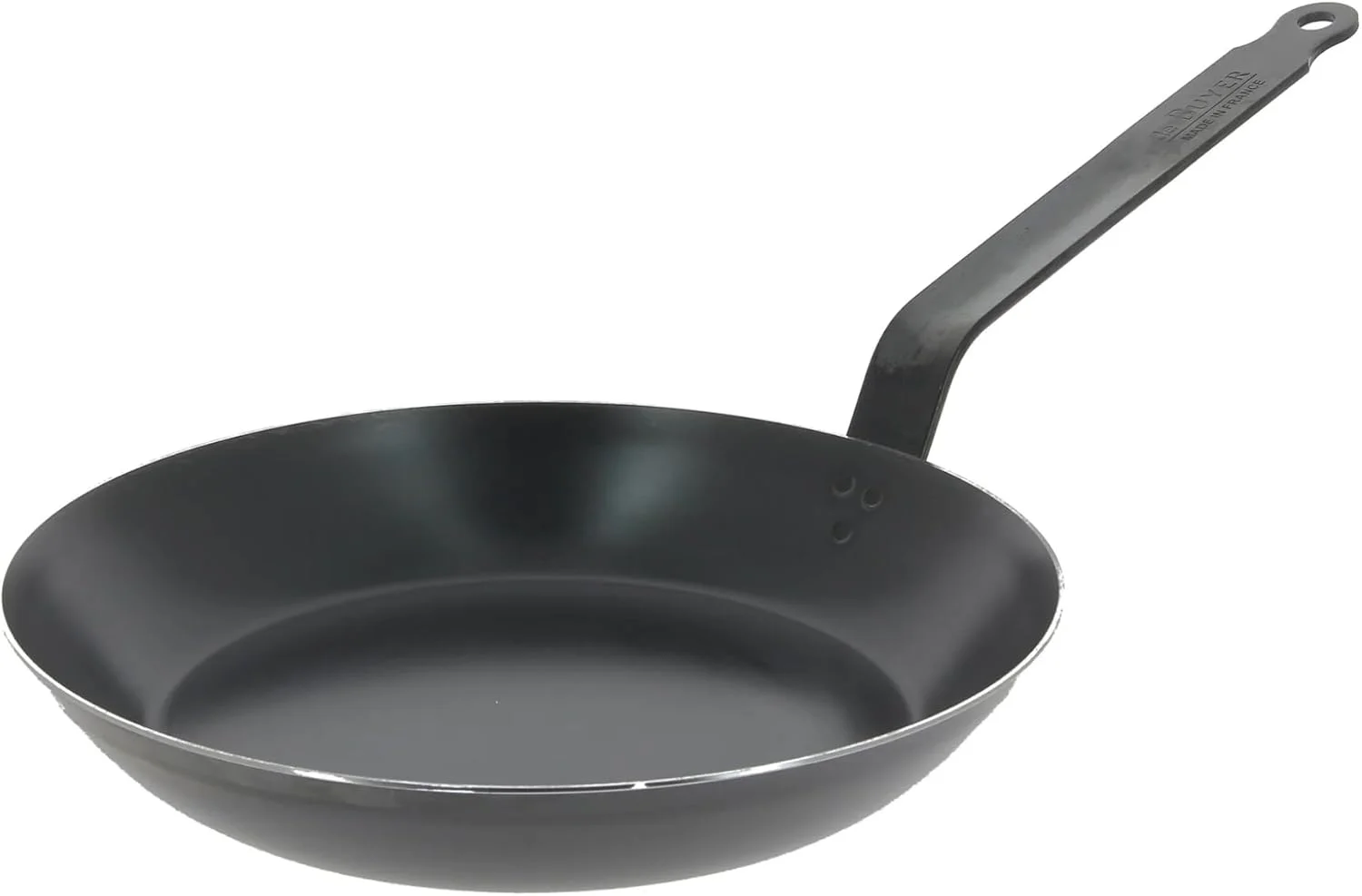
You want a welded handle with no rivet crevices — the de Buyer Blue or Matfer Bourgeat offer welded construction at a higher price.
You want the lightest carbon steel option or prefer bare (unseasoned) construction — the STRATA clad pan and de Buyer Blue are alternatives to consider.
You regularly cook tomato sauces, wine reductions, citrus glazes, or other acidic dishes — the 2024 iron-leaching guidance applies to this pan.
You want to know the pan's gauge thickness before buying — Matfer does not disclose this spec anywhere.
You want a carbon steel pan where first-use prep is clearly explained — the factory coating type is unspecified.
Neither of these quite what you're looking for?
I've reviewed all Carbon Steel Pans options at every price pointEvery Carbon Steel Pans in our database is scored using R3's deterministic scoring system - the same inputs always produce the same score. For this comparison, we evaluated Lodge and Matfer Bourgeat across 3 independent criteria: Safety (83%), Efficacy (6%), Usability (11%). No sponsored rankings. No paid placements.
Straight answers - no sponsored content, no filler.
Both scored close to 8.2/10, so the better choice depends on your priorities. Safety is our top-weighted scoring pillar, followed by efficacy, and usability. Check which pillar matters most to your family and compare those specific scores.
R3 uses a deterministic scoring system - the same inputs always produce the same score. We evaluate each Carbon Steel Pans across Safety, Efficacy, Usability using independently verified data. No sponsored rankings. No paid placements. Every score is fully reproducible.
Not necessarily. The overall score reflects our weighted rubric, but your priorities may differ. If you care most about safety, compare the safety scores directly. If budget drives your decision, the prices tell a clearer story. The "right" pick is the one that matches what matters most to your family.
Not the right match? Explore these alternatives in the same category.