Compare Dutch Ovens
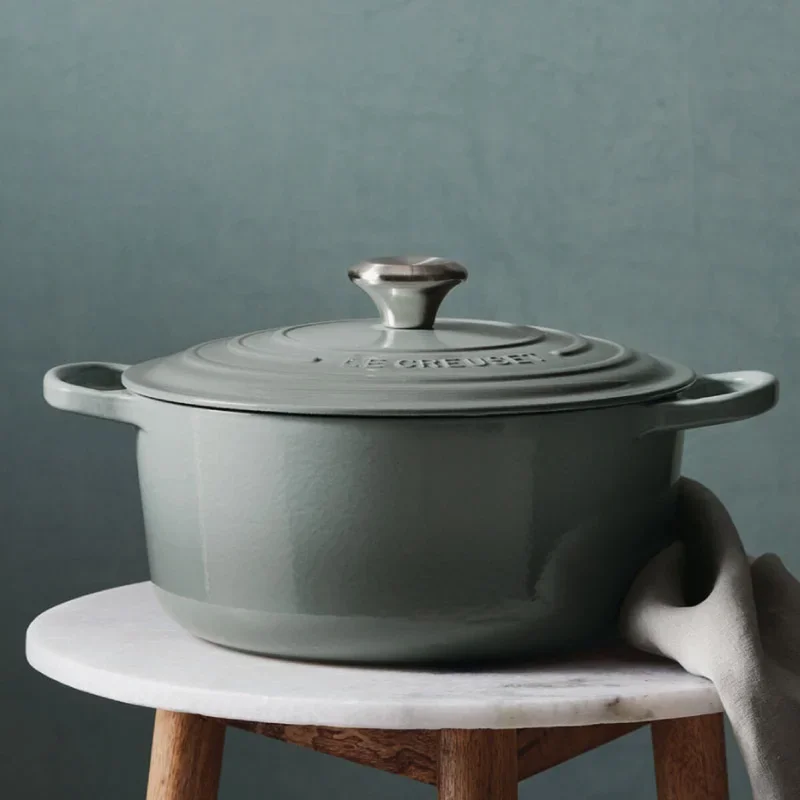
Le Creuset Signature Enameled Cast Iron Round Dutch Oven scores higher on safety - here's why.
The most important dimensions, side by side.
Le Creuset's Chemical Disclosures page -- a dedicated safety document separate from the product marketing page -- explicitly confirms the interior enamel is lead-free and meets California Prop 65 limits. That's the citation that matters.
Lodge XRF-tests their enamel for lead and documents this on their California Disclosure page. This is the same verification standard that independent clean-cookware researchers cite as meaningful. For lead, Lodge is as well-documented as the premium brands.
The same Chemical Disclosures page confirms the enamel uses an anti-acid frit that prevents cadmium from releasing into food. Worth knowing: some exterior color pigments have tested positive for cadmium traces in independent tests -- but that's the outside of the pot, not where food touches.
Lodge says their enamel is cadmium-free and cites FDA testing procedures. That's more than most brands, but they don't explicitly state Prop 65 cadmium compliance the way they do for lead. It's a promise with supporting testing language, not a named certification.
Vitreous enamel is glass fired onto iron -- PFAS cannot exist in it. This isn't a brand claim, it's chemistry. The only reason this scores 9 instead of 10 is that no independent lab has formally confirmed it, but it's the most credible PFAS-free position available for enameled cookware.
Lodge claims PFAS-free enamel, and vitreous enamel chemistry makes this almost certainly accurate -- glass fired onto iron cannot contain PFAS. But no independent lab has formally verified it for this product line.
Le Creuset's limited lifetime warranty is well-regarded. If the enamel chips, the brand has a track record of standing behind it. Read the exclusions carefully -- it's limited, not unconditional.
Lodge backs the enamel with a limited lifetime warranty -- the same tier as Le Creuset and Staub, at a fraction of the price.
Safe to 500F in the oven with the Signature series stainless steel knob -- covers sourdough bread baking, high-heat searing, and 12-hour braises. Note: the Classic series uses a phenolic knob rated to 375F, so confirm which knob is on your specific pot.
Safe to 500F in the oven -- covers bread baking, high-heat roasting, and all standard braising temperatures.
Le Creuset consistently tops heat retention tests in professional kitchens. For slow braises, stews, and bread baking, this performs at the same level as Staub in controlled tests -- and above Lodge in the excellent tier.
Cast iron always holds heat well, and Lodge is no exception. Consumer Reports rates this good -- solid and reliable for everyday cooking. If you're baking serious sourdough or running a home supper club, the difference from excellent might matter. For weeknight soup and Sunday braises, it won't.
At 11.5 lbs, Le Creuset is technically the lightest Dutch oven in this comparison -- but we're talking about a difference of a pound or two from Lodge. All cast iron Dutch ovens require two hands and attentiveness.
At 13.52 lbs empty, this is a genuinely heavy pot. Moving it from stovetop to oven to table requires strength and care. For families where lifting is a concern, consider the Le Creuset options at 11-11.5 lbs.
At $380, you are paying for the best-documented safety tier plus top-rated cooking performance plus French heritage. Lodge's enameled pot at $70 gives you Prop 65 lead compliance. The gap is real, and only you can decide if it's worth it.
At $70, you get XRF-verified lead-safe enameled cast iron and a limited lifetime warranty. The next step up for stronger dual safety documentation is $299+ (Staub) or $368+ (Le Creuset). That's a big gap for families on a budget.
Everything you need to make the call - who each one is for, and who should skip it.
Go for it if you...
You want Prop 65 dual-certified lead and cadmium safety backed by a brand-published Chemical Disclosures page.
Cooking performance is a genuine priority -- Le Creuset consistently tops professional heat retention tests.
This is a forever purchase and you're comfortable with the premium price for French-made quality.
You specifically want a non-reactive enamel interior for tomato sauces, wine braises, and acidic cooking.
You want XRF-verified Prop 65 lead-safe enamel without paying premium brand prices.
Your family makes soups, stews, and braises and doesn't need restaurant-level heat retention.
You're comfortable with a manufacturer's cadmium assurance backed by FDA testing procedures, even without explicit Prop 65 cadmium certification.
A limited lifetime warranty matters to you but budget is a genuine constraint.
The main thing to know
The safety story here is better than the brand's reputation for documentation suggests. Le Creuset's Chemical Disclosures page explicitly confirms Prop 65 compliance for both lead and cadmium in the interior enamel -- the same tier as Staub. What you're weighing at $380 is whether the combination of that certified safety, French manufacturing, and top-rated cooking performance is worth 5x the price of Lodge's XRF-verified enameled pot at $70.
Lodge XRF-screens their enamel for lead and documents it on their California Disclosure page -- one of the strongest lead-safety claims a budget brand can make. The cadmium story is weaker: FDA ASTM-C738 testing is cited but explicit Prop 65 cadmium certification is not stated. If lead safety is your primary concern, this is an excellent budget pick. If you need both lead AND cadmium backed by a named regulatory standard, compare with lodge-enameled-dutch-oven which has nearly identical specs and slightly stronger cadmium language.
Skip this if you...
Your budget is a real constraint -- Lodge's enameled Dutch oven at $70 provides Prop 65 lead compliance and is a fraction of the cost.
You read that some exterior Le Creuset color pigments have tested positive for cadmium traces (not the food-contact interior, but the exterior) and that finding affects your comfort.
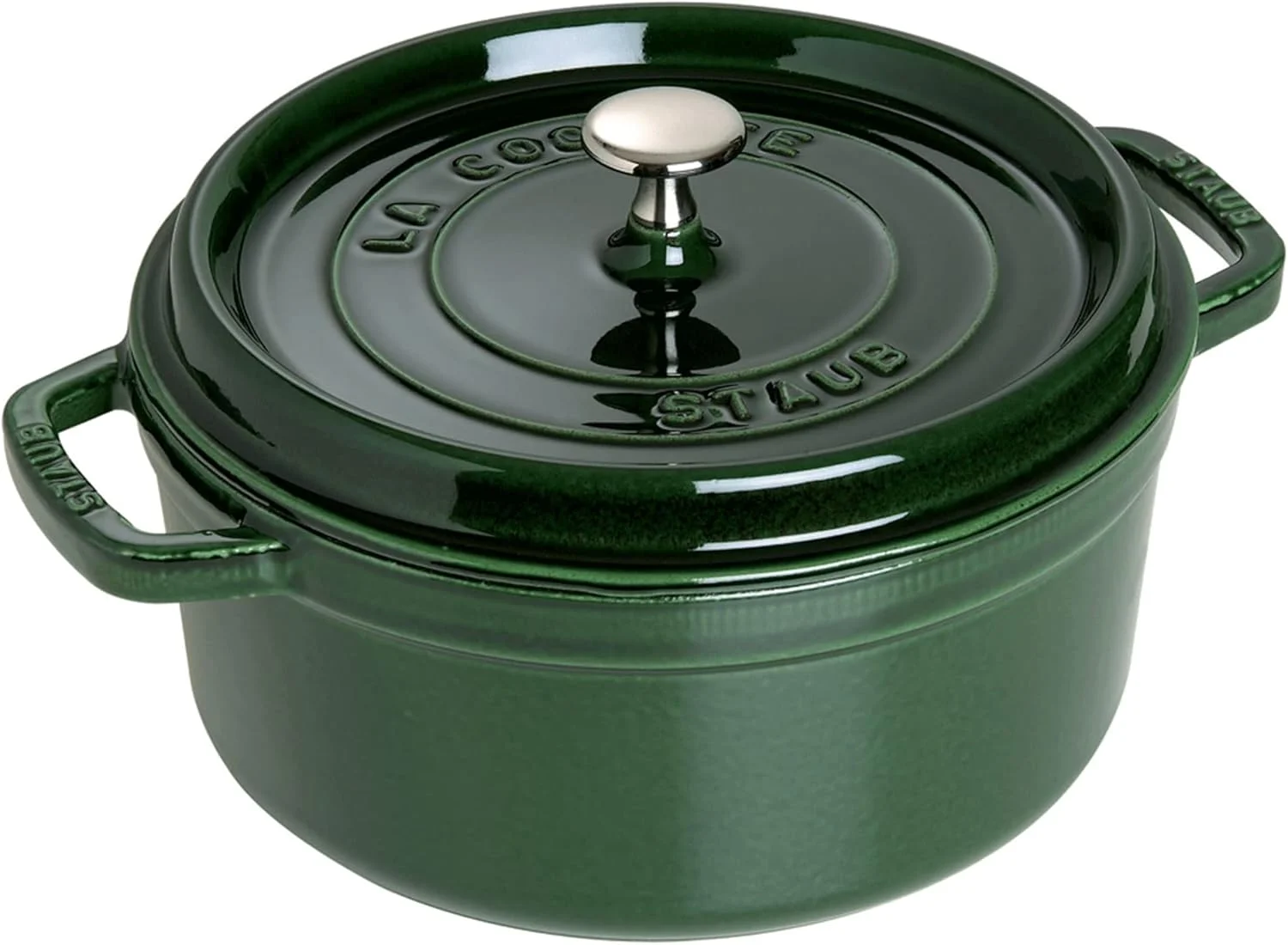
You are comparing to Staub -- which has comparable safety certification at a lower price point.
You want both lead AND cadmium backed by an explicit named regulatory standard -- the seed lodge-enameled-dutch-oven has stronger cadmium language.
The 13.52 lb weight is a concern -- Le Creuset at $380 is 2 lbs lighter and has stronger dual safety documentation.
You're a serious bread baker or precision braiser -- heat retention is good here, not excellent.
Neither of these quite what you're looking for?
I've reviewed all Dutch Ovens options at every price pointEvery Dutch Ovens in our database is scored using R3's deterministic scoring system - the same inputs always produce the same score. For this comparison, we evaluated Le Creuset and Lodge across 3 independent criteria: Safety (87%), Efficacy (12%), Usability (1%). No sponsored rankings. No paid placements.
Straight answers - no sponsored content, no filler.
I'd start with Le Creuset Le Creuset Signature Enameled Cast Iron Round Dutch Oven - it scored 9.8/10 overall in our scoring system. Safety is our top-weighted scoring pillar, followed by efficacy, and usability. Check which pillar matters most to your family and compare those specific scores.
R3 uses a deterministic scoring system - the same inputs always produce the same score. We evaluate each Dutch Ovens across Safety, Efficacy, Usability using independently verified data. No sponsored rankings. No paid placements. Every score is fully reproducible.
Not necessarily. The overall score reflects our weighted rubric, but your priorities may differ. If you care most about safety, compare the safety scores directly. If budget drives your decision, the prices tell a clearer story. The "right" pick is the one that matches what matters most to your family.
Not the right match? Explore these alternatives in the same category.