Compare Non-Stick Pans
Which scores higher on safety? R3 breaks it down.
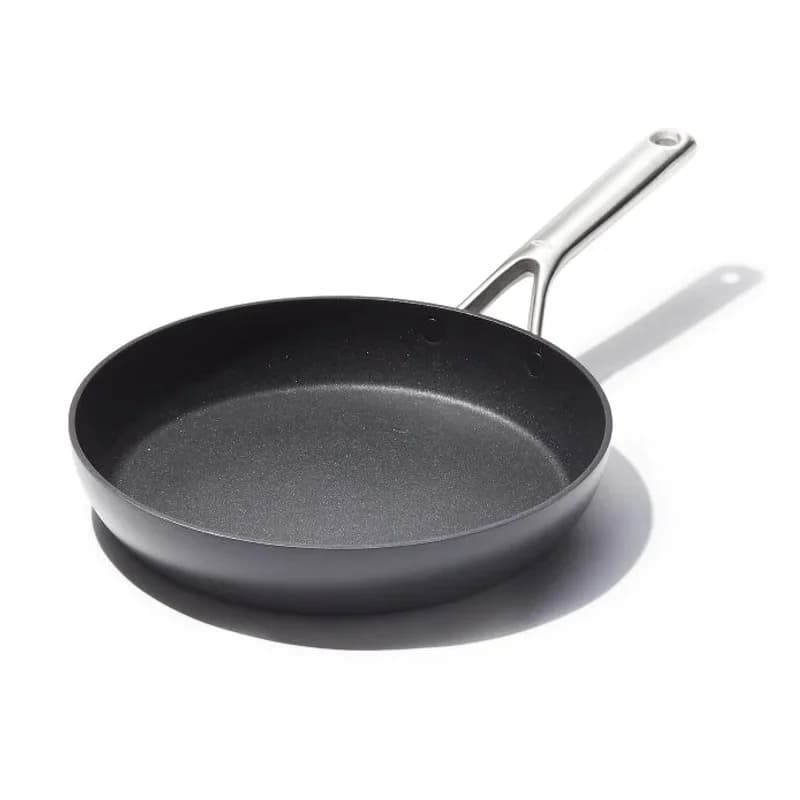
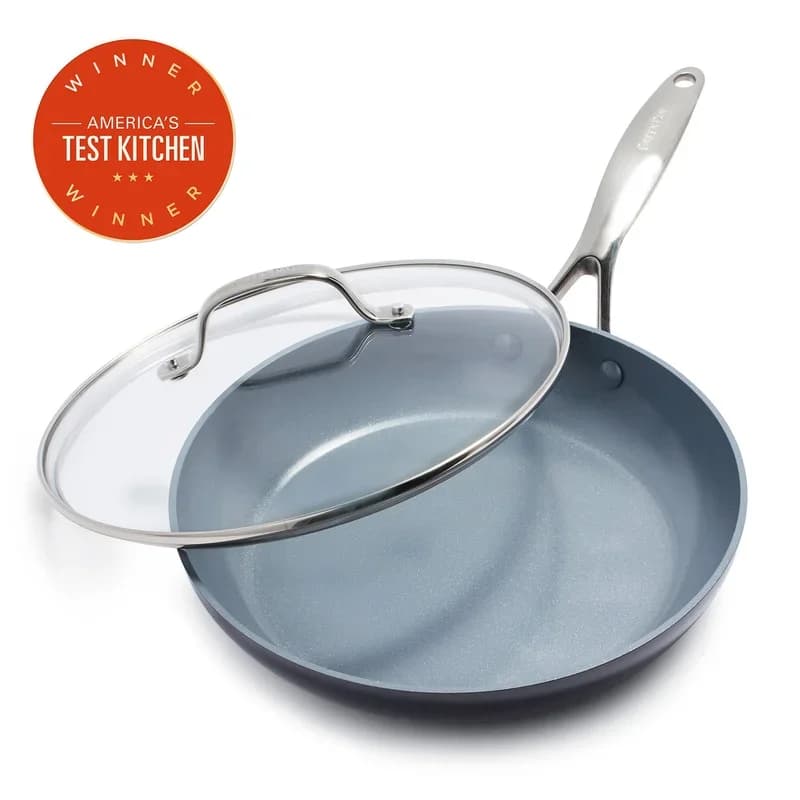
R3 scored the OXO Ceramic Professional Nonstick 10-Inch 8.5/10 and the GreenPan Valencia Pro Ceramic Nonstick 10-Inch 8.7/10 on the same non-stick pans scoring system, weighing safety, efficacy, and usability. The overall scores are close; the pillar breakdown below shows where they differ.
The most important dimensions, side by side.
See which one actually scores higher — and why
Free account unlocks full safety scores, spec-by-spec breakdown, and the R3 verdict on OXO Ceramic Professional Nonstick 10-Inch vs GreenPan Valencia Pro Ceramic Nonstick 10-Inch.
Unlock the full OXO Ceramic Professional Nonstick 10-Inch vs GreenPan Valencia Pro Ceramic Nonstick 10-Inch breakdown
Free account unlocks all safety scores, complete spec comparison, scoring rationale, and the R3 verdict on which one to buy.
Everything you need to make the call - who each one is for, and who should skip it.
Go for it if you...
You're switching away from PTFE pans and want the strongest possible chemical safety profile
You regularly finish dishes in a hot oven and need a pan that can handle 500°F+ without fume risk
A lifetime warranty is important to you and you want a brand that stands behind coating durability
You cook on gas or electric and induction base type is not a priority
Chemical safety is your top priority — you want a pan confirmed PFAS-free by independent testing labs, not just brand claims
You cook for young children or anyone with sensitivities and want to eliminate any PTFE fume risk entirely
You regularly finish dishes in the oven or under the broiler and need a pan safe up to 600°F without restriction
You want long-term manufacturer protection — the lifetime warranty covers coating defects for as long as you own the pan
You cook on gas or electric and want a light, easy-to-handle everyday pan with proven safety credentials
The main thing to know
OXO doesn't disclose coating layer count or induction base construction — two transparency gaps that keep the efficacy score at 5.11 despite an excellent hard-anodized base.
GreenPan doesn't disclose how many coating layers are applied — this is the biggest durability signal in the category and the primary reason the efficacy score is dragged down.
Skip this if you...
You cook primarily on induction and need confirmed encapsulated-base heat distribution
You want full coating transparency — OXO's undisclosed layer count makes long-term durability a guess
Price comparison is essential to your decision — current price is unavailable for this listing
You cook on induction and want the best heat response — the bonded disc base is functional but slower and more warp-prone than fully encapsulated designs
Coating durability is your primary concern — GreenPan's refusal to disclose layer count makes it impossible to objectively compare longevity against competitors who do
You're on a tight budget — comparable PFAS-free ceramic options exist in the $40–$60 range
Neither of these quite what you're looking for?
I've reviewed all Non Stick Pans options at every price pointEvery Non-Stick Pans in our database is scored using R3's deterministic scoring system - the same inputs always produce the same score. For this comparison, we evaluated OXO and GreenPan across 3 independent criteria: Safety (66%), Efficacy (25%), Usability (9%). No sponsored rankings. No paid placements.
Straight answers - no sponsored content, no filler.
Both scored close to 8.5/10, so the better choice depends on your priorities. Safety is our top-weighted scoring pillar, followed by efficacy, and usability. Check which pillar matters most to your family and compare those specific scores.
R3 uses a deterministic scoring system - the same inputs always produce the same score. We evaluate each Non-Stick Pans across Safety, Efficacy, Usability using independently verified data. No sponsored rankings. No paid placements. Every score is fully reproducible.
Not necessarily. The overall score reflects how we weight those three pillars, but your priorities may differ. If you care most about safety, compare the safety scores directly. If budget drives your decision, the prices tell a clearer story. The "right" pick is the one that matches what matters most to your family.
Not the right match? Explore these alternatives in the same category.