Compare Dutch Ovens
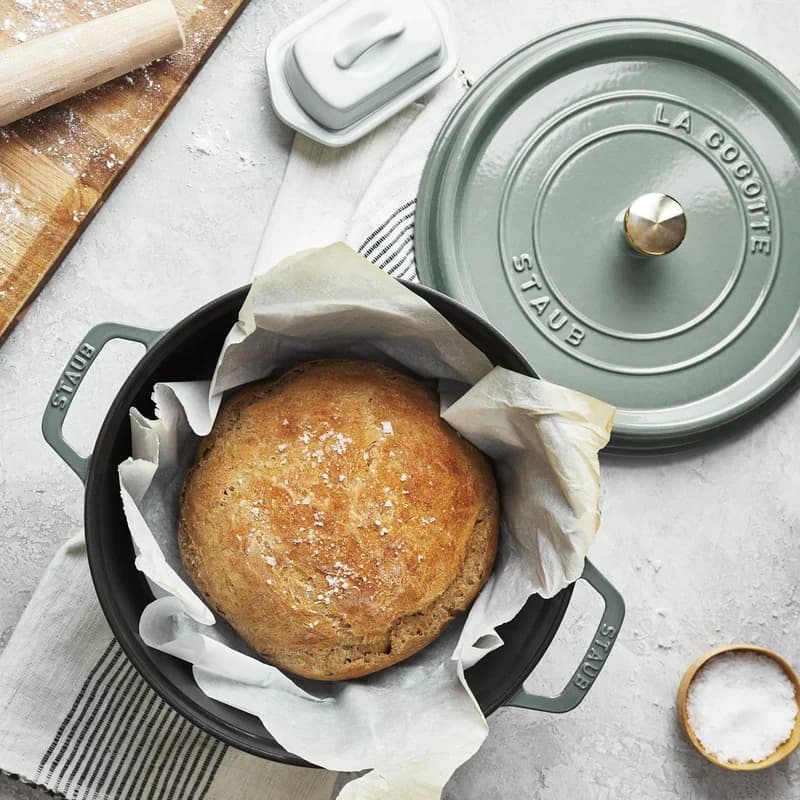
Staub Cocotte 5.5 Qt Round scores higher on safety - here's why.
The most important dimensions, side by side.
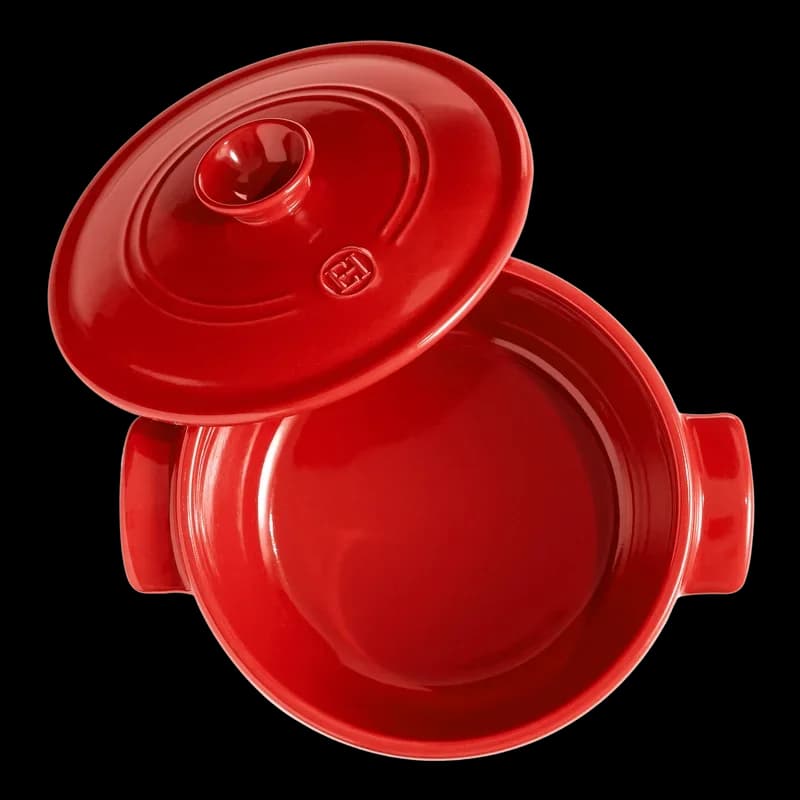
Emile Henry meets California's Prop 65 lead standard — the strictest in the US. Their manufacturing in France under EU food contact regulations means they are held to limits stricter than US FDA as a matter of law, not just brand preference.
EU regulations prohibit cadmium in food-contact ceramics — a standard even tighter than Prop 65. Emile Henry confirms compliance on their FAQ. Cadmium has historically been used in some enamel colorants; this is a clean bill of health.
Emile Henry's HR Flame ceramic is a fired glaze — no polymer coatings of any kind. It is PFAS-free by material science. The brand confirms this on their FAQ. The gap versus Caraway: no independent lab has published formal PFAS test results for Emile Henry.
Emile Henry's 10-year guarantee is the strongest warranty in this comparison — better than a standard limited lifetime warranty that can have more exclusions. For a $200 dutch oven, 10 years of coverage is meaningful protection.
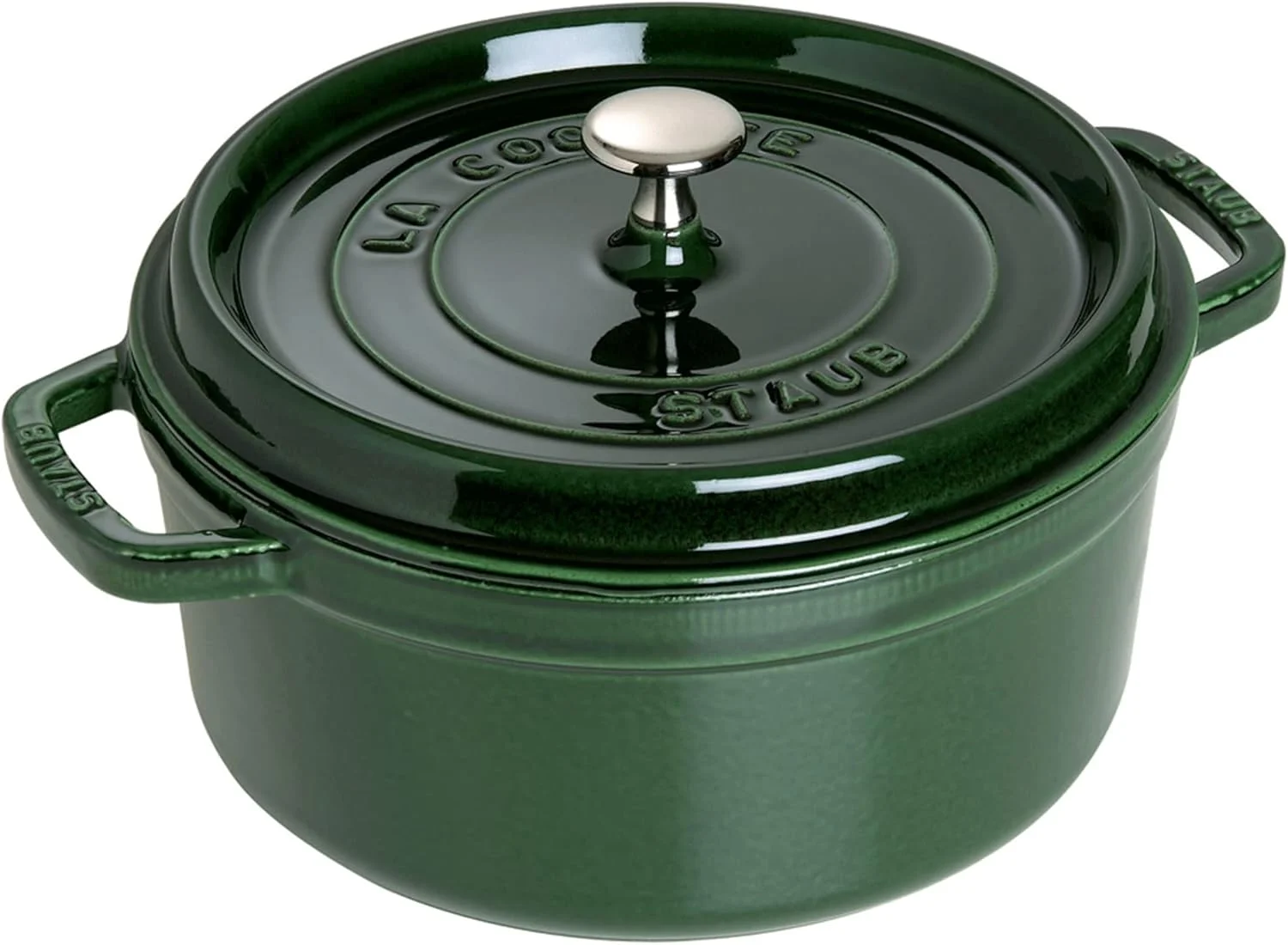
Staub meets California Prop 65 for lead -- the strictest lead standard in the US, roughly 10x more rigorous than base federal limits. And Zwilling actually publishes the audit documents, so you're not just taking their word for it.
Cadmium is a heavy metal linked to kidney damage and cancer. Staub is Prop 65 compliant on cadmium -- the only pot in this batch with that certification -- and Zwilling publishes the audit to prove it.
Staub claims PFOA-free and PTFE-free, and this is almost certainly accurate -- vitreous enamel is glass fused to iron and cannot contain PFAS by chemistry. The only missing piece is an independent lab confirmation in print.
Backed by a limited lifetime warranty. If the enamel chips under normal use, you have recourse -- important when you're spending $300.
482°F covers braising, roasting, soups, stews, and most oven applications without issue. If you bake Dutch oven sourdough, many recipes call for 500°F — that 18°F gap is a real but narrow limitation.
Safe to 500F -- covers bread baking, roasting, and all braising. The nickel-plated brass knob is rated with the whole pot, so no knob swapping needed.
Emile Henry's HR ceramic is denser and thicker than standard ceramic, providing genuinely good heat retention. Better than the ceramic Caraway non-stick dutch oven, though not quite equivalent to full cast iron for marathon braises.
Staub's black matte interior is textured with ground quartz, which creates more surface area for browning and better heat distribution. The heavy lid's interior spikes send moisture back down as tiny droplets, keeping braises and soups consistently moist throughout cooking.
8.8 lbs is the lightest a premium dutch oven gets. Full of a braise, you are lifting maybe 15-16 lbs — manageable for daily cooking. This makes Emile Henry the clear choice if weight is a primary concern.
Over 12 lbs empty. Like every cast iron Dutch oven at this size, you'll want two hands and a strong trivet. This is not a lightweight weeknight pot -- but the weight is the same trade-off you make with any premium enameled cast iron.
At $200 you are paying for 170 years of French ceramic manufacturing expertise, EU food contact safety standards, and a 10-year guarantee. Competitive with Caraway Enameled Cast Iron ($195) for a lighter, different construction.
At $300, this is a significant kitchen investment. The safety documentation and cooking performance justify the premium, but it's roughly double the Made In price for the incremental benefit of a Prop 65 certificate.
Everything you need to make the call - who each one is for, and who should skip it.
Go for it if you...
You want Prop 65 safety credentials in a significantly lighter dutch oven — at 8.8 lbs it handles daily use far more easily than cast iron alternatives.
You trust French manufacture under EU food contact regulations and value the 10-year guarantee.
You primarily braise, slow cook, or roast — the 482°F ceiling covers all of that without limitation.
You want the highest documented enamel safety -- Prop 65 for lead and cadmium, with published audits you can actually reference.
You cook slowly and often: braises, soups, stews, and Dutch oven bread all benefit from Staub's self-basting lid and excellent heat retention.
You're buying once for the long term and a $300 investment makes sense spread over years.
You want French-made cookware with a parent company (Zwilling) that publishes its compliance documentation.
Safety certification, not just safety claims, is your standard.
The main thing to know
Emile Henry has been making ceramic cookware in Marcigny, France since 1850 — and French manufacture under EU food contact regulations is genuinely stricter than US FDA for ceramic lead and cadmium limits. The result: Prop 65 compliant credentials earned through 170 years of European safety standards rather than US third-party testing. At 8.8 lbs it is the lightest premium dutch oven in this comparison, backed by a 10-year guarantee. Two honest limitations: the 482°F maximum is 18°F short of the 500°F benchmark many bakers need for Dutch oven bread; and Emile Henry has not published independent PFAS lab results (though fired ceramic glaze is inherently PFAS-free by material).
Staub is the only Dutch oven in this comparison with Prop 65 certification for both lead AND cadmium, backed by Zwilling's published compliance audits. That's not marketing language -- it's the strongest documented enamel safety story you can buy. The tradeoff is price: at $300, it's a serious investment. But if verified safety matters to you, there's no stronger case in this category.
Skip this if you...
You bake Dutch oven sourdough bread at 500°F — Emile Henry's 482°F ceiling is below what most recipes require.
You want published independent PFAS lab results — Emile Henry has not released these (though the ceramic material is inherently PFAS-free).
You want the most extensively third-party-tested option available — look at Caraway Enameled Cast Iron for published 200+ PFAS type results.
Your budget is under $150 -- Lodge gives you solid lead safety at $80.
You rarely cook low-and-slow; the heat retention premium won't show up in weeknight cooking.
Neither of these quite what you're looking for?
I've reviewed all Dutch Ovens options at every price pointEvery Dutch Ovens in our database is scored using R3's deterministic scoring system - the same inputs always produce the same score. For this comparison, we evaluated Emile Henry and Staub across 3 independent criteria: Safety (87%), Efficacy (12%), Usability (1%). No sponsored rankings. No paid placements.
Straight answers - no sponsored content, no filler.
I'd start with Staub Staub Cocotte 5.5 Qt Round - it scored 9.5/10 overall in our scoring system. Safety is our top-weighted scoring pillar, followed by efficacy, and usability. Check which pillar matters most to your family and compare those specific scores.
R3 uses a deterministic scoring system - the same inputs always produce the same score. We evaluate each Dutch Ovens across Safety, Efficacy, Usability using independently verified data. No sponsored rankings. No paid placements. Every score is fully reproducible.
Not necessarily. The overall score reflects our weighted rubric, but your priorities may differ. If you care most about safety, compare the safety scores directly. If budget drives your decision, the prices tell a clearer story. The "right" pick is the one that matches what matters most to your family.
Not the right match? Explore these alternatives in the same category.