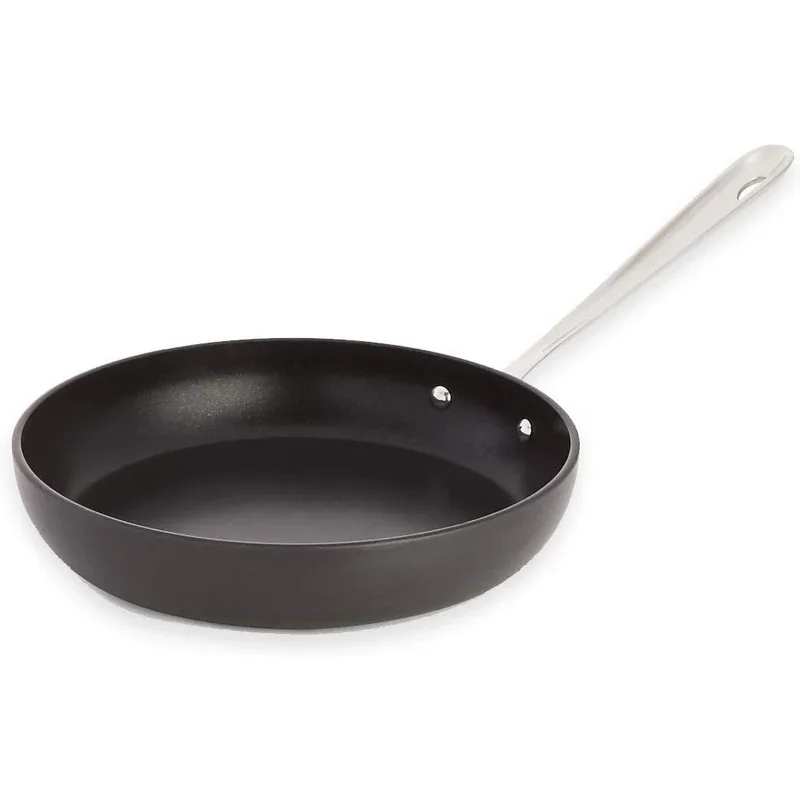
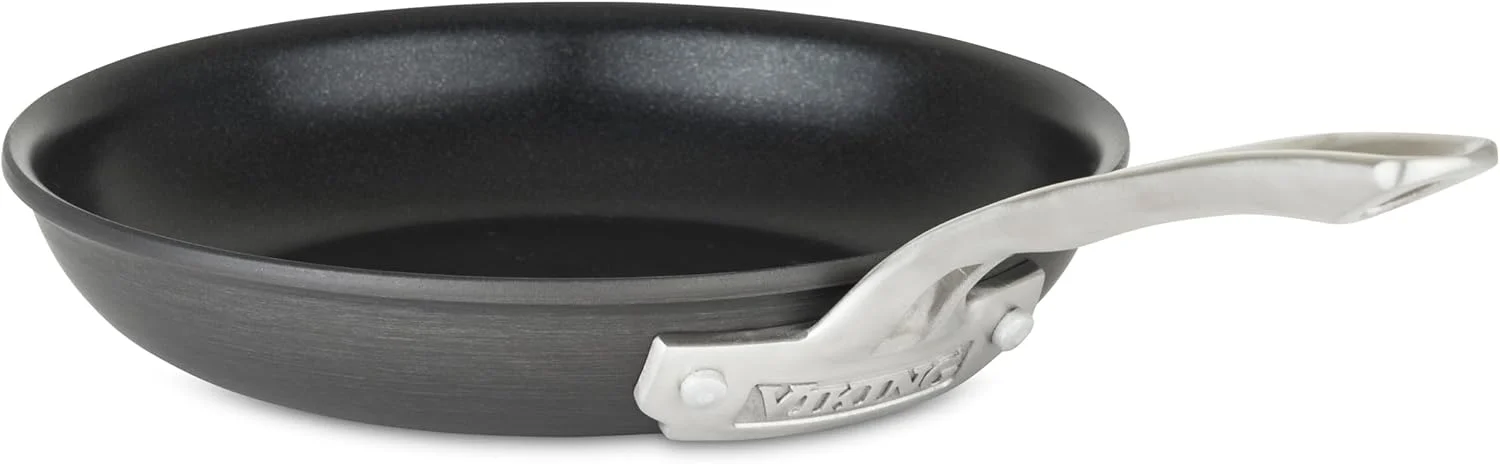
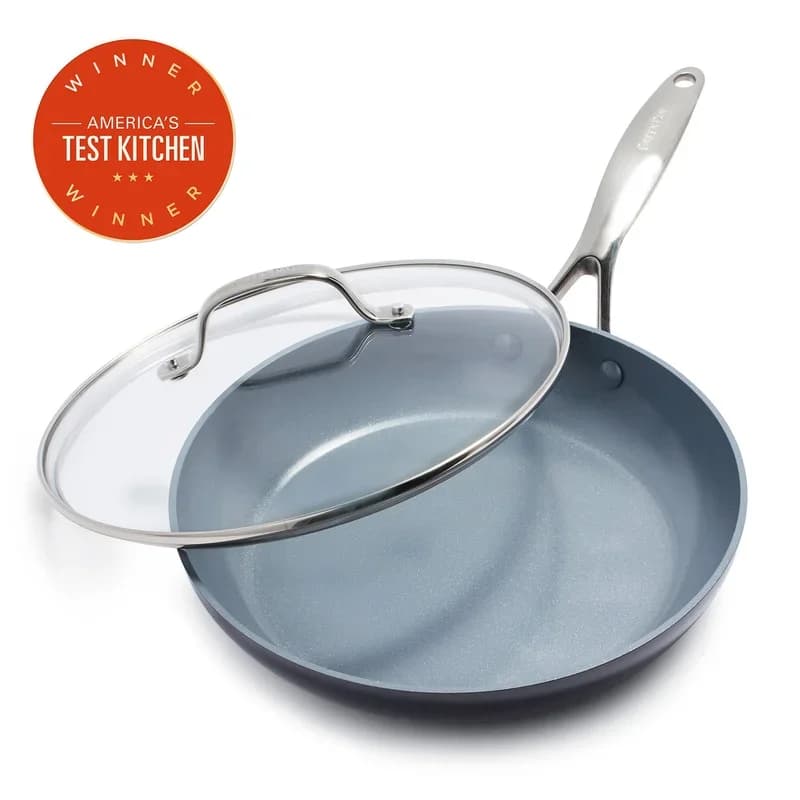
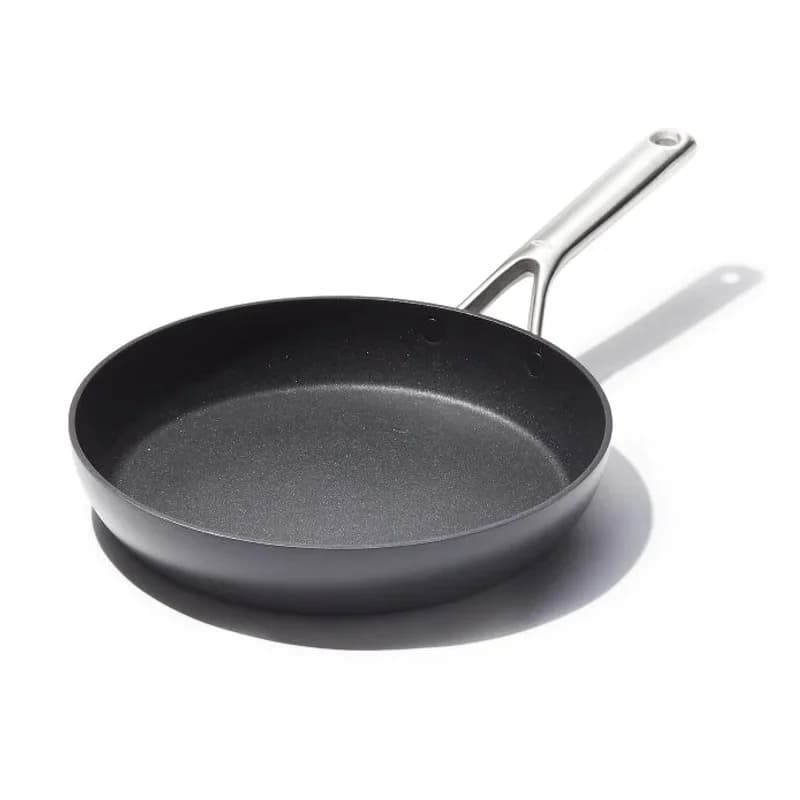
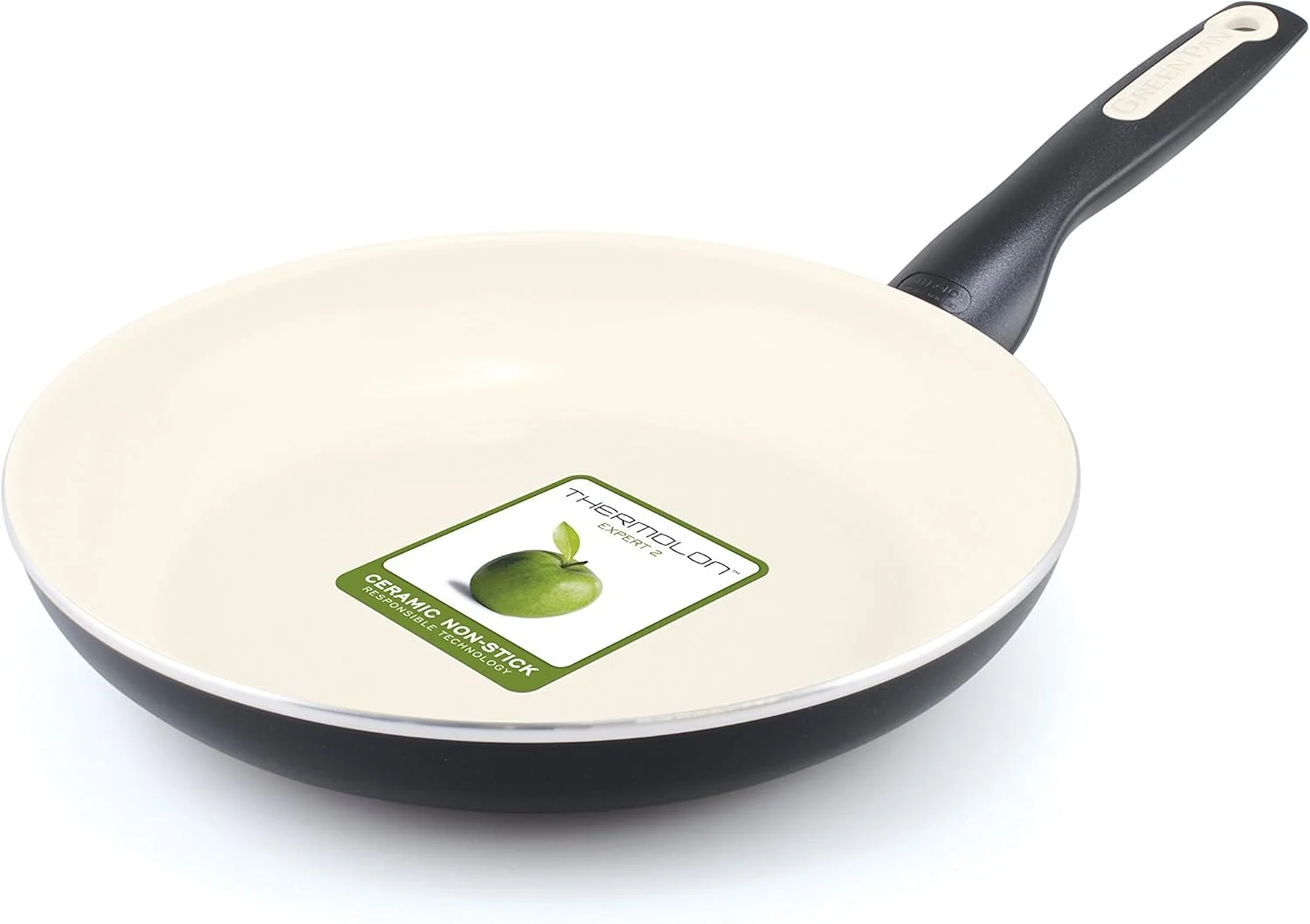
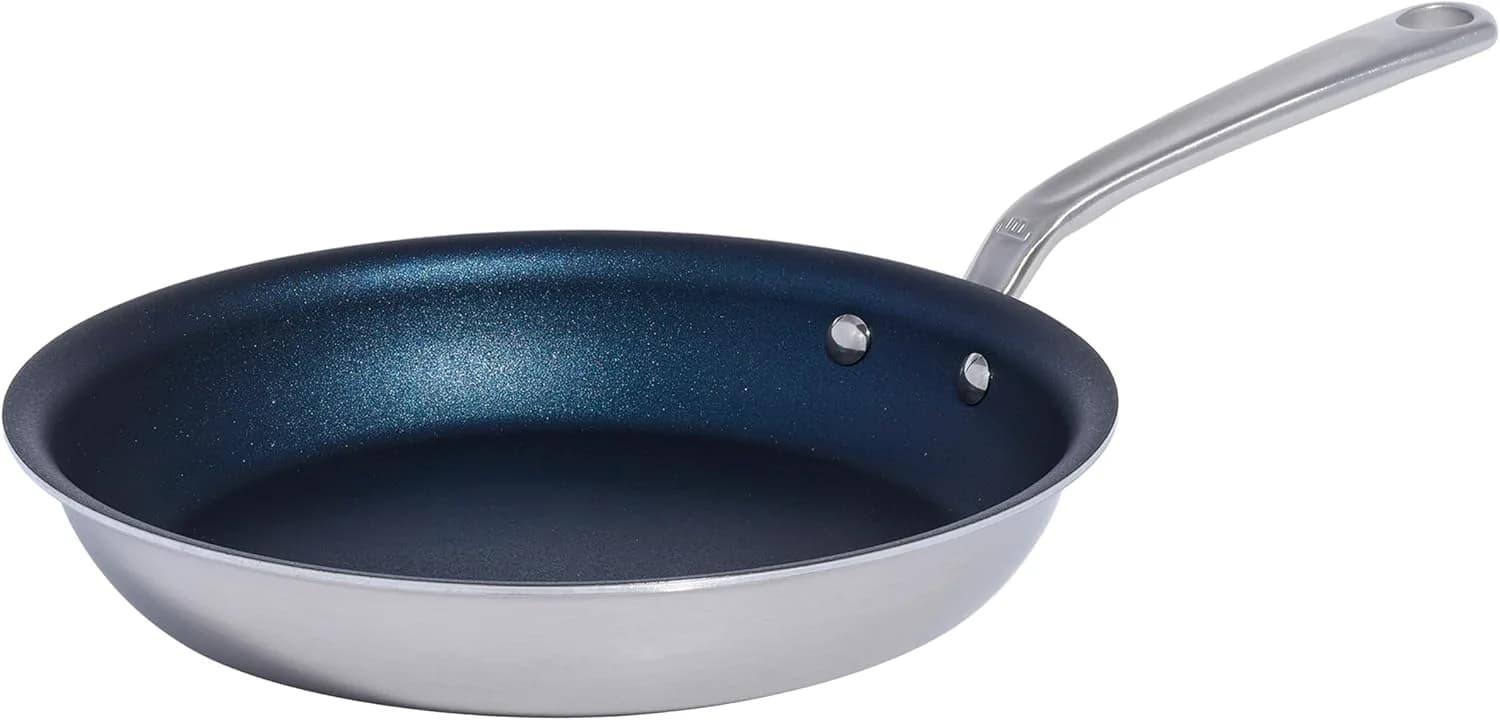
Compare Non-Stick Pans
Which scores higher on safety? R3 breaks it down.
The most important dimensions, side by side.
PTFE nonstick coatings use PFAS chemistry. All-Clad is PFOA-free (as required by law since 2015), but PTFE itself remains in the PFAS compound class. If minimizing PFAS exposure is your priority, this is the core trade-off — it applies equally to every PTFE pan on the market.
Viking explicitly discloses PTFE in the Hard Anodized Nonstick AB1200 filing. PTFE is FDA-approved for food contact. No safe level of PFOA established by EPA, but modern PTFE is made without PFOA.
All-Clad's AB 1200 disclosure page tells you exactly what's in the coating — PTFE, PFA, and FEP listed by name. That level of transparency is rare among PTFE brands and earns a perfect score on this criterion.
Viking's AB1200 disclosure at clippercorp.com explicitly lists PTFE, FEP, and PFA for this product line — full chemical transparency.
500°F is the maximum you should ever use a PTFE pan — at higher temperatures the coating begins to break down. This pan is rated exactly at that ceiling, which is fine for standard oven use. Avoid broiling, which can spike surface temperatures above 500°F.
500°F matches ATK's maximum safe-use ceiling for PTFE. Above this temperature, PTFE begins degrading and can release fumes. The 500°F rating means you can use this pan in any standard home oven.
Hard-anodized aluminum is All-Clad's premium base construction — harder than standard aluminum, distributes heat evenly, and resists scratches. Even heat distribution means your eggs don't stick in one spot while overcooking in another.
Hard-anodized aluminum is electrochemically hardened to be 30% harder than stainless steel. It distributes heat evenly, preventing the hot spots that degrade PTFE coatings fastest.
Three PTFE layers is the standard for commercial-grade nonstick pans — Cook's Illustrated found this provides solid durability for everyday use. Proper care (hand-washing, no metal utensils) extends this to 3–5 years.
3-layer PTFE coating is the industry standard. Expected lifespan of 3-5 years with proper care (medium heat, no metal utensils, hand-wash).
The HA1's encapsulated base means it works on all cooktops including induction — and outperforms disc-bonded pans on induction heat distribution. If you have or plan to get an induction cooktop, this is the construction you want.
Works on all cooktops including induction via a bonded stainless disc. WC notes higher warping risk vs. full-clad encapsulated pans on induction — use medium heat on induction.
At 2.38 lbs this pan is easy to lift one-handed, including when full of food. Heavy enough to hold heat between additions, light enough to flip and toss without wrist fatigue.
Viking doesn't publish the weight for this model. Neutral score applied.
The stainless handle can go in the oven with the pan — no silicone sleeve to remove. Note that it conducts heat during stovetop use, so grab a mitt after 5–10 minutes over high heat.
Integral cast stainless handle allows full oven use up to 500°F. Heavier than riveted handles, which adds weight. Conducts heat — use an oven mitt.
All-Clad says this pan is dishwasher-safe, but Cook's Illustrated recommends hand-washing every nonstick pan without exception — detergent breaks down the PTFE coating faster than you'd expect. Hand-wash only to get the full lifespan.
Listed as dishwasher-safe, but Viking recommends hand-washing to extend life. Expert consensus (CI, WC) is that dishwasher use degrades PTFE coating regardless of manufacturer claims.
All-Clad backs the HA1 with a lifetime warranty against manufacturer defects. If the coating bubbles or flakes from normal use, they cover it — a strong signal of confidence in their own construction.
Lifetime warranty covers coating and structural defects.
$64.99 is above budget for a nonstick pan that will need replacing in 3–5 years. You're paying for All-Clad's construction quality and brand reputation — worthwhile if you value those, but ceramic alternatives at similar price points achieve better R3 safety scores.
WC's ideal nonstick price range is $30-60. $49.99 delivers hard-anodized construction and 3-layer coating at optimal cost.
Everything you need to make the call - who each one is for, and who should skip it.
Go for it if you...
You've decided PTFE nonstick is right for your household and want the best-built version available
You need induction compatibility — the encapsulated base is the premium tier that outperforms disc-bonded alternatives
You value manufacturer transparency — All-Clad's AB 1200 page explicitly names PTFE, PFA, and FEP, which is more disclosure than most PTFE brands provide
You want a lifetime warranty backing a premium-construction nonstick pan
You cook with CI's recommendations in mind — this is their #1 pick for real-world cooking performance
You want the best PTFE pan at $50-60 — hard-anodized base, 3 layers, disclosed chemistry
You cook on gas, electric, or induction and want a versatile induction-compatible nonstick
You've accepted disclosed PTFE and want a brand with AB1200 transparency at this price
The main thing to know
The HA1 is the best PTFE pan R3 tested — Cook's Illustrated's #1 pick for good reason. But PTFE is a PFAS compound, and R3's safety-first rubric penalizes that chemistry regardless of how well the pan is built. If you have decided PTFE is acceptable for your household, this is the pan to buy. If you want to minimize PFAS exposure, a ceramic-coated alternative will score higher.
PTFE pan — if you're PFAS-averse, this isn't the pan. For buyers comfortable with disclosed PTFE, the hard-anodized base and 3-layer coating make this a durable mid-range option at the right price.
Skip this if you...
Minimizing PFAS exposure is a priority — ceramic-coated pans achieve materially higher safety scores at comparable prices
You want to use the dishwasher — despite the brand claim, hand-washing is required to protect the coating
You cook at extreme high heat or broil regularly — PTFE degrades above 500°F and this pan's ceiling leaves no safety buffer
You want a PFAS-free coating — this is PTFE (disclosed), not ceramic
You plan to use the dishwasher — hand-wash to preserve the PTFE coating regardless of the label
You need to know the exact weight before buying — Viking doesn't publish it for this size
Neither of these quite what you're looking for?
I've reviewed all Non Stick Pans options at every price pointEvery Non-Stick Pans in our database is scored using R3's deterministic scoring system - the same inputs always produce the same score. For this comparison, we evaluated All-Clad and Viking across 3 independent criteria: Safety (66%), Efficacy (25%), Usability (9%). No sponsored rankings. No paid placements.
Straight answers - no sponsored content, no filler.
Both scored close to 6.7/10, so the better choice depends on your priorities. Safety is our top-weighted scoring pillar, followed by efficacy, and usability. Check which pillar matters most to your family and compare those specific scores.
R3 uses a deterministic scoring system - the same inputs always produce the same score. We evaluate each Non-Stick Pans across Safety, Efficacy, Usability using independently verified data. No sponsored rankings. No paid placements. Every score is fully reproducible.
Not necessarily. The overall score reflects our weighted rubric, but your priorities may differ. If you care most about safety, compare the safety scores directly. If budget drives your decision, the prices tell a clearer story. The "right" pick is the one that matches what matters most to your family.
Not the right match? Explore these alternatives in the same category.