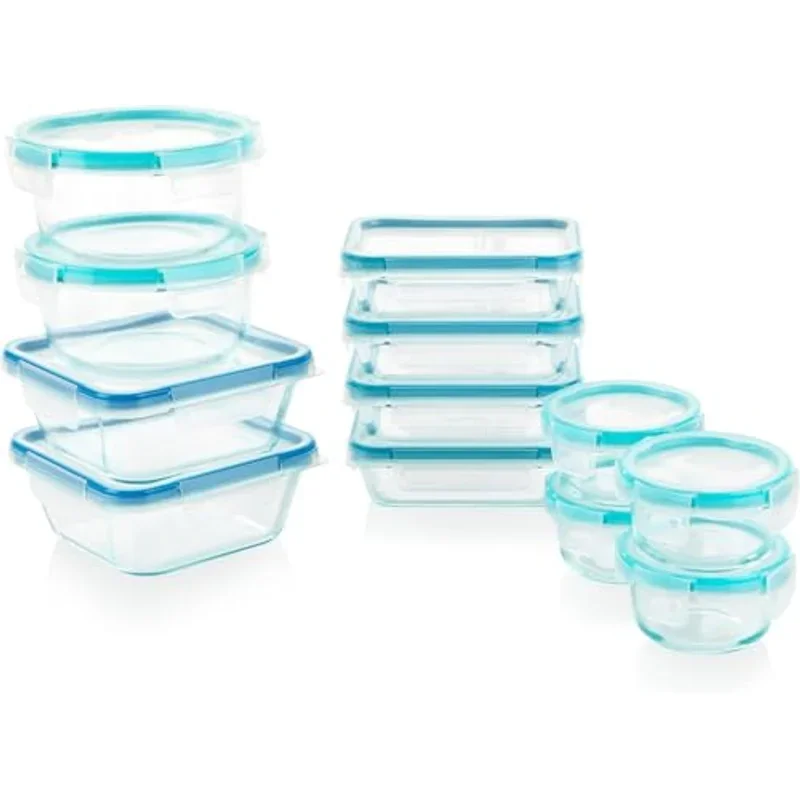
Key Specs
Container Material
Tempered soda-lime glass (Pyrex)
Lid Material
BPA-free plastic with silicone gasket
Lid Seal Mechanism
4-tab snap-lock with silicone gasket
Number of Containers
9 containers + 9 lids pieces
Snapware
#2 of 8 food storage containers tested
What the product listing won't tell you
Know before you buy
The Snapware Total Solution is a well-designed glass storage set with best-in-class sealing, stain resistance, and a strong warranty structure. BPA-free plastic lids with no additional chemical transparency are the primary safety limitation, and glass weight makes these impractical for daily transport.
You want glass containers that genuinely don't stain — no orange tint from tomato sauce, no lingering garlic smell.
Snapware
Snapware Total Solution Glass Food Storage Containers (18-Piece Set)
Snapware
Snapware Total Solution Glass Food Storage Containers (18-Piece Set)
$49.99
We may earn a commission. It doesn't affect our scores.
You need oven-safe storage: these go up to 450°F with the lid removed, enabling real freezer-to-oven meal prep.
You care about long-term ownership — the lifetime lid warranty and available replacement parts mean you're not replacing the whole set when one tab breaks.
You want a leakproof seal for transporting food — the 4-tab snap-lock with silicone gasket is the strongest configuration available in this category.
You cook in batches and want uniform containers in multiple sizes: 1-cup, 2-cup, and 4-cup all in one set.
You need to transport food daily — glass is heavy and shatters; silicone or Tritan containers are meaningfully more practical for packed lunches.
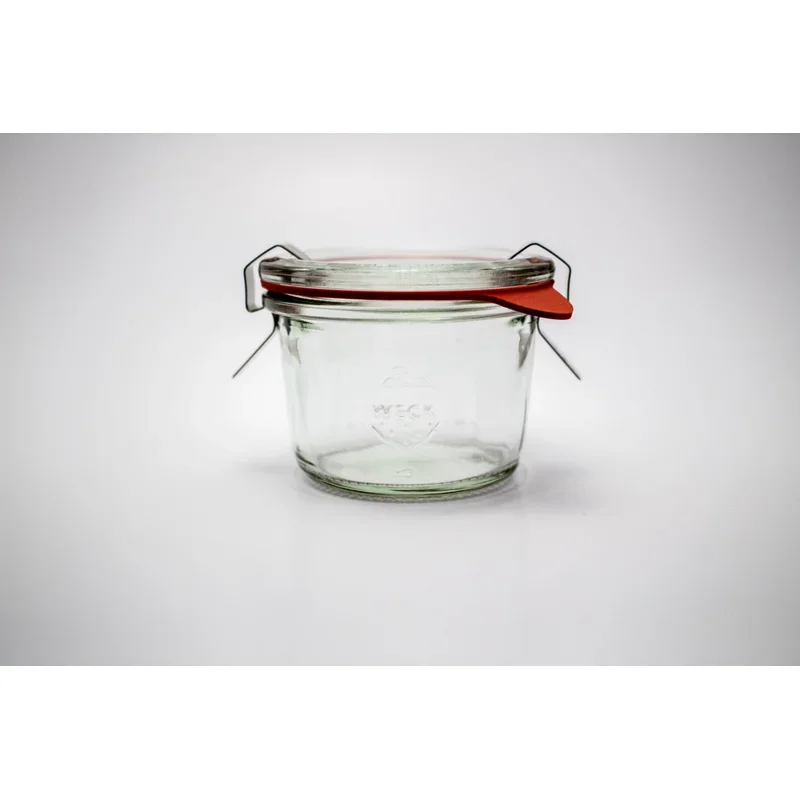
You want zero plastic food contact — the BPA-free plastic lids touch food when containers are stored sideways or inverted; Weck jar-style glass lids eliminate this entirely.
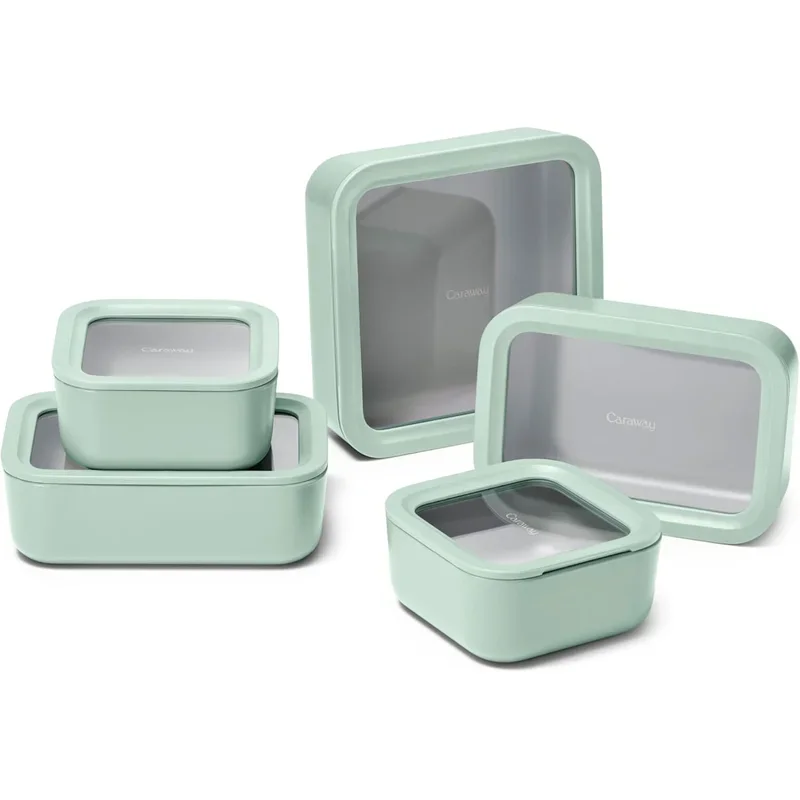
You expect independent PFAS testing on your food containers — Snapware doesn't publish T1 lab results; Caraway and a few others do.
Specs the product listing doesn't explain
What determines how well this performs its core job
What your food and family come into contact with every use
Noise, maintenance, and what happens if something goes wrong
Additional product details
8 criteria — open any layer to see exactly what we found
6.2
Safety
Mixed
9.3
Efficacy
Excellent
8.5
Usability
Good
Criteria
The containers are genuine glass — no plastic, no coating, nothing that can leach into your leftovers. The one thing to know: this is soda-lime glass, not borosilicate. Both are chemically identical for food safety. The difference is that soda-lime glass doesn't like sudden temperature swings — let it come to room temperature before putting it in a hot oven.
The lids are BPA-free plastic — that's the standard claim for this category. It means the lids don't contain BPA, but it doesn't say anything about BPS or phthalates. When containers are stacked on their side or upside down, the lid is touching your food. If you want zero plastic food contact, you'd need a glass-lidded alternative like Weck.
Snapware declares the lids are BPA-free — that's it. No lab has independently tested for PFAS, BPS, or phthalates. The glass containers don't need those claims because glass doesn't contain those chemicals. It's the plastic lids where disclosure matters most, and the transparency there is minimal.
R3 verdict
The glass containers are genuinely inert — no coatings, no chemical migration, no BPA by material. The main limitation is the plastic lids: they're food-contact surfaces when containers are stored sideways or inverted, and 'BPA-free' only addresses one bisphenol.
Criteria
The glass containers meet US FDA food-contact standards — that's the minimum required to sell food containers in the US. No independent lab has tested them for PFAS contamination. For glass containers that's less concerning than for plastic or coated cookware, but if you want lab-verified PFAS testing, brands like Caraway publish those results and Snapware doesn't.
R3 verdict
Snapware's glass containers comply with FDA 21 CFR food-contact standards — that's the baseline US regulatory requirement. But there's no independent PFAS lab testing, no LFGB certification, and no Mamavation testing on record.
The glass floor (score 4) acknowledges that glass containers predate modern PFAS certification frameworks because they never contained those chemicals. The gap from 4 to 10 would close if Corelle Brands published T1 third-party PFAS testing results.
Criteria
The 4-tab snap-lock design with a silicone gasket is the best seal configuration you can get in a plastic-lid container set. Four latches mean even pressure around the entire lid. It's genuinely leakproof — you can transport soup in a bag without worrying. The tradeoff is that it takes a moment to open all four tabs, which some people find annoying for quick access.
Glass doesn't stain. At all. Put tomato sauce, turmeric rice, or leftover curry in these and they wash out completely. Your plastic containers from three years ago are probably orange. These won't be. It's one of the most practical advantages of switching to glass storage.
Criteria
The glass containers and lids are both fully dishwasher safe. No hand-washing required, no special rack placement needed. Run the full dishwasher cycle and these come out clean every time. Lowest-effort maintenance in the glass storage category.
R3 verdict
Both glass containers and plastic lids are fully dishwasher safe with no restrictions — no cracking, warping, or seal degradation reported. No special care or hand-washing required for any component under normal use. This is an upgrade from earlier data which noted top-rack-only for lids.
Criteria
The lifetime warranty on the lids is the part that actually matters. Glass containers rarely fail — the lids do. The snap-lock tabs weaken over time, the silicone gasket wears out, and the plastic can crack. A lifetime warranty means Snapware will replace defective lids whenever that happens. Replacement lids are also sold separately, so you don't need to buy a new set when one lid breaks.
R3 verdict
Snapware's warranty structure is thoughtfully designed around actual product lifecycles: glass containers carry a 2-year warranty while plastic lids get a lifetime warranty — the component that actually wears out first. Replacement lids are available at major retailers. Score upgraded to 10 reflecting lifetime warranty with confirmed lid replacement availability.
Criteria
The glass containers are fully microwave safe. The plastic lids are not — you have to take the lid off before reheating, which means no built-in splatter protection. It's a minor extra step that's completely standard for glass container sets, but worth knowing before you buy if you reheat multiple containers daily.
These go straight in the freezer — glass and lid both. Make a big batch of soup, portion it out, freeze it. The containers handle it without warping, cracking, or absorbing freezer odors. That's the full meal prep workflow working as it should.
Criteria
Glass is heavy. A 4-cup rectangular container weighs noticeably more than a plastic equivalent, and if it drops on a hard floor it can shatter. For packed office lunches or kids' bags, that's a real consideration. If you're using these at home — fridge to microwave to table — weight isn't an issue. If you're carrying them daily, it gets old.
R3 verdict
Glass is the least portable material in the food storage category. A 9-container set means significant weight and shatter risk for transport.
These are designed for refrigerator-to-table use, not packed lunches or kids' school bags. If portability is a primary use case, silicone or Tritan containers score significantly higher here.
Criteria
Around $50 for 9 glass containers with lids works out to roughly $5.55 per container. That's standard pricing for glass storage with snap-lock lids and a lifetime lid warranty — not a premium, not a bargain. If you're comparing to Pyrex Simply Store or Glasslock, Snapware's 4-latch seal and lifetime lid warranty make it worth the slight premium.
Already have an account? Log in
Verified retailer — current pricing
Starting price
$49.99
We earn a small commission on purchases. It never influences our scores — R3 is funded by readers, not brands.
Alternatives that address specific trade-offs
Why this matters: Snapware's glass containers comply with FDA 21 CFR food-contact standards — that's the baseline US regulatory requirement. But there's no independent
Stasher
Scores 6.0/10 on third-party certification & verification vs 4.0 here
Didn't find the food storage container you need?
See all food storage containers we reviewed#2 of 8 food storage containers reviewed
No BPS-free or phthalate-free claims exist for the lids. For the glass body, the only meaningful distinction from borosilicate is thermal shock behavior — allow room-temperature warm-up before oven use.
R3 verdict
R3 verdict
This is Snapware's strongest category. The 4-latch silicone gasket seal is the highest-rated seal configuration in the rubric — airtight, leakproof, and confirmed by product testing.
The glass body adds perfect stain and odor resistance: no tomato sauce staining, no garlic odor absorption, 15+ year lifespan with zero degradation. These two criteria together give this layer a perfect 10.
This is Snapware's strongest category. The 4-latch silicone gasket seal is the highest-rated seal configuration in the rubric — airtight, leakproof, and confirmed by product testing.
The glass body adds perfect stain and odor resistance: no tomato sauce staining, no garlic odor absorption, 15+ year lifespan with zero degradation. These two criteria together give this layer a perfect 10.
These containers can go in a preheated oven up to 450°F — hot enough for baking casseroles, reheating leftovers, or finishing a frittata. Remove the lid first (lids are plastic, not oven safe). Don't put a cold container directly in a hot oven — let it come to room temperature first to avoid thermal shock.
R3 verdict
The glass containers cover the full thermal range: freezer safe, oven safe to 450°F, and microwave safe. The one-step compromise is the microwave: you have to remove the plastic lid before heating, which means no splatter shield and you need to add a paper towel or plate on top.
That's minor friction but worth knowing. Freezer-to-fridge-to-oven workflows are fully supported — just don't go freezer-to-hot-oven directly.
R3 verdict
The glass containers cover the full thermal range: freezer safe, oven safe to 450°F, and microwave safe. The one-step compromise is the microwave: you have to remove the plastic lid before heating, which means no splatter shield and you need to add a paper towel or plate on top.
That's minor friction but worth knowing. Freezer-to-fridge-to-oven workflows are fully supported — just don't go freezer-to-hot-oven directly.