Quick Take
Score: 8.9/10 | The APEC ROES-50 is the nuclear option for water filtration. When nothing else is pure enough - when you have well water, arsenic concerns, fluoride sensitivity, or severe contamination - reverse osmosis removes everything. This is the system I recommend to families who have exhausted other options or whose water quality reports reveal concerning contaminants.
What We Evaluated
This review uses R3's Water Filter Methodology v1.1.0.
Safety Analysis (40% weight) - Score: 9.5/10
Reverse Osmosis: The Ultimate Filter
Reverse osmosis forces water through a semipermeable membrane with pores so small (0.0001 micron) that virtually nothing passes through except water molecules. This removes:
- 99%+ of dissolved solids (TDS to near-zero)
- 99%+ of lead, arsenic, chromium-6 (heavy metals)
- 99%+ of fluoride (important for families limiting exposure)
- 99%+ of PFAS (forever chemicals)
- 99%+ of bacteria and viruses (with pre-filters)
- 99%+ of pharmaceuticals, pesticides, industrial chemicals
No pitcher, faucet, or standard under-sink filter matches this breadth.
WQA Gold Seal Certification
APEC holds WQA (Water Quality Association) Gold Seal certification - the industry's most rigorous third-party testing standard. This is equivalent to or exceeding NSF certification.
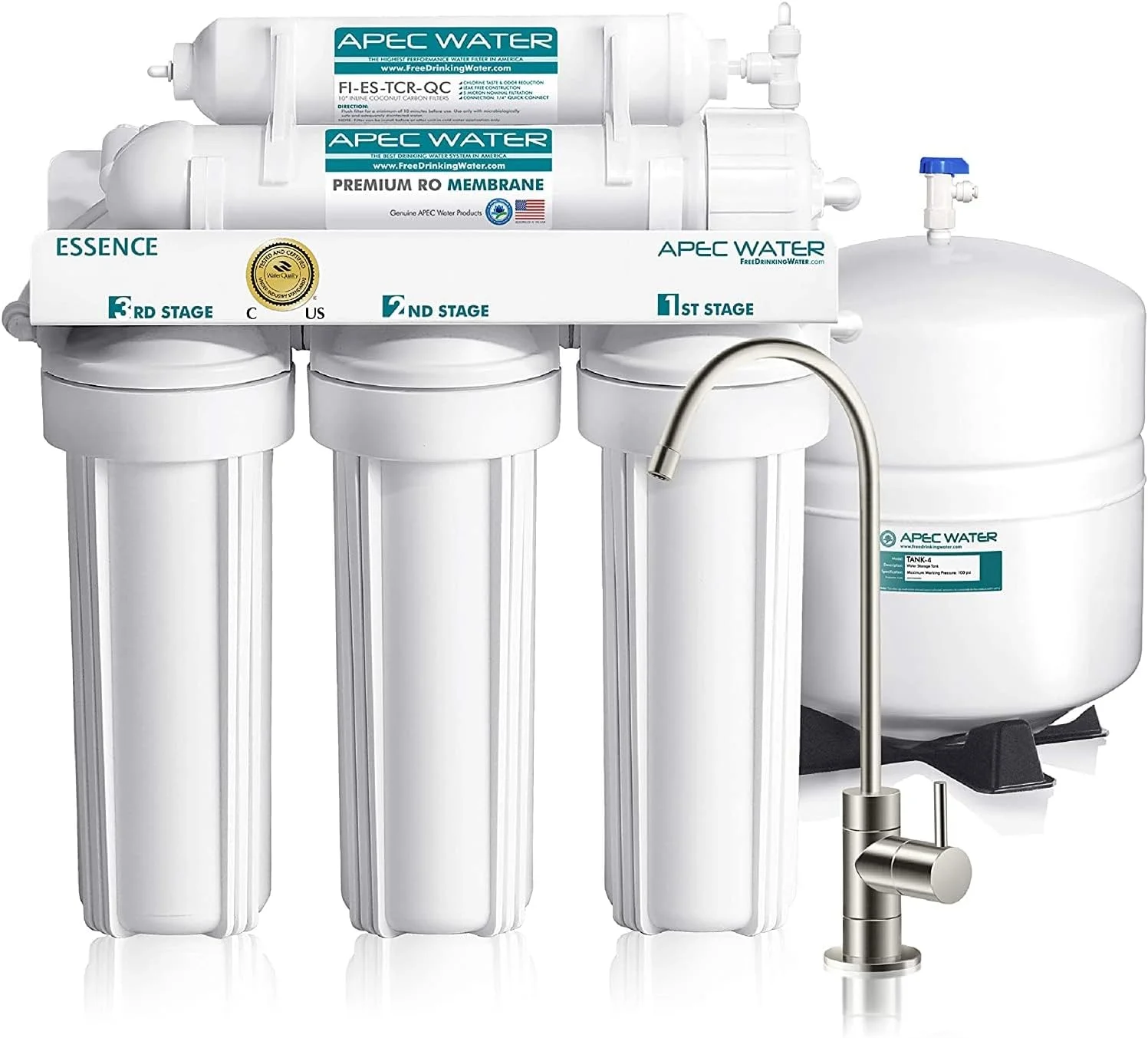
5-Stage Filtration Process
- Stage 1: Sediment Pre-Filter - Removes rust, dust, particles
- Stage 2: Carbon Block - Removes chlorine, taste, odor
- Stage 3: Carbon Block - Extended chlorine and chemical removal
- Stage 4: RO Membrane - The core filter that removes 99%+ of contaminants
- Stage 5: Polishing Carbon - Final taste refinement
Each stage serves a purpose; the pre-filters protect the expensive RO membrane from damage.
Made in USA
Manufactured in California with domestic quality control. APEC has been making RO systems since 1996 - decades of experience.
Fluoride Removal
A key differentiator: RO removes fluoride, which no standard pitcher or faucet filter can do. For families specifically seeking fluoride reduction, RO is the only home solution.
Efficacy Analysis (35% weight) - Score: 9.3/10
Contaminant Removal: Virtually Everything
RO removes 1,000+ contaminants at 99%+ rates. This includes contaminants that other filters struggle with:
- Arsenic (problematic in many well water supplies)
- Chromium-6 (Erin Brockovich contaminant)
- Nitrates (agricultural runoff)
- Radium (naturally occurring in some groundwater)
- Fluoride (added to municipal water, some seek to avoid)
Output Capacity: 50 GPD
50 gallons per day is sufficient for most family drinking and cooking needs. A 3-gallon storage tank provides ready filtered water; the system refills automatically.
Filter Life
- Pre-filters (Stages 1-3): Replace every 6-12 months (~$25/set)
- RO Membrane (Stage 4): Replace every 2-3 years (~$40)
- Polishing filter (Stage 5): Replace every 6-12 months (~$15)
Annual cost: approximately $50-70 depending on water quality and usage.
TDS Reduction
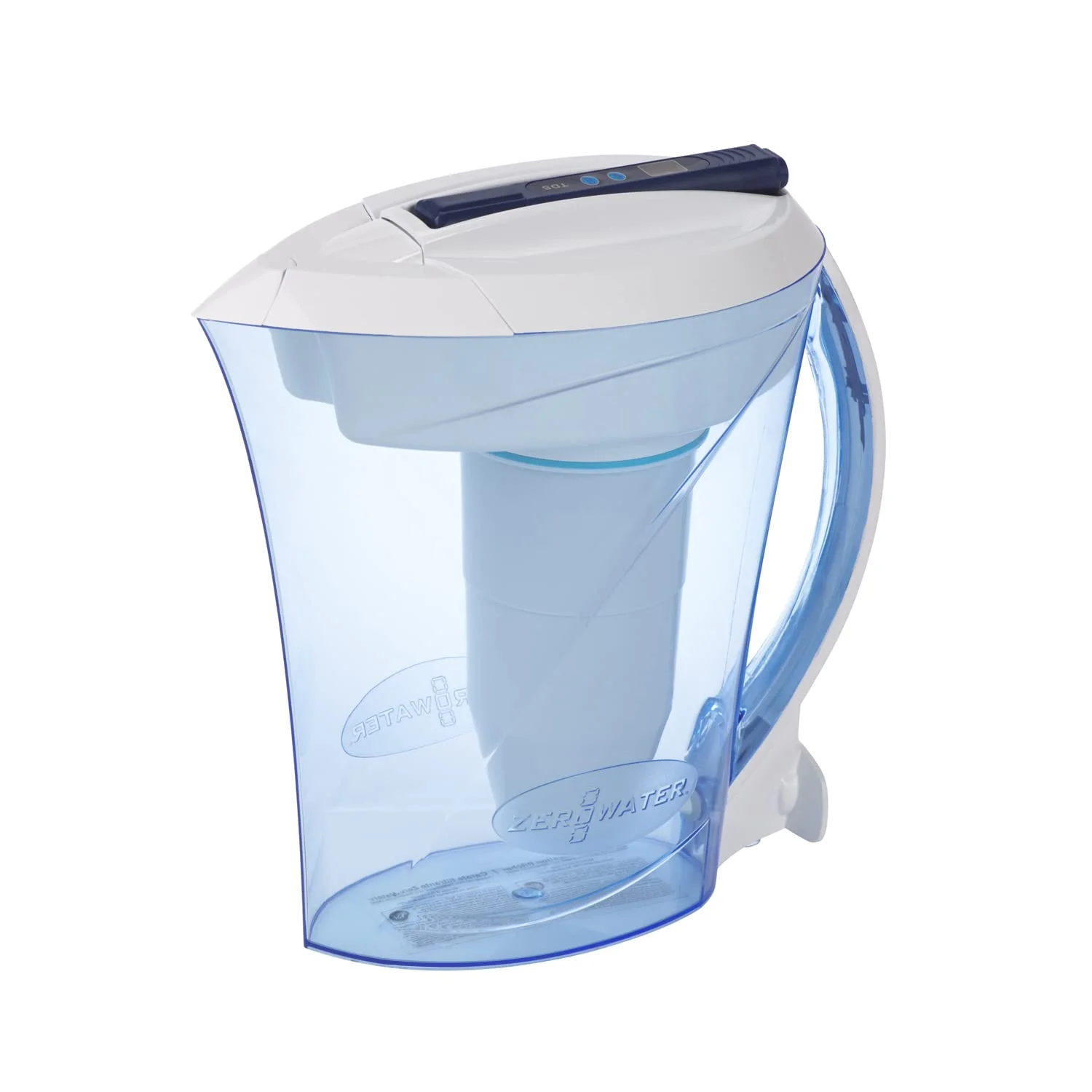
RO produces water with TDS of 0-10, compared to typical tap water of 100-400+. For ZeroWater fans who want true near-zero TDS, RO is the permanent solution without weekly filter changes.
Value Analysis (15% weight) - Score: 7.5/10
Upfront Cost: $199.99
More expensive than pitcher filters but competitive for under-sink systems:
- APEC ROES-50: $200
- Aquasana AQ-5200: $130
- iSpring RCC7: $200
- Waterdrop G3: $400
Annual Operating Cost: $50-70
Replacement filters are inexpensive: $25 for pre-filter set, $40 for membrane (every 2-3 years), $15 for polishing filter. Over 5 years, operating costs are comparable to pitcher filters.
The Water Waste Trade-Off
Here is the critical consideration: RO systems waste 3-4 gallons of water per gallon of purified water. The rejected water (brine) goes down the drain.
For a family using 3 gallons of purified water daily:
- 3 gallons purified + 9-12 gallons rejected = 12-15 gallons total
- At typical water rates ($0.01/gallon), this adds ~$3-5/month to your water bill
This waste is the primary reason we do not recommend RO for everyone. It is justified for severe contamination; it is overkill for typical municipal water.
Cost Per Gallon (Including Water Waste)
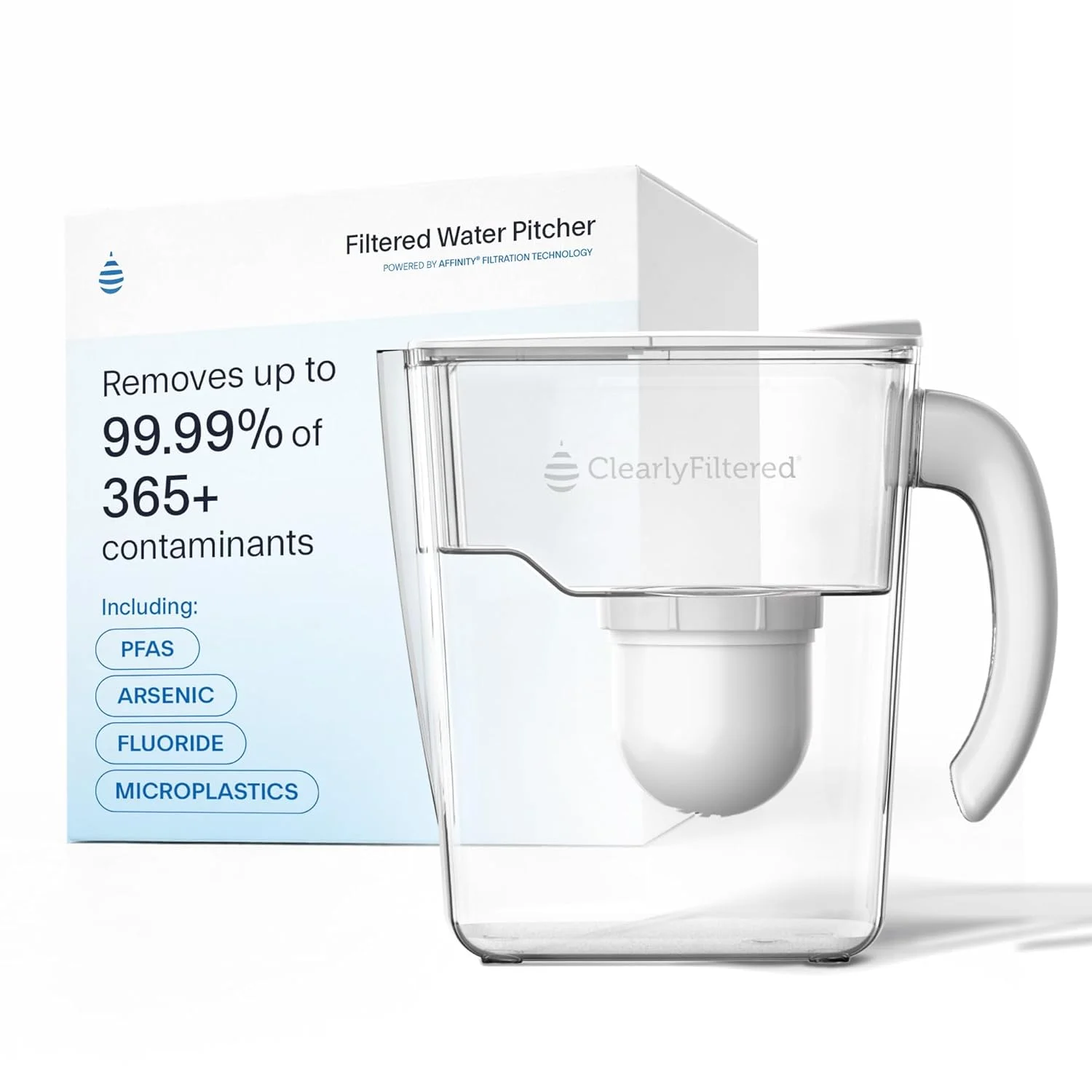
Factoring in wasted water, RO costs approximately $0.20-0.25 per gallon of purified water. Comparable to Clearly Filtered pitcher filters.
Usability (7% weight)
Installation: DIY Advanced or Professional
Installation requires:
- Drilling a hole for the dedicated faucet
- Connecting to cold water supply line
- Installing storage tank under sink
- Connecting drain line for waste water
DIY installation takes 2-3 hours with basic plumbing skills. Many families hire a plumber ($100-200).
Space Requirements
The system plus 3-gallon storage tank requires significant under-sink cabinet space. Not suitable for very small cabinets.
Filter Changes
Straightforward cartridge replacements every 6-12 months. The membrane (core filter) only needs replacement every 2-3 years.
Taste Profile
RO water tastes very pure - almost "flat" to some palates because it lacks minerals. Some families add mineral drops or use remineralization cartridges (Stage 6, optional).
When RO Makes Sense
Reverse osmosis is not necessary for everyone. It makes sense if:
- Well water users with unknown or concerning contamination
- High arsenic or heavy metal areas (check your water quality report)
- Fluoride sensitivity (RO is the only home solution)
- Maximum peace of mind for medically sensitive family members
- Very high TDS water (500+) that exhausts other filters quickly
For typical municipal water with moderate concerns, the Aquasana AQ-5200 or Clearly Filtered pitcher provide excellent protection without water waste.
The Bottom Line
The APEC ROES-50 is the most comprehensive water filtration system available for home use, removing 99%+ of virtually all contaminants including those other filters cannot address. At $200 with $50 annual operating costs, it delivers unmatched purity for families with well water, severe contamination, or maximum protection requirements. The water waste trade-off (3-4 gallons per purified gallon) means RO is overkill for typical municipal water - but it is essential for families with genuine contamination concerns.