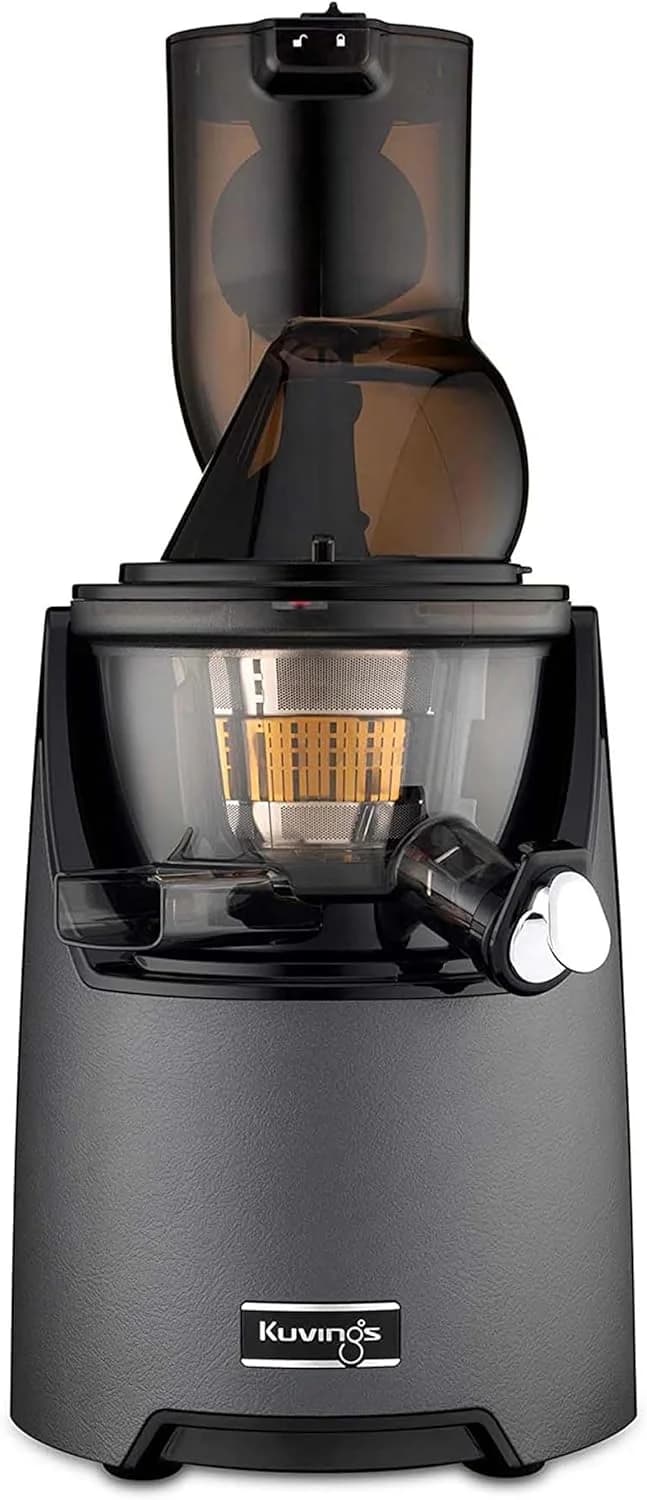
Compare Juicers
Which scores higher on safety? R3 breaks it down.
The most important dimensions, side by side.
The auger and housing are BPA-free plastic, but Ninja does not identify the specific type. Without knowing the polymer, we cannot verify what chemicals were used in place of BPA.
The filter basket is stainless steel -- a safe, non-reactive material for the surface that contacts produce during extraction.
Your juice collects and sits in a BPA-free plastic container. While BPA has been removed, acidic juices in prolonged contact with unspecified plastic is still a consideration for chemically cautious families.
The juice container material isn't disclosed. Your juice sits in this container after extraction, and we can't verify what it's made of.
Ninja confirms this product is BPA-free across all components. This is a baseline expectation for modern kitchen appliances.
BPA-free is confirmed, though with undisclosed container materials the claim only covers the components that are identified.
Ninja has not stated whether this product contains PFAS (forever chemicals). For a product with all-plastic food-contact surfaces, this is a notable gap.
Qcen makes no statement about PFAS content. Without knowing the full material list, we can't confirm or deny the presence of PFAS.
Ninja confirms BPA-free status but does not identify the specific plastic type or address other chemical concerns. Partial transparency.
Only the filter material is specified. The container, housing, and other food-contact parts remain unidentified -- we're working with an incomplete picture.
No independent lab has tested this product for heavy metal content in its food-contact surfaces.
No independent lab has tested this juicer for heavy metal contamination.
Cold-press masticating extraction slowly crushes produce, preserving more vitamins and enzymes than centrifugal juicers. Your juice stays fresh for up to 72 hours in the fridge.
Centrifugal juicing extracts fast but generates heat that breaks down nutrients. Leafy greens like kale and spinach won't juice well with this method.
The 150W motor is well-suited for slow extraction. It handles most fruits and vegetables effectively, though very hard produce may need to be cut smaller first.
500W provides solid extraction force for most fruits and vegetables -- no issues with apples, oranges, or cucumbers.
Ninja does not publish the exact RPM for this model. We are working from the brand's cold-press designation, which typically means under 120 RPM.
At 18,000 RPM, this juicer generates significant heat during extraction. Vitamins and enzymes break down quickly -- drink your juice within minutes for best nutrition.
Two interchangeable filters let you choose between smoother or pulpier juice. A nice touch that most budget juicers skip.
One strainer, one pulp level. You can't adjust texture -- what you get is what you get.
No noise measurement is available. Masticating juicers are generally much quieter than centrifugal models, so expect a low hum rather than a roar.
No noise measurement is available. Centrifugal juicers are generally loud -- expect noticeable noise during operation.
All removable parts go in the dishwasher, which is a significant daily convenience advantage over hand-wash-only competitors.
Removable parts go in the dishwasher, making daily cleanup quick and easy.
Five parts to disassemble and reassemble -- manageable for daily juicing without frustration.
The number of parts to disassemble isn't specified in the product listing.
At nearly 16 inches tall, this juicer may not fit under standard kitchen cabinets. Check your counter clearance before purchasing.
At under 8 inches tall, this fits comfortably under any standard kitchen cabinet. Easy to store on the counter permanently.
One year of warranty is the industry minimum. For a $130 appliance, this is standard but not reassuring for long-term durability.
A 2-year warranty is decent for a $53 juicer -- better than average for this price range and the best warranty among the budget options we reviewed.
At $130, this is competitively priced for a cold-press juicer. The juice quality is genuinely good, but the material safety gaps mean you are paying less and getting less transparency.
At $53, this is the most affordable juicer we reviewed. The low price is attractive, but factor in the material unknowns when assessing true value.
Everything you need to make the call - who each one is for, and who should skip it.
Go for it if you...
You want cold-press juice quality at a budget-friendly price under $130.
BPA-free plastic is acceptable to your family and you are less concerned about PFAS or specific polymer identification.
You value the NeverClog feed chute and dual-filter pulp control for daily convenience.
Dishwasher-safe parts are important because you juice every day and need quick cleanup.
You want the most affordable juicer in the batch and primarily juice simple fruits like apples and oranges.
A compact under-8-inch design that fits under any cabinet is important for your kitchen layout.
Dishwasher-safe parts and a 2-year warranty matter more to you than material transparency.
You're okay drinking juice immediately -- centrifugal extraction means nutrients degrade within hours.
The main thing to know
Every food-contact surface is BPA-free plastic, but Ninja will not tell you what type of plastic it is or whether it contains PFAS. For families who prioritize chemical transparency, this is a significant unknown.
The juice container material is undisclosed and PFAS status unknown -- at this price point, material transparency is minimal and you're trusting an unfamiliar brand with limited safety documentation.
Skip this if you...
You need to know the exact type of plastic touching your food -- Ninja does not disclose the polymer.
PFAS-free verification is a requirement for your family's kitchen appliances.
You prefer stainless steel or glass food-contact surfaces to eliminate plastic leaching concerns entirely.
Knowing exactly what materials your juice touches is important to your family -- the container is undisclosed.
You want juice that stays nutrient-rich for hours -- the 18,000 RPM extraction causes rapid degradation.
You juice leafy greens regularly -- centrifugal juicers extract them poorly.
Neither of these quite what you're looking for?
I've reviewed all Juicers options at every price pointEvery Juicers in our database is scored using R3's deterministic scoring system - the same inputs always produce the same score. For this comparison, we evaluated Ninja and Qcen across 3 independent criteria: Safety (87%), Efficacy (9%), Usability (4%). No sponsored rankings. No paid placements.
Straight answers - no sponsored content, no filler.
Both scored close to 5.1/10, so the better choice depends on your priorities. Safety is our top-weighted scoring pillar, followed by efficacy, and usability. Check which pillar matters most to your family and compare those specific scores.
R3 uses a deterministic scoring system - the same inputs always produce the same score. We evaluate each Juicers across Safety, Efficacy, Usability using independently verified data. No sponsored rankings. No paid placements. Every score is fully reproducible.
Not necessarily. The overall score reflects our weighted rubric, but your priorities may differ. If you care most about safety, compare the safety scores directly. If budget drives your decision, the prices tell a clearer story. The "right" pick is the one that matches what matters most to your family.
Not the right match? Explore these alternatives in the same category.