Compare Coffee Machines
Which scores higher on safety? R3 breaks it down.
The most important dimensions, side by side.
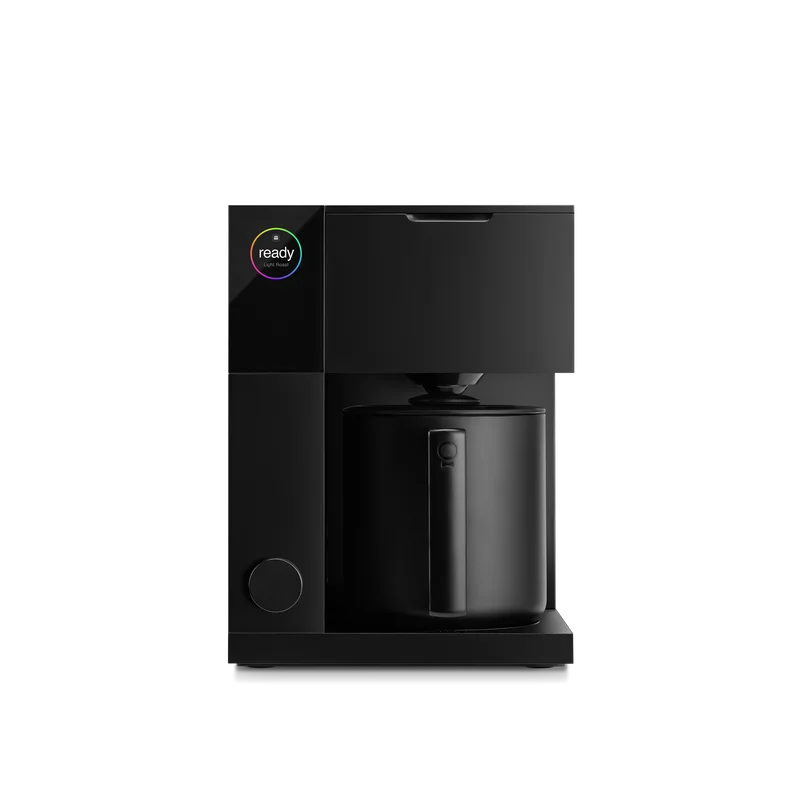
Almost no plastic touches your hot water or coffee — the brew path is primarily stainless steel with only small gaskets and seals in plastic.
The plastic in this machine is limited to gaskets and seals -- the parts that hold water connections together, not the parts water flows through. That's meaningfully different from machines where the reservoir or internal plumbing are plastic.
Fellow says BPA-free, which removes one concern. But at $400, we'd expect a broader claim covering replacement chemicals like BPS and BPF, which research suggests are similarly problematic.
UL Listed — an independent lab has verified this machine won't start a fire or shock you. This is confirmed, not just claimed.
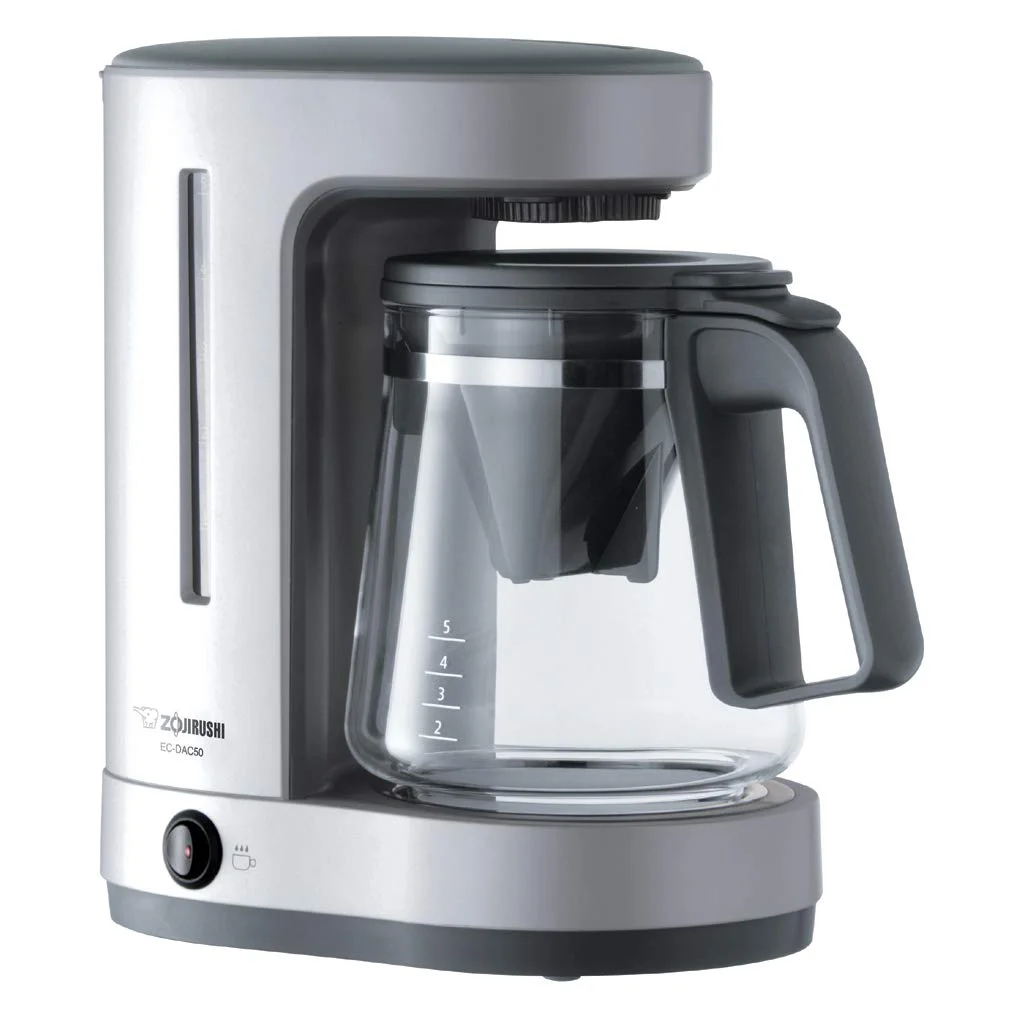
Zojirushi explicitly claims freedom from BPA, PFAS, PTFE, and PFOA on all areas that contact food. At $52, that's the most comprehensive chemical safety disclosure in this batch. The specific polymer isn't named, which is the only gap.
The Zojirushi official store explicitly states 'cULus listed' -- this is confirmed, not inferred. That means an independent lab has verified it for both US and Canadian electrical safety standards. That's the gold standard for home appliance electrical safety.
205°F is right in the sweet spot for pulling full flavor from your coffee grounds. Fellow lets you adjust this from 122–210°F if your beans need something different.
Multiple independent reviews confirm 200-205°F brew temperature. This compact 5-cup machine delivers extraction quality that competes with full-size brewers costing significantly more.
The Specialty Coffee Association certified the Aiden as meeting all their standards for home brewing — temperature, water volume, brew time, and extraction. This is the gold standard for drip coffee.
No SCA certification -- this is typical for compact 5-cup machines, which rarely go through the certification process. The brew temperature performance is SCA-range regardless.
2-year warranty is the industry baseline for premium appliances. Extends to 3 years with product registration — worth doing.
One year is the industry minimum. Every other machine in this batch offers at least 2 years. For a $52 machine, the math is different than for a $349 machine -- but it's still worth knowing.
Both filter baskets (single-serve and batch brew) are dishwasher safe — toss them in and forget about it.
The filter basket goes on the top rack of the dishwasher and the water tank lifts out completely for cleaning. For a machine you'll use every morning, this simplicity adds up.
An indicator light tells you when it's time to descale. No guessing, no calendar reminders needed.
No descaling indicator found. In hard water areas, track your descaling schedule manually -- every 1-3 months, or when you notice slower brew times.
At $399.95, this is one of the most expensive home drip coffee makers on the market. Price is recorded for context but does not affect the overall score.
At $52, the Zutto is the most affordable machine in this batch by a wide margin. The chemical safety credentials and cULus certification that cost $180-349 elsewhere are available here at a fraction of the price -- for households of 1-2 people.
Everything you need to make the call - who each one is for, and who should skip it.
Go for it if you...
Precision brewing matters to you and you want independent SCA validation that your machine actually hits optimal extraction temperature.
You prefer a minimal-plastic brew path with a stainless thermal carafe so your coffee isn't sitting in heated plastic.
A 2-year warranty and a descaling indicator are important for low-maintenance daily use.
You drink specialty coffee and want a machine built to extract it properly.
You're a household of one or two who wants strong chemical safety credentials -- BPA, PFAS, and phthalate-free -- at an accessible $90 price.
You want a machine with confirmed cULus electrical safety certification, which none of the other plastic-in-brew-path machines in this batch can confirm as definitively.
You value compact, well-engineered Japanese appliances that prioritize brew quality and minimal footprint.
You're comfortable starting the machine manually and don't need a programmable timer.
The main thing to know
The Fellow Aiden earns its SCA certification and brews a genuinely great cup at 205°F — but for $400, the BPA-free-only plastic safety claim and missing NSF 372 lead certification are gaps that families paying a premium for safety should know about.
This is a 5-cup machine built for 1-2 people. At $52 it offers an impressive chemical safety profile -- BPA, BPS, BPF, phthalate, and PFAS-free with cULus certification -- but the 1-year warranty is the shortest in this batch and there's no SCA certification.
Skip this if you...
You expect full bisphenol-free certification from a $400 appliance — this only claims BPA-free.
Lead-safety (NSF 372) certification is a hard requirement before you buy any coffee maker.
Budget is a concern — there are SCA-certified options at half the price with similar safety profiles.
You need to brew for a family of three or more -- five cups won't be enough and you'll be running multiple pots.
A 1-year warranty is too short for a kitchen appliance investment -- this has the shortest warranty in this batch.
NSF/ANSI 372 lead-free certification on metal components is a non-negotiable for your family.
Neither of these quite what you're looking for?
I've reviewed all Coffee Machines options at every price pointEvery Coffee Machines in our database is scored using R3's deterministic scoring system - the same inputs always produce the same score. For this comparison, we evaluated Fellow and Zojirushi across 3 independent criteria: Safety (81%), Efficacy (18%), Usability (1%). No sponsored rankings. No paid placements.
Straight answers - no sponsored content, no filler.
Both scored close to 6.2/10, so the better choice depends on your priorities. Safety is our top-weighted scoring pillar, followed by efficacy, and usability. Check which pillar matters most to your family and compare those specific scores.
R3 uses a deterministic scoring system - the same inputs always produce the same score. We evaluate each Coffee Machines across Safety, Efficacy, Usability using independently verified data. No sponsored rankings. No paid placements. Every score is fully reproducible.
Not necessarily. The overall score reflects our weighted rubric, but your priorities may differ. If you care most about safety, compare the safety scores directly. If budget drives your decision, the prices tell a clearer story. The "right" pick is the one that matches what matters most to your family.
Not the right match? Explore these alternatives in the same category.