Compare Carbon Steel Pans
Which scores higher on safety? R3 breaks it down.
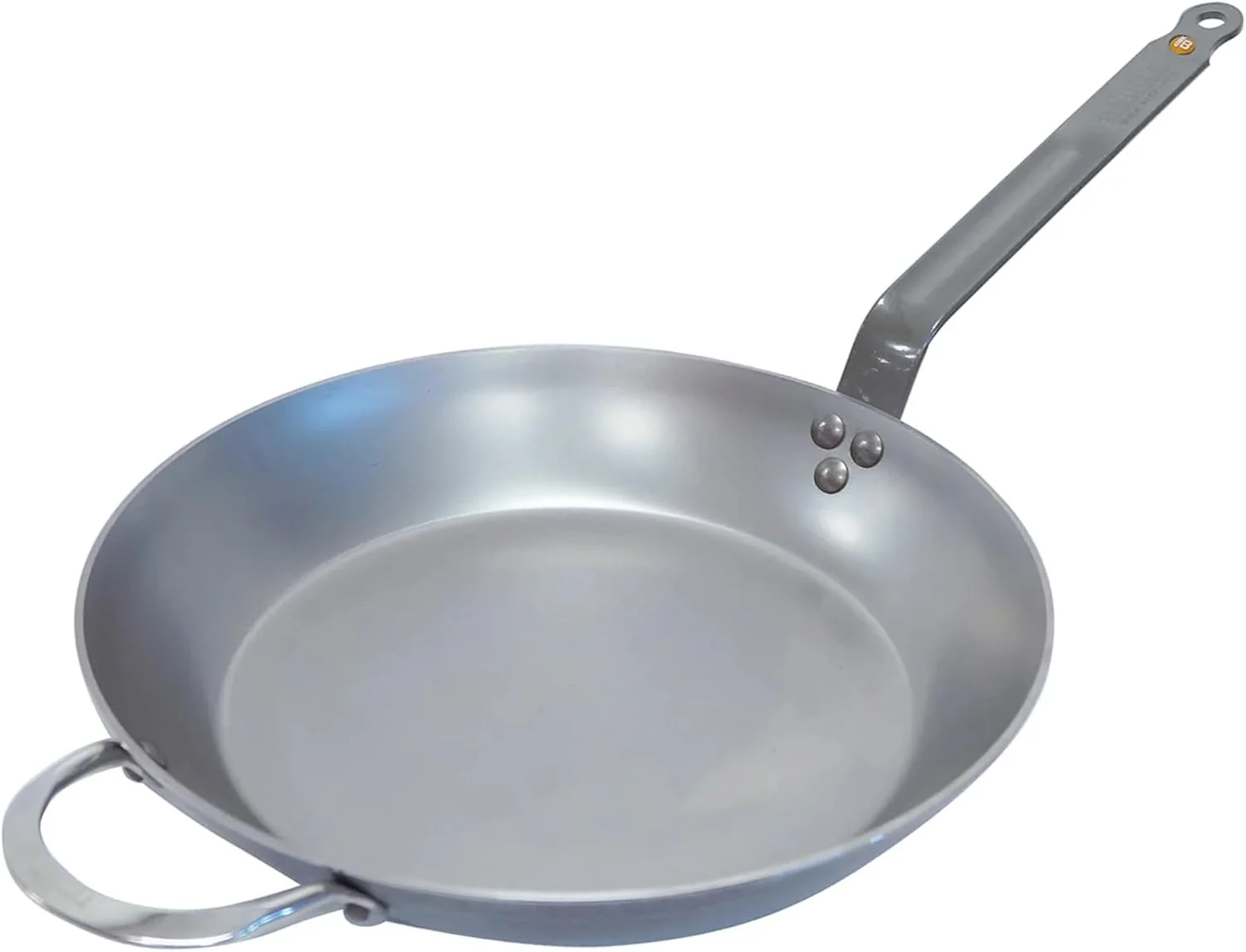
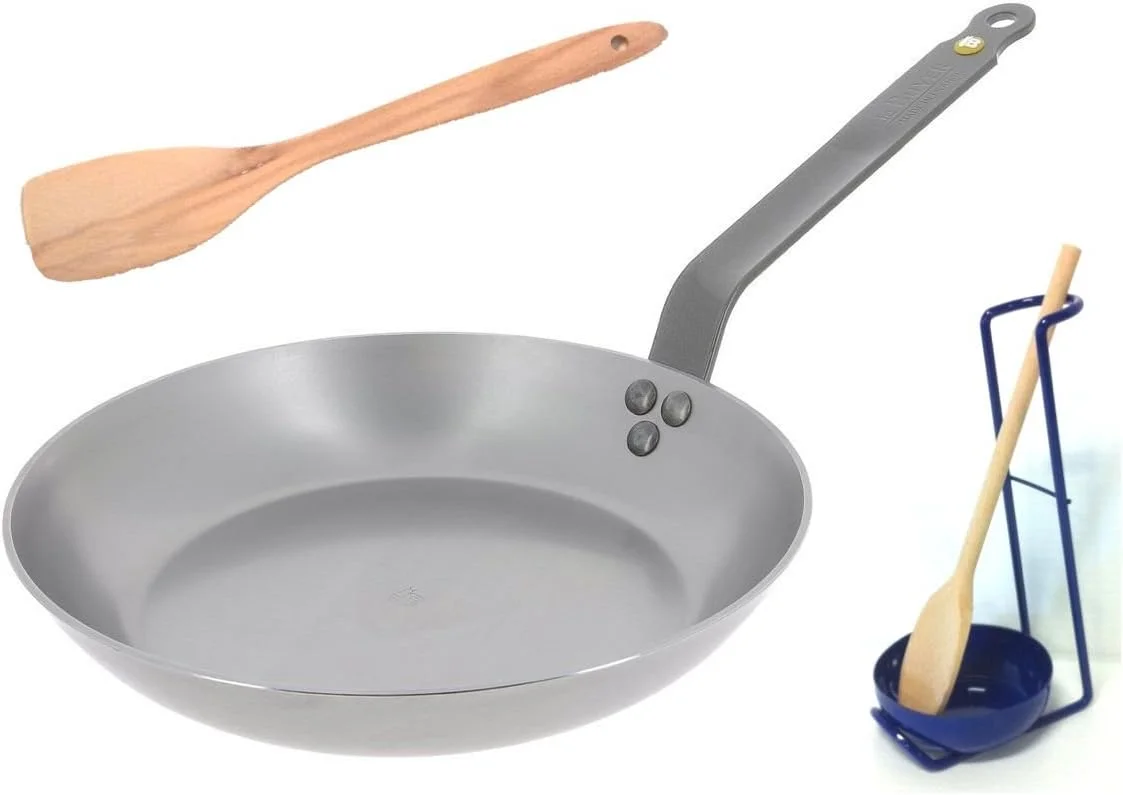
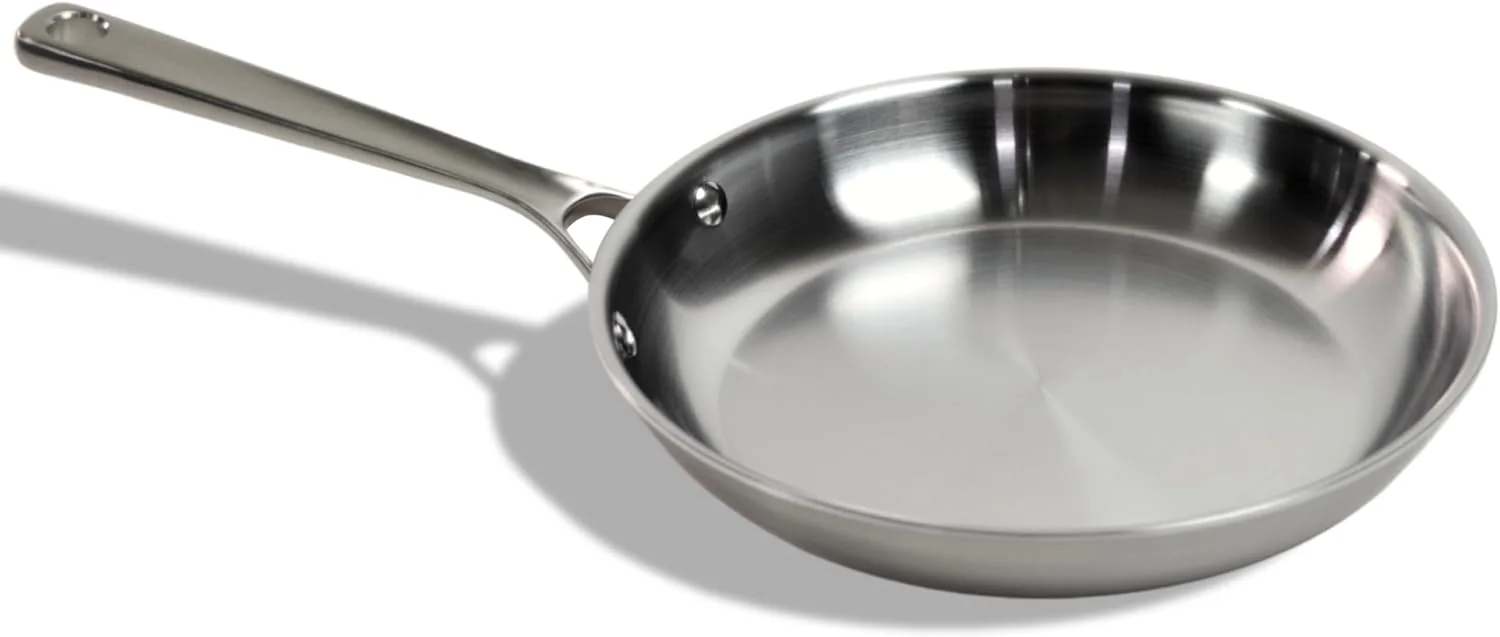
R3 scored the de Buyer Mineral B 12.5" Fry Pan 9.3/10 and the de Buyer Mineral B Element 11" Fry Pan 9.3/10 on the same carbon steel pans scoring system, weighing safety, efficacy, and usability. The overall scores are close; the pillar breakdown below shows where they differ.
The most important dimensions, side by side.
See which one actually scores higher — and why
Free account unlocks full safety scores, spec-by-spec breakdown, and the R3 verdict on de Buyer Mineral B 12.5" Fry Pan vs de Buyer Mineral B Element 11" Fry Pan.
Unlock the full de Buyer Mineral B 12.5" Fry Pan vs de Buyer Mineral B Element 11" Fry Pan breakdown
Free account unlocks all safety scores, complete spec comparison, scoring rationale, and the R3 verdict on which one to buy.
Everything you need to make the call - who each one is for, and who should skip it.
Go for it if you...
You want the largest cooking surface (12.5") with 3mm professional gauge in this carbon steel set
You cook large proteins or batch meals where surface area matters more than handle oven-ceiling
You want verified PFAS-free bare carbon steel with professional French construction
You want the highest gauge thickness (3mm) for professional-grade heat retention and searing performance in an 11" pan.
Chemical safety is your top priority — bare carbon steel is PFAS/PTFE-free by material definition, with no synthetic coating to degrade or flake.
You cook on induction and want a pan that handles high heat without warping.
You prefer long-lasting cookware that improves with age and doesn't need replacement every few years.
The main thing to know
No oven-safe temperature rating published — the stainless-steel-riveted handle implies limited oven use, but the exact ceiling is unconfirmed. Budget time for beeswax full-pan removal before first seasoning.
Ships with a full-pan beeswax coating that must be removed with steel wool before first seasoning — skipping this step prevents proper seasoning adhesion.
Skip this if you...
Oven finishing at high temperature is important — the Element (400°F confirmed) or Blue (500°F) are safer choices if you regularly finish proteins in the oven
You are new to carbon steel — the beeswax setup and larger mass make this a better choice for experienced users
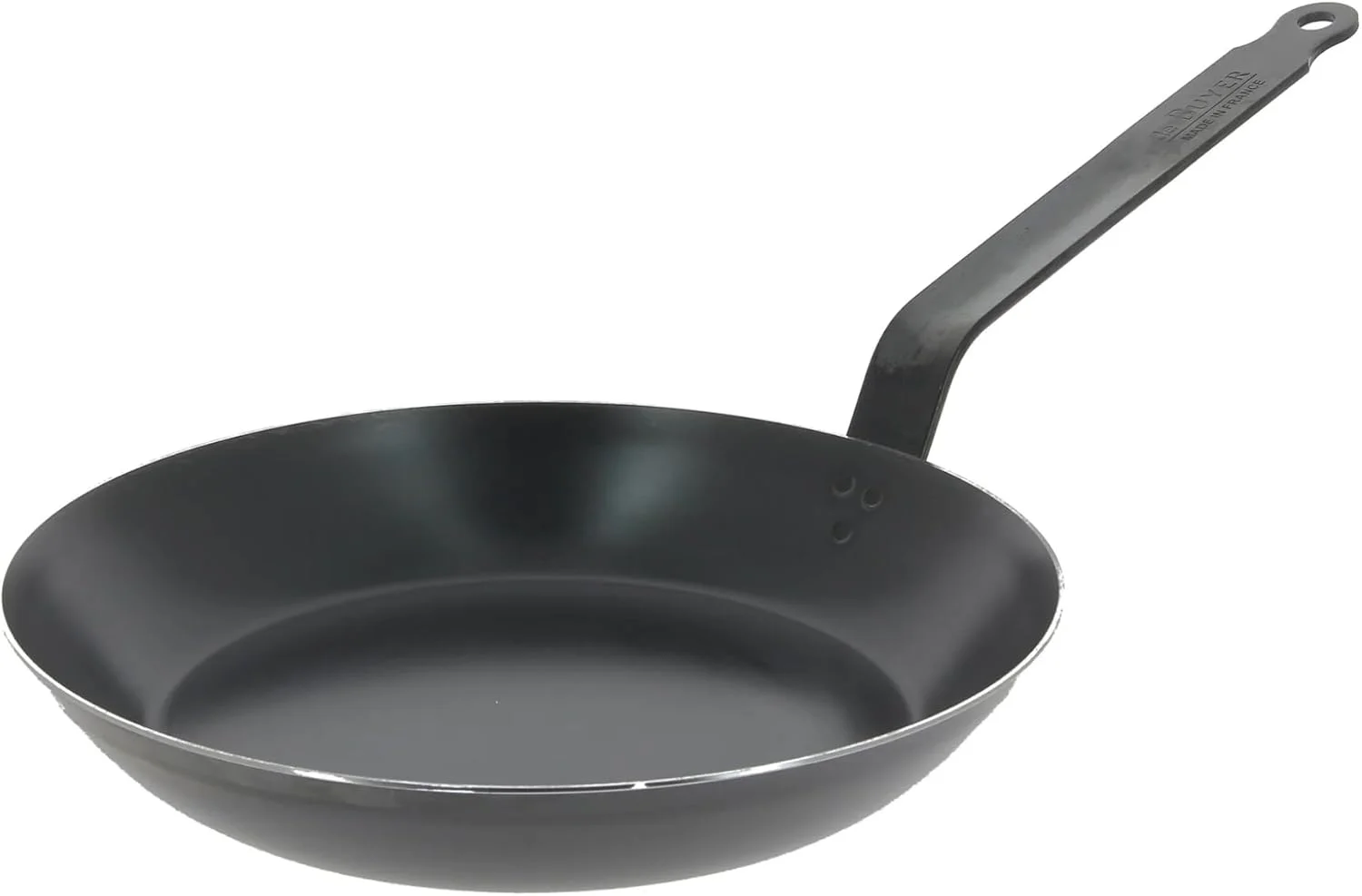
You want the most usability-optimized de Buyer — the Blue at $70 has the welded handle and 500°F oven rating for $40 less
Setup friction matters to you — the beeswax removal step requires steel wool scrubbing and is more involved than pre-seasoned alternatives.
You need higher oven-safe temperature for broiler use — the 400°F rating limits high-temp oven finishing.
Budget is a constraint — de Buyer Blue achieves the same safety score at $70 vs $115.
Neither of these quite what you're looking for?
I've reviewed all Carbon Steel Pans options at every price pointEvery Carbon Steel Pans in our database is scored using R3's deterministic scoring system - the same inputs always produce the same score. For this comparison, we evaluated de Buyer and de Buyer across 3 independent criteria: Safety (83%), Efficacy (6%), Usability (11%). No sponsored rankings. No paid placements.
Straight answers - no sponsored content, no filler.
Both scored close to 9.3/10, so the better choice depends on your priorities. Safety is our top-weighted scoring pillar, followed by efficacy, and usability. Check which pillar matters most to your family and compare those specific scores.
R3 uses a deterministic scoring system - the same inputs always produce the same score. We evaluate each Carbon Steel Pans across Safety, Efficacy, Usability using independently verified data. No sponsored rankings. No paid placements. Every score is fully reproducible.
Not necessarily. The overall score reflects how we weight those three pillars, but your priorities may differ. If you care most about safety, compare the safety scores directly. If budget drives your decision, the prices tell a clearer story. The "right" pick is the one that matches what matters most to your family.
Not the right match? Explore these alternatives in the same category.