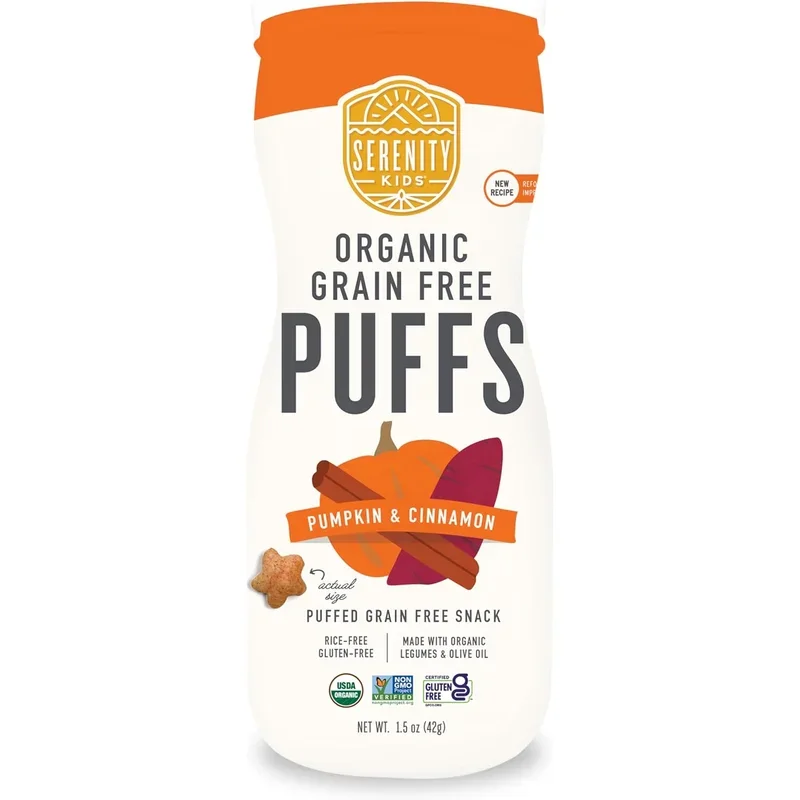
I remember standing in the baby food aisle, turning over puff canister after canister, watching sugar and rice flour dominate every ingredient list. Then I found Serenity Kids, and everything changed.
Why Most Baby Puffs Fail the Ingredient Test
Let me paint a picture of the typical baby puff ingredient list. Rice flour is almost always first - concerning given that Consumer Reports and the FDA have flagged arsenic levels in rice-based baby foods. Then comes sugar in various disguises: cane sugar, fruit juice concentrate, tapioca syrup. By the time you reach the "vegetable" ingredient, it's often a powder that constitutes 2% of the product.
Serenity Kids flips this formula entirely. The Sweet Potato Puff ingredients read: Organic Sweet Potato, Organic Avocado Oil, Organic Cassava Flour. That's it. Three ingredients, with an actual vegetable as the first one.
The Grain-Free Advantage
The grain-free positioning isn't just marketing differentiation - it addresses a real concern. A 2021 congressional report found that many baby foods contain concerning levels of heavy metals, with rice-based products being particularly problematic. By using cassava flour instead of rice flour, Serenity Kids sidesteps this issue entirely.
Cassava is a root vegetable that creates the puff texture without grains. It's naturally gluten-free and has been a dietary staple in many cultures for centuries. For babies with gluten sensitivities or parents wanting to delay grain introduction, this matters.
Breaking Down the Nutrition
Each serving (about 75 puffs) contains:
- 25 calories
- 0g sugar (not "1g from fruit" - literally zero)
- 1g fat from avocado oil
- Less than 1g protein
These are designed for motor skill development and introducing vegetables, not caloric sustenance. The flavor comes from real vegetables - sweet potato, butternut squash, and carrot varieties are available. My baby actually developed a taste for vegetables, not sweetness, because these puffs trained her palate on real food flavors.
The Texture Reality
Honest feedback here: these dissolve differently than conventional rice puffs. They're denser and take slightly longer to melt. For babies just starting self-feeding (6-8 months), this might require a bit more practice. By 9-10 months, most babies handle them easily.
The shape is similar to other puffs - easy for tiny fingers to grasp using the pincer grip. They're sturdy enough to survive a diaper bag but dissolve appropriately in the mouth.
Allergen Profile
Serenity Kids Puffs are free from the top 9 allergens: no milk, eggs, fish, shellfish, tree nuts, peanuts, wheat, soy, or sesame. Made in a dedicated allergen-free facility. For families managing allergies early, this is significant.
The Value Question
At $6.99 for a 1.5oz canister (versus $3-4 for conventional puffs), these are premium-priced. You're paying roughly double what Gerber or Happy Baby charges.
Here's how I justify it: I'm not buying these for the calories. I'm buying them for motor skill development and vegetable flavor exposure during a critical window of taste preference formation. The research on early food introduction suggests that babies exposed to vegetable flavors early are more likely to accept vegetables later. That's worth something.
What the Research Says
A 2019 study in the American Journal of Clinical Nutrition found that repeated exposure to vegetable flavors in infancy increased vegetable acceptance in toddlerhood. Serenity Kids is specifically designed around this concept - the founder, Serenity Carr, cites this research in developing her product line.
The company also partners with regenerative farms and prioritizes organic sourcing. While "regenerative agriculture" can be vague, Serenity Kids publishes their sourcing practices and supplier relationships.
Comparison to Alternatives
Happy Baby Organic Superfood Puffs: Organic rice flour as first ingredient, 1g added sugar, contains multiple grains. Cheaper at ~$4/canister.
Gerber Organic Puffs: Rice flour first, added sugar, more processed. Budget option at ~$3/canister.
Once Upon a Farm Baby Food Pouches: Clean ingredients but different format (purees, not puffs).
Serenity Kids is the only option I've found with vegetables first, no added sugar, and no rice or grains.
The Downsides
Price: At $6.99, these cost roughly twice conventional puffs. Not sustainable as a high-volume snack for budget-conscious families.
Availability: Found at Whole Foods, Amazon, and the company website - not everywhere. Your local grocery may not stock them.
Calorie Density: At 25 calories per serving, these won't fill a hungry baby. They're for development and flavor exposure, not sustenance.
Texture Adjustment: Some babies need a few tries to adapt from rice-based puff textures.
Who Should Buy This
- Parents of babies 6-18 months who want the cleanest possible puff option
- Families concerned about arsenic in rice-based baby foods
- Those prioritizing vegetable flavor introduction over sweetness
- Parents managing food allergies who need certified allergen-free options
Who Might Skip This
- Budget-constrained families who need higher volume, lower-cost options
- Parents of older toddlers (2+) who have already transitioned to other snacks
- Those whose local stores don't carry the product
The Verdict
Serenity Kids Grain-Free Puffs earn our top recommendation for babies and young toddlers because they represent what baby puffs should be: vegetables first, no added sugar, no concerning grains. The premium price reflects genuinely premium ingredients - not just marketing. For the 6-18 month window when taste preferences are forming, these are the puffs I trust.