Tri-ply stainless as your primary cookware
One quality stainless skillet can replace most pans. Learn the technique and it'll last forever.
A research-based guide to cookware materials: which are truly safe, which are marketing hype, and how to build a kitchen that lasts without compromising health.
By Renee, R3 Founder
Evidence-based product analysis since 2024
Updated June 2026
When you shop through retailer links on our site, we may earn affiliate commissions. R3 takes no money from brands and scores every product the same way. Learn more.
Get the research before you buy
The picks that cleared safety, what to skip, and why. No spam, no sponsors.
The quick answer
Stainless steel and cast iron are the safest long-term cookware choices: they're stable, durable, and have decades of use history. Traditional non-stick (PTFE/Teflon) is safe at normal cooking temperatures below 500°F but degrades with high heat. Ceramic-coated pans are PTFE-free but typically wear out within 1-2 years. "Non-toxic" marketing often exaggerates both problems and solutions.
Editor's note. This guide is based on material science research, FDA food contact guidelines, and independent testing of cookware materials. We focus on evidence rather than marketing claims.
Traditional non-stick coatings, typically PTFE (polytetrafluoroethylene, the generic name for Teflon), are the most controversial cookware category.
The actual concern: PTFE starts breaking down at temperatures above 500°F (260°C), releasing fumes that can cause flu-like symptoms in humans and are toxic to birds. Preheating an empty pan on high can reach these temperatures in minutes.
What's changed: PFOA, a chemical once used to manufacture PTFE, was eliminated from production in 2013 under the EPA's PFOA phase-out after health concerns emerged. Modern PTFE is made without PFOA. The PTFE itself was never the problem; it was the manufacturing chemical.
The practical reality: PTFE is fine for low-to-medium heat cooking (eggs, pancakes, fish). It's not ideal for searing, high-heat cooking, or any situation where the pan might get very hot. The bigger problem is durability: scratched non-stick releases particles and loses effectiveness.
Our take: PTFE has a place in the kitchen, but it shouldn't be your primary cookware. Use it for what it's good at (delicate cooking) and use more durable materials for everything else.
PFOA, the problematic manufacturing chemical, was eliminated from PTFE production in 2013 under the EPA's phase-out; modern PTFE is different from what caused the original concerns.
In short
Ceramic-coated pans are marketed as the "non-toxic" alternative to PTFE, and the coatings typically last only 1-2 years. Here's the reality:
What it actually is: "Ceramic" non-stick isn't ceramic like your coffee mug. It's a sol-gel coating (silica-based) applied over aluminum. The coating contains no PTFE or PFAS, which is the main selling point.
The durability problem: Ceramic coatings typically last 1-2 years before losing their non-stick properties, much shorter than quality PTFE. Once the coating degrades, you're cooking on exposed aluminum (which some prefer to avoid).
High-heat performance: Ceramic handles higher heat than PTFE, which is good. But the coating degrades faster with repeated high-heat use, which partially negates this advantage.
Our assessment: Ceramic is fine and avoids PTFE if that's important to you. But the shorter lifespan means more waste and higher long-term cost. If you want non-stick without PTFE, it's an option; just budget for replacement.
Ceramic-coated pans avoid PTFE and PFAS entirely, but their sol-gel coatings typically lose non-stick performance within 1-2 years, far sooner than quality PTFE.
In short
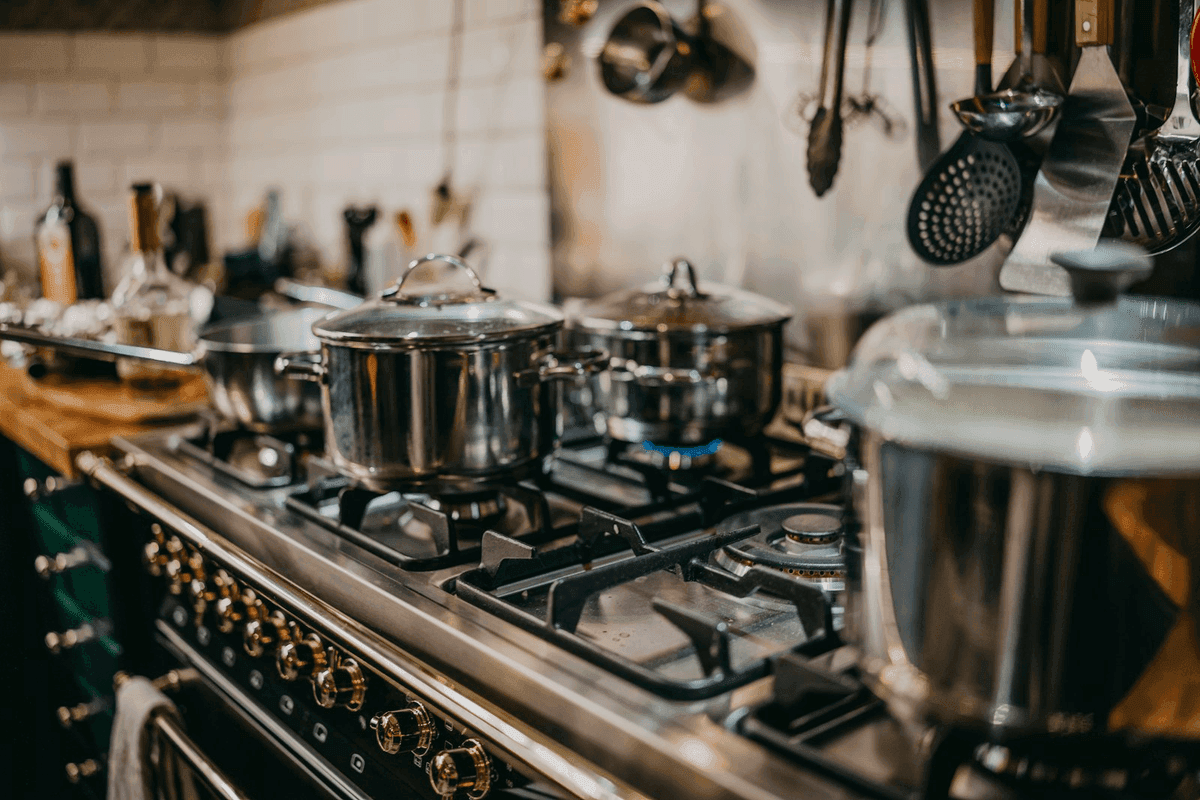
Stainless steel is our top recommendation for most cooking tasks. Here's why:
Material stability: Stainless steel is an alloy of iron, chromium, and nickel. It's non-reactive with most foods, doesn't break down with heat, and has no coatings to degrade. Quality stainless lasts decades.
Nickel considerations: Some people have nickel allergies. If you're sensitive, choose nickel-free stainless (often labeled 18/0 instead of 18/10) or alternate materials. For most people, nickel leaching from cookware is not a meaningful exposure source.
The learning curve: Stainless requires technique (preheating, using enough fat, not moving food too soon). Food can stick if you don't get this right. But the technique is learnable and becomes automatic.
Tri-ply construction matters: Good stainless has an aluminum or copper core sandwiched between stainless layers. This provides even heating (stainless alone heats unevenly). Brands like All-Clad, Cuisinart MultiClad, and Tramontina Tri-ply offer this at different price points.
Investment value: A quality stainless set lasts 20+ years. Amortized over that time, even expensive options are cheaper than repeatedly replacing non-stick.
A quality stainless steel pan lasts 20+ years. That's decades of cooking without coating concerns or replacement costs.
In short
1 more tips
Create a free account to see more buying advice
We score every product the same way and send the picks that cleared safety, what to skip, and why. No spam, no sponsors.
Cited research
Common questions about cookware safety, answered by our research team.
PTFE (Teflon) cookware is generally safe at normal cooking temperatures below 500°F (260°C), as it doesn't leach harmful amounts into food. However, overheating above 500°F releases toxic fumes causing polymer fume fever, harmful to humans and deadly to birds. PFOA, once used in production, is phased out but replacements like GenX raise similar unproven health concerns including cancer and liver issues.[1][2][3][5]
PFOA, historically used to make PTFE, links to cancer (kidney, testicular), liver damage, high cholesterol, decreased vaccine response, thyroid issues, and developmental effects in children. Detected in 98% of US blood samples, it persists in the environment, contaminating water for millions. Phased out since 2013, but residues may remain in older pans.[1][4][5][6]
Heating PTFE above 500-570°F (260-300°C) degrades the coating, releasing pyrolytic gases and fumes toxic to pets (especially birds) and causing flu-like polymer fume fever in humans with chills, fever, and headaches. Avoid empty preheating; use medium heat and ventilation.[1][2][3][5]
Ceramic coatings are marketed as PTFE alternatives without PFAS, but they aren't perfect: durability varies, and some may contain other chemicals or wear quickly. They avoid PFOA/GenX risks but check for true non-toxic claims, as not all are PFAS-free per tests.[3][1]
Stainless steel is durable, lasts forever without coatings, and avoids PFAS chemicals entirely. It's inert, doesn't leach toxins when used properly, though it requires oil to prevent sticking. Ideal long-term workhorse for health-conscious cooking without overheating or scratching risks.
Replace pans made before 2015, as they likely contain PFOA. Even newer PTFE pans should be discarded after 5 years or if scratched, to minimize PFAS exposure risks like liver damage and immunity issues. Opt for PFOA-free verified alternatives.[3][5]
PFAS (per- and polyfluoroalkyl substances) include PFOA and PTFE polymers used in non-stick coatings for water/oil resistance. Persistent 'forever chemicals,' they contaminate water, link to cancers, hormone disruption, and weakened immunity. Cooking releases trace amounts, especially if damaged or overheated.[1][2][6]
Chipped PTFE flakes pass through the digestive system harmlessly, as particles are too large for absorption. However, scratched coatings may release more PFAS over time, and overheating remains risky. Pristine condition is safest; replace damaged pans.[3][4]